24 Questions to ask before hiring a commercial drone company
Key Takeaways
Hiring well means evaluating the whole operation, not just the quality of a few attractive aerial images.
- Define the business result before discussing flight details.
- Match the provider’s experience and equipment to the actual assignment.
- Verify certification, permissions, insurance, privacy practices, and site access.
- Ask how safety decisions, weather delays, and emergencies are handled.
- Compare quotes by deliverables, rights, schedule, and total value-not price alone.
Clarify your project goals and requirements
Before you contact a commercial drone company, decide what the work needs to accomplish. A clear brief helps providers recommend the right capture method and estimate the effort honestly. It also gives you a fair basis for comparing proposals. The most useful questions to ask before hiring a commercial drone company begin with the outcome, not the aircraft.
What business outcome should the drone footage support?
Start by explaining what decision or business task the footage should support. You may need documentation for a project record, visual material for marketing, measurements for planning, or evidence for an inspection. Ask the provider what they will deliver and how that output will fit into your existing workflow. A defined end use prevents an attractive flight from producing media nobody can use.
If the purpose is construction documentation, for example, a repeatable view may matter more than dramatic angles. If the purpose is promotion, composition, editing, and delivery format may matter more than measurements. Put the intended audience, decision, and success criteria in writing before requesting bids.
Which locations, subjects, and conditions must be captured?
Give the company the exact addresses, boundaries, structures, subjects, and preferred viewpoints as early as possible. Mention active work areas, nearby roads, people, neighboring properties, restricted access, and anything confidential. The provider should ask practical follow-up questions rather than assume every site is straightforward.
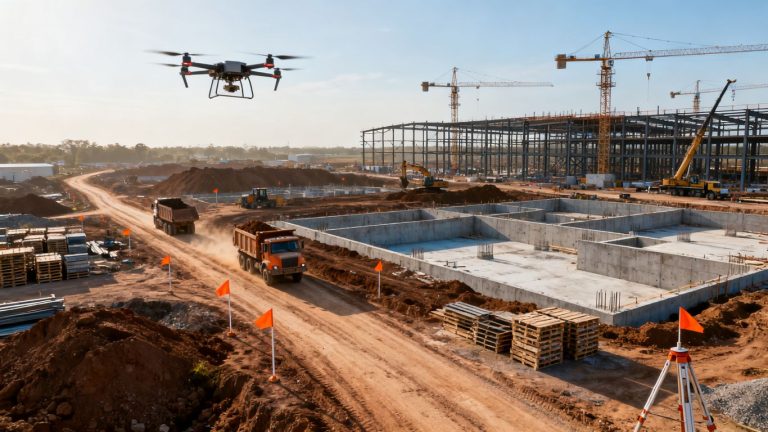
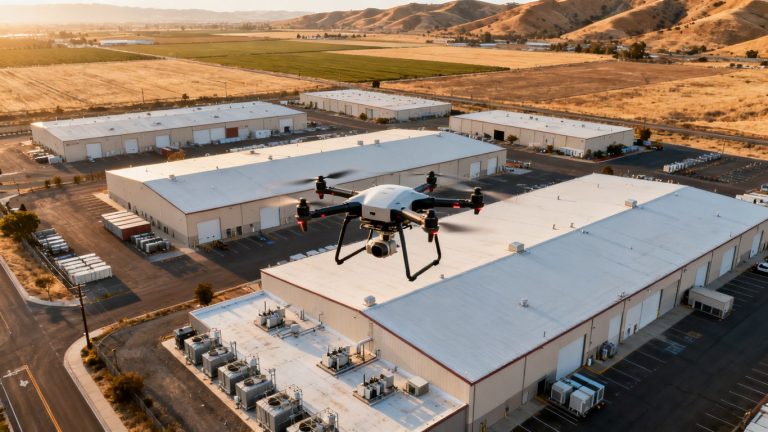
Also describe the conditions that matter. A roof inspection, a large development site, and a finished commercial property each call for different planning. For broader context on documenting job sites, you can review this construction drone photography guide while preparing your brief.
What type of aerial services does the project require?
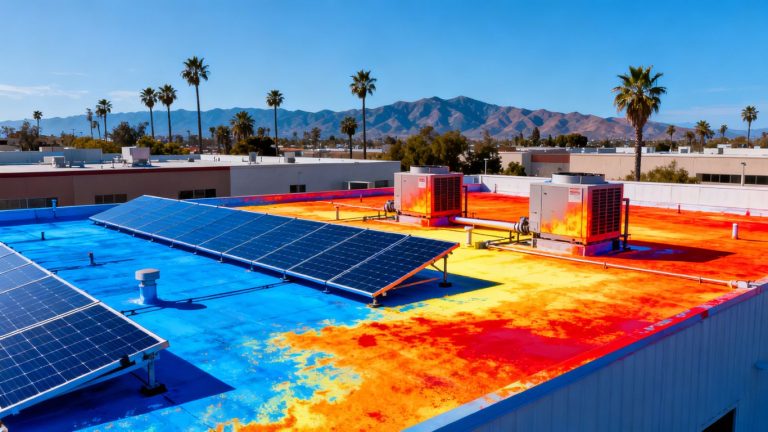
Use plain language to separate photography, video, mapping, surveying, inspection, thermal imaging, and progress monitoring. These services can involve different aircraft, sensors, processing steps, and expertise. Ask whether you need raw capture, interpreted data, or both, and whether the provider can explain the limits of each option.
A company such as 1st Choice Aerials describes commercial drone services that include aerial mapping, thermal inspections, and data collection. That kind of service description can help you turn a general request into a specific scope, but your proposal should still state the exact locations, outputs, and intended use.
What timeline and scheduling constraints could affect the work?
Tell the provider about deadlines tied to inspections, bids, public announcements, insurance claims, stakeholder meetings, or construction milestones. Ask how much notice they typically need and which parts of the schedule depend on weather, airspace, site access, or client preparation. A fast turnaround may also require an agreed delivery format and a defined review process.
Avoid treating the flight date as the whole schedule. Planning, permissions, capture, processing, editing, quality review, and delivery may all need time. A written timeline makes it easier to see where a delay would affect the final result.
Evaluate the company’s experience and capabilities
A capable operator should be able to connect prior work to your particular site and objective. Look beyond a polished reel and ask who performed the work, what conditions they faced, and what the client actually received. Experience is most useful when it resembles the complexity of your assignment. The right questions also reveal whether you are hiring a pilot alone or a team that can manage the full production.
How much experience do you have with projects like ours?
Ask for examples involving the same type of property, subject, data, or operating condition. A provider may have extensive aerial experience yet limited familiarity with your industry’s documentation needs. Ask what changed during comparable assignments and how the team adapted without compromising safety or quality.
Relevant experience does not have to mean an identical project. What matters is a clear explanation of how the company’s prior work translates to your site, schedule, and deliverables.
Can you provide relevant portfolio samples and client references?
Request samples that resemble the final product you want, not only the most cinematic work in the portfolio. For mapping or inspection, ask to see the report, map, model, or annotated imagery that accompanied the capture. References can help confirm communication, reliability, turnaround, and how well the delivered files worked in practice.
A useful reference conversation should cover whether the provider kept commitments, handled changes, and explained limitations clearly. You are evaluating the working relationship as much as the images.
Which aircraft, cameras, and specialized equipment do you use?
Ask which equipment is appropriate for the assignment and why. The answer should connect the aircraft and sensor to your required resolution, coverage, lighting, flight environment, and output. If you need thermal work or mapping, ask about the capture and processing workflow rather than accepting a general claim about advanced gear.
A practical equipment discussion often covers these points:
- The aircraft’s suitability for the site and expected flight conditions.
- The camera or sensor needed for the requested level of detail.
- Backup equipment and procedures for an equipment failure.
- How raw data will be processed, checked, and delivered.
The list is a starting point, not a substitute for a scope of work. A provider should explain what each choice changes for the result, schedule, and price.
Can your team handle complex sites, interiors, or challenging environments?
Describe obstacles before the quote is finalized: confined spaces, tall structures, active facilities, interior areas, traffic, crowds, sensitive operations, or difficult launch and landing locations. Ask whether the team has handled comparable constraints and what additional coordination would be required. Do not assume that a company experienced outdoors can automatically manage interiors or complex industrial sites.
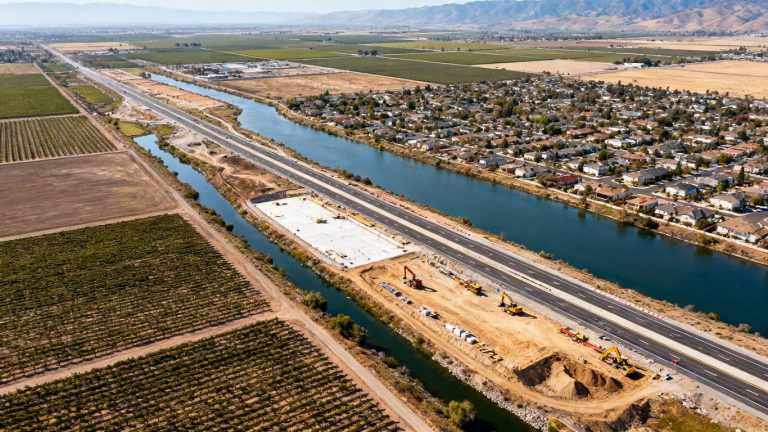
For construction and development work, drone surveying services may be a useful reference point when deciding whether your needs call for mapped site data rather than ordinary photography. Keep the final proposal specific about what the team can and cannot capture.
Confirm licensing, insurance, and legal compliance
Commercial drone work involves more than hiring someone who can operate an aircraft. The company must identify the responsible pilot, understand applicable airspace rules, and plan the operation within legal limits. You should not need to become an aviation specialist, but you should receive clear answers and supporting documentation. Treat vague assurances as a reason to ask more questions before signing.
Are your pilots properly certified for commercial drone operations?
Ask who will serve as the remote pilot in command and request confirmation of the person’s current commercial qualification. In the United States, many small commercial operations fall under FAA Part 107, but the provider should explain which rules apply to your assignment. Ask how the company keeps its pilots current and whether another qualified pilot would take over if staffing changes.
The answer should identify responsibility, not merely point to a company logo or generic statement. A current certificate is a baseline; relevant judgment, planning, and communication still matter.
Do you have the permits and airspace authorizations this project requires?
Provide the exact location early so the operator can review airspace, nearby airports, temporary restrictions, and site-specific limits. Ask who obtains any required authorization and when you will know whether the proposed flight is approved. If the plan depends on a waiver, permission, or special coordination, that should appear in the schedule and contract.
The provider should also explain what happens if authorization is unavailable on the requested date. A compliant alternative may involve changing the time, location, flight profile, or scope rather than quietly proceeding.
What insurance coverage protects the client, crew, and property?
Ask for evidence of appropriate liability coverage and clarify whether it applies to the proposed work, aircraft, crew, and locations. Property owners or general contractors may have their own minimum requirements, so share those before mobilization. Also ask how an incident would be reported and who is responsible for claims coordination.
Insurance does not replace careful operations, but it provides an important layer of protection. The certificate and contract should agree on the named parties, limits, and dates relevant to the project.
How do you manage privacy, data protection, and property access?
Discuss neighboring properties, people who may appear in the footage, restricted areas, confidential operations, and any information that should not be distributed. Confirm who authorizes launch and landing, how consent or access is documented, and whether faces, license plates, or sensitive features need treatment. The provider should also explain who can view the files during production.
Ask how long data is retained, where it is stored, and how it is deleted or transferred when the project ends. These details are especially important when footage includes occupied facilities or commercially sensitive activity.
Review safety and risk management procedures
Good safety planning is visible before the aircraft leaves the ground. The company should assess the site, identify people and obstacles, review conditions, and establish a decision process for changing plans. Ask for a practical explanation rather than a stack of impressive-sounding terms. A thoughtful operator will welcome these questions because they reduce surprises for everyone on site.
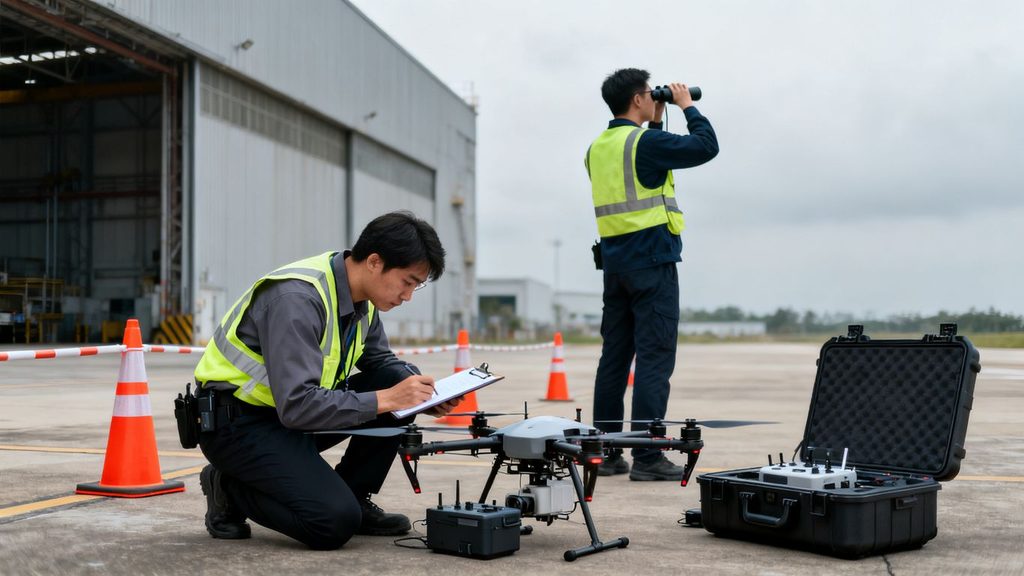
What preflight planning and site assessment do you perform?
Ask what information the team needs before arrival and what they will inspect on site. That may include launch areas, access routes, structures, wires, cranes, vehicles, people, neighboring properties, and communication procedures. You should know who coordinates with the site contact and how the team confirms that conditions match the plan.
For a large or active property, request a written flight plan or site assessment summary when appropriate. It helps your staff prepare the location and gives both sides a shared understanding of the proposed operation.
How do you manage weather, obstacles, crowds, and changing conditions?
Ask which conditions would stop, shorten, or modify the flight. Wind, rain, low visibility, heat, electromagnetic interference, moving equipment, and unexpected people in the operating area may all affect the plan. The operator should explain who has authority to pause the work and how that decision will be communicated.
Do not reward a provider for promising to fly in every condition. Sound risk management means setting limits before pressure builds on the day of capture.
What happens if a flight must be delayed or canceled?
Get the rescheduling process in writing. Ask how much notice the team will provide when possible, whether travel or preparation charges still apply, and how the next available date is chosen. The contract should distinguish a weather or airspace delay from a client cancellation or an inaccessible site.
A clear contingency plan can preserve the larger project schedule. It may include a backup date, a revised capture plan, or partial delivery when only some of the work can be completed safely.
Which safety records, checklists, and emergency procedures do you follow?
Ask what records the crew keeps for the assignment and whether the site contact can review the relevant portions. Useful answers may cover preflight checklists, equipment checks, crew communication, incident reporting, lost-link procedures, and emergency landing decisions. The precise format matters less than consistent use and clear accountability.
A provider should be able to describe how lessons from prior incidents or near misses change future planning. That conversation tells you more than a generic promise to operate safely.
Define the production process and deliverables
A drone project is finished when the agreed files and information are usable, not merely when the aircraft lands. Clarify the people involved, the number of capture days, the editing or processing steps, and the review process. Ask what is included in the base scope and what would trigger a change order. This is where a promising conversation becomes a workable production plan.
Who will plan, operate, edit, and manage the project?
Ask for the names or roles of the people responsible for planning, flight operations, data processing, editing, quality control, and client communication. One person may handle several roles, but the handoffs should still be clear. Confirm who will answer questions during the project and who has authority to approve a revised plan.
If a subcontractor or separate editor will be involved, ask when that will happen and how quality will be maintained. A single point of contact can make a multi-step assignment much easier to manage.
How many flights, locations, and revisions are included?
Define the number of sites, flight sessions, subjects, angles, deliverables, and client review rounds. “Aerial coverage” can mean very different amounts of work depending on the property and the intended output. Ask what happens if weather requires another visit or if an overlooked viewpoint must be captured.
The proposal should separate included work from optional work. That makes a lower initial price easier to evaluate without assuming that missing items will be added at no cost.
What file formats, resolutions, and editing services will you receive?
Specify whether you will receive raw footage, edited video, still images, maps, models, reports, or another output. Confirm resolution, aspect ratio, naming conventions, delivery method, and expected turnaround. If the files must enter a design, construction, marketing, or records system, share those technical requirements before capture.
For mapped work, ask whether processing includes products such as orthomosaics, 3D models, point clouds, or elevation data only when those products are genuinely needed. The deliverables should describe the output precisely rather than rely on broad language such as “all data.”
How are footage storage, backups, ownership, and usage rights handled?
Ask who owns the raw and edited material, what license each party receives, and whether the provider may use the work in a portfolio. Confirm when files are backed up, how they are transferred, and how long the company keeps its copies. If multiple stakeholders need access, document who may share, edit, publish, or archive the material.
Ownership and usage are separate questions. A client may receive the files yet still need written permission for particular commercial, advertising, or third-party uses, so have the contract state the intended rights clearly.
Compare pricing, contracts, and overall value
Price comparisons only work when the proposals describe comparable work. A low number may exclude planning, permissions, processing, editing, travel, revisions, or useful file formats. A higher number may include a more complete service, but it still needs to be justified in terms you can assess. Read the estimate alongside the scope, schedule, rights, and risk provisions.
Is the quote fixed, hourly, or based on project milestones?
Ask how the provider calculated the estimate and what assumptions support it. Project pricing can be easier to budget, while hourly or milestone pricing may make sense when the scope is still developing. Confirm whether the quote includes preflight planning, travel, capture, processing, editing, reporting, and delivery.
A cost guide such as this overview of commercial drone mapping costs can help you identify variables that commonly affect a mapping estimate. Use it as a framework for questions, not as a substitute for a site-specific proposal.
Which expenses could be added to the initial estimate?
Request a written list of possible additional charges. Common categories may include travel, lodging, permits, special equipment, extra flights, rush processing, difficult access, extended editing, and additional revisions. Ask what must be approved before the cost is incurred.
Compare estimates line by line so you do not mistake an incomplete quote for a better deal. A clear allowance or change-order process is often more valuable than an artificially low starting figure.
What payment terms, cancellation policies, and rescheduling fees apply?
Review the deposit, invoice timing, payment milestones, cancellation window, weather policy, and refund or credit terms. Ask what happens if the site is unavailable, the client changes the scope, or a required authorization does not arrive. These terms should be consistent with the operational risks described in the safety plan.
It is also worth confirming when the client receives final files and whether payment is tied to capture, approval, or delivery. That small detail can prevent disagreement at the end of the project.
How should you compare a low-cost provider with a full-service team?
Compare the complete result rather than the flight-hour price. Look at relevant experience, compliance, safety planning, equipment fit, processing, communication, delivery speed, revisions, and usage rights. A full-service provider may be a better fit when your team needs actionable data or finished media rather than a folder of unprocessed clips.
A provider such as 1st Choice Aerials describes aerial photography services for uses including real estate and construction. That is a useful example of why the intended application belongs in the comparison, but you should still judge each proposal by its documented scope and your own requirements. The best value is the option that delivers the needed result with fewest avoidable surprises.
Conclusion
The strongest hiring decision comes from asking specific questions before anyone schedules a flight. Define the outcome, test relevant experience, verify compliance and insurance, examine safety planning, and put deliverables and costs in writing. When proposals are clear enough to compare, you can choose a commercial drone company with confidence instead of relying on a polished portfolio or the lowest quote.
Frequently Asked Questions
What is the first question to ask a commercial drone company?
Ask what the provider needs to know about your project’s purpose, location, subjects, conditions, schedule, and required deliverables. A useful first conversation begins with the business outcome rather than equipment.
How can I verify a drone operator’s qualifications?
Ask who will be the remote pilot in command and request evidence of the required commercial certification. You should also ask about relevant experience, current training, airspace planning, and insurance.
Why does the exact project location matter?
The location affects airspace, access, obstacles, people, privacy, weather exposure, and the safest flight plan. Providing the address early allows the operator to identify constraints before quoting the work.
Should I ask for raw footage?
Ask for raw footage only if you have a reason to store, edit, or analyze it. Confirm whether raw files, edited media, processed data, or reports are included, along with the formats and usage rights.
What insurance should a commercial drone company carry?
Ask for appropriate liability coverage and confirm that it applies to the proposed operation, property, crew, and client requirements. The certificate and contract should identify relevant limits and dates.
How do weather delays affect a drone project?
Weather may require a pause, revised flight plan, or new date. Ask about the provider’s decision rules, notification process, backup dates, and any charges that apply when conditions make a flight unsafe.
Is the cheapest quote usually the best choice?
Not necessarily. Compare the complete scope, safety planning, compliance, experience, processing, delivery, revisions, rights, and possible extra charges before deciding which proposal offers the best value.