Drone roof inspection cost in the Bay Area: 2026 pricing
Key Takeaways
A drone roof inspection can be a practical way to document roof condition without putting workers on every surface. The final price depends less on the drone itself than on the roof, the requested deliverables, and the conditions around the property.
- Bay Area residential drone inspections commonly fall in the low hundreds, while larger commercial projects can reach several thousand dollars.
- Roof size, height, pitch, access, travel, and reporting detail all influence the quote.
- A basic inspection may include aerial photos, video, condition notes, and a written report.
- Thermal imaging and other specialized deliverables usually add cost.
- The best quote explains exactly what is included, excluded, and delivered afterward.
What drone roof inspections cost in the Bay Area
The phrase “drone roof inspection cost in the bay area” does not point to one fixed rate. A small, accessible home and a multi-building commercial property require very different amounts of flight planning, capture time, review, and reporting. In 2026, many residential jobs are likely to be priced in the low hundreds, while complex commercial work may run from several hundred to several thousand dollars. Treat those figures as budgeting guidance rather than a guaranteed rate card.
Typical price ranges for residential inspections
For a straightforward single-family home, a reasonable planning range is often about $150 to $400 for visual aerial documentation and a basic report. A larger home, steep roof, difficult site, or more detailed report can push the price higher. Some providers may quote a minimum fee even when the actual roof area is modest, because travel, setup, insurance, and post-flight review still take time.
The most useful question is not simply whether a quote is cheap. Ask whether it includes usable images, notes about observed conditions, and a report that can be shared with a buyer, seller, insurer, or roofing professional.
Commercial and multifamily inspection pricing
Commercial and multifamily projects are commonly scoped as custom jobs. A small commercial building might begin around $500 to $1,000, while larger roofs, multiple buildings, and more detailed documentation can move into the $1,500 to $5,000-plus range. Thermal imaging, roof-area measurements, annotated findings, and accelerated turnaround can all add to the total.
A provider’s published commercial drone inspection services may cover several asset types, so the quote should identify the roof areas and deliverables for your specific project. That prevents a broad service description from being mistaken for an all-inclusive inspection package.
Minimum service fees and travel charges
Many operators set a minimum project charge. It helps cover pilot preparation, equipment checks, flight planning, data transfer, image review, and the time required to produce a professional deliverable. Travel may be included within a local service area or listed separately, especially when the property is outside the provider’s usual route.
Ask whether the quote includes mobilization, return visits, parking, difficult access, and rescheduling after poor weather. These details matter more than a small difference in the headline price.
When roof size changes the final price
Roof size affects flight time and the volume of imagery that must be reviewed, but it is not the only measurement that matters. A compact roof split across several elevations may take more effort than a broad, unobstructed warehouse roof. The number of buildings, roof sections, and requested outputs often matters as much as square footage.
For a preliminary comparison, give each provider the same address, building count, approximate roof area, and requested report format. Consistent project details make competing quotes far easier to evaluate.
What affects drone roof inspection pricing
A drone inspection quote is usually a calculation of field effort plus analysis and reporting. The aircraft may complete the capture quickly, but preparation and review still require skilled work. Bay Area properties also vary sharply in density, terrain, weather exposure, and airspace conditions. Those differences can shift a simple visual survey into a more involved project.
Roof size, height, and pitch
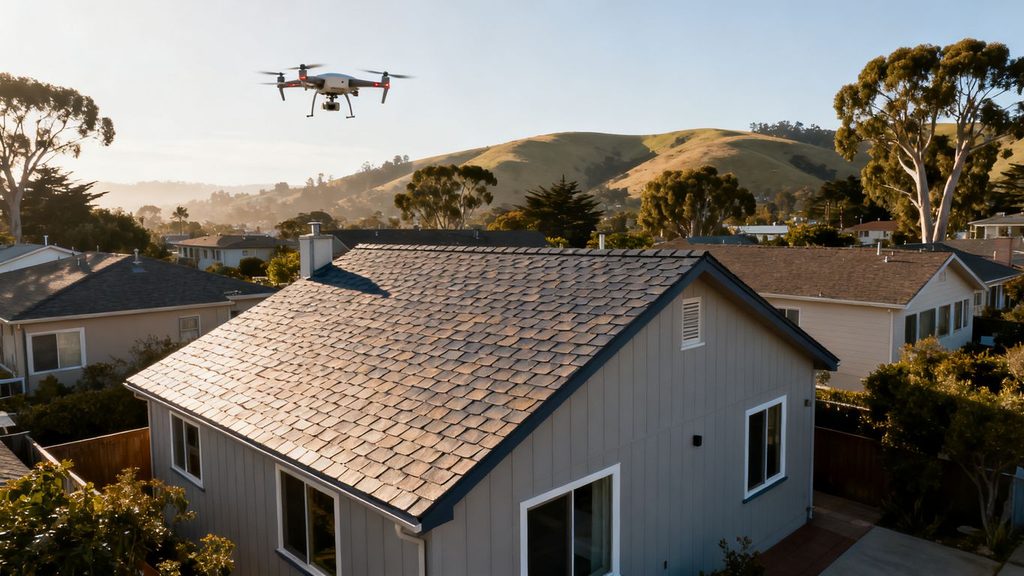
A large roof needs more flight lines, more photographs, and more time to check for gaps in coverage. Height can affect launch and recovery planning, while a steep or irregular roof may require more careful image angles. Tall buildings and roofs surrounded by trees, wires, or neighboring structures can add another layer of operational complexity.
The quote should state whether pricing is based on roof area, building count, inspection time, or a fixed project scope. That distinction helps explain why two properties with similar square footage may receive different prices.
Roof access and site complexity
Drone work still depends on practical access to a safe launch area. Gates, fences, active work zones, nearby roads, overhead wires, trees, and crowded neighboring properties may require additional planning. A pilot may also need a property contact present to coordinate entry or keep people clear during the flight.
For larger sites, clarify which buildings and elevations are included. A quote that covers one main roof may not automatically include detached garages, mechanical enclosures, covered walkways, or adjacent structures.
Inspection scope and reporting requirements
A visual pass, a detailed condition assessment, and a report prepared for a claim are different services. The more specific the requested output, the more time is needed to organize imagery, review findings, annotate locations, and explain limitations. If a property manager needs files for a maintenance record, that may call for a different deliverable than a homeowner seeking a quick overview.
Define the deliverable before comparing prices. Useful scope questions include:
- Is the inspection visual only, or does it include thermal imaging?
- Are all roof sections and related structures included?
- Will the client receive original photos, video, annotations, or measurements?
- How quickly will the report and files be delivered?
Once those answers are written into the quote, a lower price is less likely to conceal a narrower service. It also gives the inspector a fair basis for estimating the work.
Weather, permits, and airspace restrictions
Wind, rain, fog, and poor visibility can prevent a safe flight or reduce the usefulness of the imagery. Urban properties may also require more careful airspace review and coordination around people, roads, and neighboring buildings. If a job must be rescheduled, ask in advance whether the provider charges another mobilization fee.
A qualified operator should explain any relevant operating limitations before the appointment. The goal is not merely to get the drone airborne, but to collect consistent, reviewable data under suitable conditions.
What a drone roof inspection includes
The contents of a drone inspection vary by provider and package. A basic service may focus on visual documentation, while a more involved assignment adds measurements, annotations, thermal data, or a structured report. Before booking, ask for a sample deliverable or a written list of included files. That is the clearest way to connect the price to something tangible.
Aerial photos and high-resolution video
Most visual drone inspections produce overhead and angled images of the roof surface. High-resolution photos can document flashing, penetrations, ridges, valleys, drainage areas, visible debris, and apparent surface damage from a safer distance. Video may provide a useful continuous record, although still images are often easier to reference in a report.
Ask how the files will be delivered and whether they are original-resolution images or compressed previews. File organization also matters when the inspection will be used for future maintenance comparisons.
Roof condition documentation
A report may organize visible observations by roof section and describe conditions such as displaced materials, ponding indicators, damaged edges, exposed components, or debris. Aerial imagery cannot reveal every concealed defect, so a good report should distinguish visible evidence from assumptions and recommend follow-up where appropriate.
For property owners, the lasting value is often the documented baseline. A dated set of images can help compare changes after a storm or during a later maintenance cycle.
Measurements and inspection reports
Some projects include approximate roof measurements, marked-up imagery, or a more formal written report. Measurement accuracy depends on the equipment, capture plan, processing method, and requested level of detail. If the figures will be used for purchasing materials or engineering decisions, confirm whether additional verification is required.
A useful report should identify the property, date, inspected areas, visible findings, limitations, and supporting images. It should be readable by someone who was not present during the flight.
Optional thermal or infrared imaging
Thermal imaging is usually an add-on rather than part of the least expensive visual package. It can show temperature differences that warrant further investigation, but interpretation depends on weather, roof construction, timing, surface conditions, and the sensor used. A thermal image is not automatically proof of moisture or damage.
If thermal work is proposed, ask whether the price includes the thermal data, interpretation, marked locations, and a written explanation. A page about drone thermography illustrates why specialized thermal projects require their own planning rather than being treated as a casual extra.
Drone inspection versus traditional roof inspection
A drone inspection and a hands-on roof inspection answer overlapping but not identical questions. A drone can document broad areas quickly and reduce the need for ladders or roof travel. A physical inspection can test materials and conditions that cannot be confirmed from the air. The right choice depends on the purpose of the inspection and the uncertainty that remains afterward.
Differences in labor, access, and safety
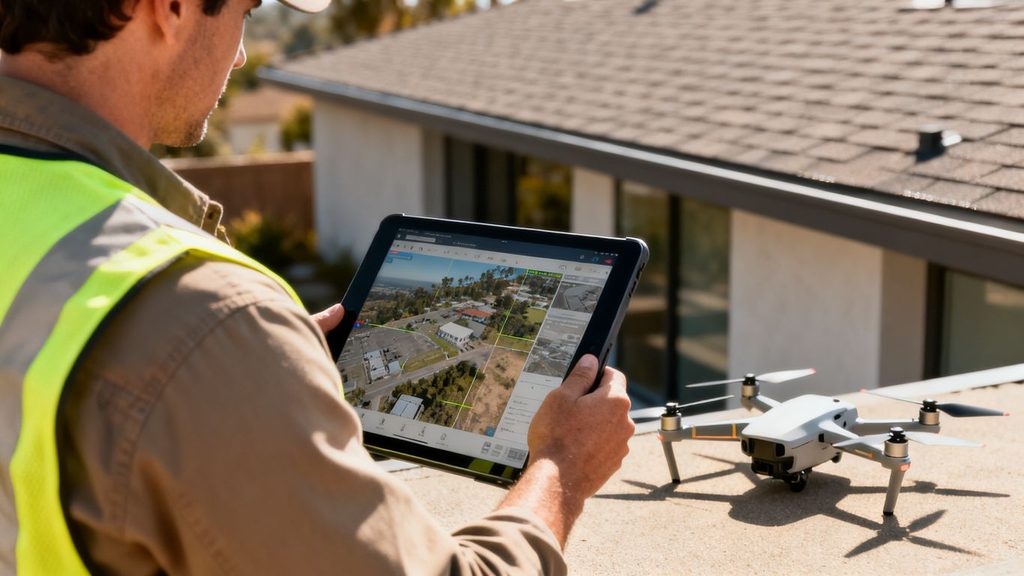
Drone capture can reduce setup time and limit exposure to steep, fragile, or otherwise hazardous surfaces. It is particularly useful when a roof is difficult to reach or when a property contains many sections that would take substantial time to view from ladders. The operator still needs a safe launch area and a compliant flight plan.
Traditional inspections involve more physical access and may require ladders, roof walking, or additional equipment. They can take longer, but they also allow direct contact with roof materials and components.
When a hands-on inspection is still necessary
Aerial imagery generally cannot confirm the condition beneath a membrane, test a soft spot, probe wood, verify a suspected leak path, or assess every concealed connection. A roof professional may need to access the surface when the purpose is repair planning, a warranty decision, structural assessment, or confirmation of a suspected defect.
If imagery shows a concern, the sensible next step may be a targeted physical inspection rather than an assumption based on pixels alone. Drone work can narrow the area that needs attention without replacing every other method.
Combining drone imagery with physical testing
A hybrid inspection can be efficient when a property is large or difficult to access. The drone first documents the overall condition and identifies areas that deserve closer review. A qualified professional can then focus physical testing on those locations instead of spending equal time across the entire roof.
That approach works best when both providers agree on the scope and share the imagery or findings. It also creates a clearer record of what was observed from above and what was confirmed on site.
Comparing total value rather than upfront price
The lowest quote may not be the least expensive choice if it produces incomplete coverage or a report that cannot support the decision you need to make. Compare the time saved, the safety exposure avoided, the usefulness of the files, and the cost of any follow-up inspection. A more detailed package can be worthwhile when it prevents repeated site visits.
Guidance on drone versus manual inspections is useful when weighing documentation, safety, regulations, and the cases where a hybrid approach makes more sense. The comparison should remain tied to your property and decision, not to a generic promise of savings.
Bay Area pricing differences by location and property type
There is no single Bay Area market for roof inspection pricing. Dense urban blocks, suburban homes, industrial campuses, hillsides, and coastal properties present different operating conditions. Local labor and travel patterns may also affect quotes. A provider serving Alameda, Contra Costa, Marin, San Francisco, San Mateo, and Santa Clara counties, such as Symplify Roofing, may still price each assignment according to the property itself.
San Francisco and dense urban properties
San Francisco roofs may involve tight setbacks, neighboring structures, rooftop equipment, overhead obstructions, and limited launch locations. Those conditions can increase planning time even when the roof is not especially large. Properties with public access nearby may also require closer attention to people and vehicle movement.
Ask whether the quote covers all visible roof elevations and how the operator will handle restricted or crowded surroundings. A site visit or detailed pre-flight review may be worthwhile for complex urban properties.
East Bay homes and commercial buildings
East Bay pricing can vary widely between a detached suburban home, a hillside residence, and a warehouse or apartment complex. Flat commercial roofs may be broad and efficient to capture, while older or multi-level properties can require more passes and more careful review. Travel between separate buildings should be clearly addressed.
For owners comparing services, Symplify Roofing describes advanced drone roof inspections in the Bay Area, but the final scope still needs to be confirmed for the particular address. General regional coverage does not by itself define the number of structures or report detail included.
South Bay and Silicon Valley facilities
South Bay facilities may include large campuses, manufacturing buildings, office complexes, and mixed roof systems. A quote may account for several buildings, security procedures, active loading areas, or the need to coordinate with a facilities team. Data organization can become as significant as flight time when many roofs are involved.
Request a building-by-building scope and a file naming or report structure that staff can use later. That small administrative detail can make a large inspection much more useful.
Coastal, hillside, and hard-to-access roofs
Coastal moisture, wind exposure, steep terrain, and narrow access can affect both scheduling and capture conditions. Hillside homes may have a safe launch area on one side but limited visibility on another. Coastal fog or wind can also create a need for flexible scheduling.
A good quote should explain the rescheduling policy and identify any extra work caused by difficult access. If the operator cannot safely capture a section, the final report should say so rather than implying complete coverage.
When a drone roof inspection is worth the cost
A drone inspection is most valuable when the information will influence a meaningful property decision. It can create a visual record quickly, reduce unnecessary roof access, and help direct follow-up work. It is less useful when the issue requires direct testing that aerial imagery cannot provide. Consider the decision first, then select the least expensive method that can answer it reliably.
Pre-purchase and real estate transactions
For a buyer or seller, aerial documentation can provide a broader view of roof condition during due diligence. It may reveal visible wear, debris, damaged components, or areas that deserve a closer look before closing. The inspection should not be treated as a guarantee that concealed problems do not exist.
A written report and dated images are especially helpful when several parties need to review the same information. They can also clarify whether a follow-up inspection is needed before negotiations proceed.
Storm, leak, and insurance documentation
After a storm, drone imagery can document visible changes without immediately sending someone onto a potentially unsafe roof. Before-and-after images can help organize a claim file, although insurers may require specific documentation or an in-person assessment. A drone report should distinguish observed damage from damage that cannot be confirmed visually.
For a leak, aerial images may help identify damaged flashing, debris, roof penetrations, or drainage concerns. They do not establish the full path water traveled inside the building, so interior evidence and physical follow-up may still be necessary.
Preventive maintenance and roof life planning
Periodic aerial documentation can establish a baseline for a roof that is difficult or costly to walk. Comparing images over time may help property owners notice changes, prioritize repairs, and plan budgets before a small issue becomes urgent. The value grows when the same roof sections are documented consistently.
Set a repeatable scope for future inspections. Similar angles, file organization, and reporting categories make trend comparisons more meaningful than a series of unrelated snapshots.
Large or dangerous commercial roofs
Large commercial roofs are strong candidates when access is hazardous, the property has multiple structures, or operations make lengthy inspection work disruptive. Aerial capture can survey broad areas while limiting the time workers spend near edges, equipment, and other hazards. For context, providers offering commercial roof inspection services commonly discuss high-resolution imagery and thermal imaging as separate parts of a commercial scope.
The business case should include the cost of follow-up work and the consequences of missed conditions. A well-defined inspection may be worthwhile even when the initial quote is higher than a basic visual pass.
How to compare Bay Area drone inspection quotes
Comparing quotes requires more than lining up dollar amounts. Ask each provider to describe the same property, inspection purpose, capture method, report, and turnaround time. This makes gaps visible and reduces the chance that one quote is inexpensive only because it excludes important work. It also gives you a better basis for discussing revisions before the flight.
Questions to ask about pilot qualifications
Ask who will operate the aircraft, how long the provider has handled similar roofs, and whether the pilot has experience with your property type. For a complex commercial site, experience with multi-building capture and organized reporting may matter more than a generic promise of speed.
You should also ask how the operator handles pre-flight planning, people on the ground, obstructions, and weather changes. Clear answers suggest a more deliberate process.
Verifying insurance, licensing, and compliance
Confirm that the provider carries appropriate insurance and operates under the rules that apply to the assignment. Ask for documentation rather than relying on a badge or informal assurance. The provider should also explain any airspace, privacy, property-access, or site-safety constraints that affect the job.
Compliance does not guarantee a useful report, but missing documentation creates avoidable risk. It is a basic part of selecting an operator for a property record, claim, or commercial maintenance program.
Reviewing sample reports and deliverables
A sample report shows whether the provider communicates findings clearly. Look for labeled imagery, a defined inspection date, coverage limitations, organized file delivery, and language that separates visible conditions from confirmed defects. If you need measurements or thermal information, make sure the sample reflects that type of output rather than only attractive aerial photographs.
Ask whether you receive the original images, a PDF report, video, annotations, measurements, or processed data. The answer should be written into the quote.
Identifying hidden fees and exclusions
Before approving the work, ask about travel, minimum charges, rescheduling, additional buildings, thermal add-ons, rush delivery, return visits, and taxes. Also ask what happens if weather, airspace, or site conditions prevent complete coverage. These are ordinary project details, not signs that a provider is being difficult.
A useful final check is to request a one-page scope with the property address, included roof areas, deliverables, timing, price, and exclusions. Once both sides agree to that document, the quote becomes much easier to trust.
Conclusion
A Bay Area drone roof inspection can cost a few hundred dollars for a straightforward home and several thousand for a complex commercial assignment, but the roof and the deliverable matter more than the aircraft. Compare scope, reporting, qualifications, compliance, and follow-up needs alongside price. That approach turns a vague estimate into a practical decision about the information your property actually requires.
Frequently Asked Questions
How much does a drone roof inspection cost in the Bay Area?
Many residential inspections fall in the low hundreds, while commercial and multifamily projects can range from several hundred to several thousand dollars. Roof size, complexity, travel, reporting, and optional imaging determine the final quote.
Is a drone roof inspection cheaper than a traditional inspection?
It can be, especially when the roof is large, hazardous, or difficult to access. A hands-on inspection may still be necessary for testing materials or confirming concealed conditions, so the methods are not always interchangeable.
What does a basic drone roof inspection include?
A basic package commonly includes aerial photographs and sometimes video, along with visual observations and a written or digital report. Exact deliverables vary, so they should be listed in the quote.
Does thermal imaging cost extra?
Usually, yes. Thermal imaging requires specialized equipment, suitable conditions, additional capture planning, and interpretation. Ask whether the quote includes the thermal files, analysis, and marked findings.
Can a drone inspection find a roof leak?
It may document visible damage or conditions associated with a leak, but aerial imagery alone cannot always trace water movement or confirm concealed moisture. Interior evidence and physical testing may be needed.
Do I need a roof inspection before buying a Bay Area property?
An inspection can help identify visible concerns and guide due diligence, particularly for older, large, steep, or difficult-to-access roofs. It should be part of a broader evaluation rather than the only assessment.
What should I ask before accepting a quote?
Ask what areas are included, what files and reports you receive, whether thermal imaging is included, how weather affects scheduling, what qualifications and insurance the operator has, and which fees or follow-up visits are excluded.