In-house drone programs vs. drone service provider costs
Key Takeaways
The choice between building an internal capability and hiring specialists is a financial decision, but cost is only part of the picture.
- An in-house program requires more than aircraft; training, software, insurance, compliance, and staff time all count.
- Provider pricing can be hourly, daily, project-based, or recurring, depending on the work and deliverables.
- Break-even depends mainly on flight frequency, mission complexity, utilization, and the value of timely data.
- Construction, inspections, mapping, agriculture, and emergency work have different equipment and expertise requirements.
- A hybrid model can preserve internal responsiveness while outsourcing specialized or infrequent missions.
What drives the cost of an in-house drone program
An internal drone program gives a company direct control over scheduling, equipment, workflows, and data handling. It also turns a series of occasional purchases into an operating function that needs ongoing management. The right comparison is therefore not simply the price of a drone against a provider’s invoice. It is the full cost of producing dependable, usable aerial information.
The in-house versus outsourced drone decision is easiest to assess when the company defines its required outputs first. A simple progress image, a measured map, and a thermal inspection may all involve a flight, but they do not require the same equipment, skills, or review process.
Drone hardware, sensors, and accessories
The aircraft is the visible starting point, yet it may not be the largest hardware expense. A basic visual camera may suit routine documentation, while mapping, thermal, inspection, or surveying work can call for different sensors, positioning equipment, batteries, charging systems, cases, controllers, and field accessories. Redundancy also matters when a missed flight would delay a project or leave an asset undocumented.
Buying specialized equipment before demand is proven creates a utilization problem. A company may own capable hardware that spends most of the year stored, while still paying for upkeep and periodic replacement. Hardware selection should follow the recurring mission profile rather than the most impressive specification sheet.
Pilot training and certification requirements
An employee who already understands a site is not automatically ready to operate a commercial drone program. The organization must account for initial training, testing, recurrent learning, flight planning, weather judgment, airspace procedures, recordkeeping, and the time required to develop safe operating habits. The professional drone services guide also illustrates why regulations, mission planning, data acquisition, and distribution can form a substantial learning curve when a program is built internally.
Training costs include more than course fees. Staff members spend paid hours learning and practicing, and supervisors may need to review procedures before flights are approved. If only one person can operate the system, vacation, illness, or turnover can quickly reduce the program’s practical availability.
Software, data processing, and storage
A flight produces files, not necessarily a business answer. Internal teams may need planning software, photogrammetry or inspection tools, secure storage, processing capacity, user permissions, backups, and a method for delivering results to people who do not operate drones. Those costs may be subscription-based, usage-based, or embedded in existing systems, so they are easy to overlook during the purchase stage.
The required output should determine the software budget. Orthomosaics, 3D models, measurements, thermal imagery, and organized inspection reports can involve different processing steps and review skills. Data retention also has a cost, particularly when projects generate large image sets that must remain accessible for claims, audits, maintenance planning, or construction records.
Insurance, maintenance, and equipment replacement
Insurance, inspections, firmware updates, battery replacement, repairs, calibration, and secure transport belong in the annual operating budget. Batteries have finite useful lives, and a damaged aircraft may be unavailable while a repair is arranged. Weather can add another form of cost by causing rescheduling, overtime, or a second mobilization.
A sensible budget includes a reserve rather than assuming every flight proceeds normally. It should also assign responsibility for preflight checks, maintenance records, incident reporting, and equipment decisions. Reliable availability has a price, even when no flight is taking place.
How drone service provider pricing works
A drone service provider generally prices a mission around the work required to plan, fly, process, review, and deliver the result. The invoice may look simpler than an internal budget because many costs are bundled into the fee. That does not make the service automatically cheaper; it makes the cost easier to tie to a specific business need.
A useful quote describes both the fieldwork and the deliverable. For broader context on equipment, labor, insurance, licensing, and pricing structures, a company can review this commercial drone mapping cost guide before requesting proposals.
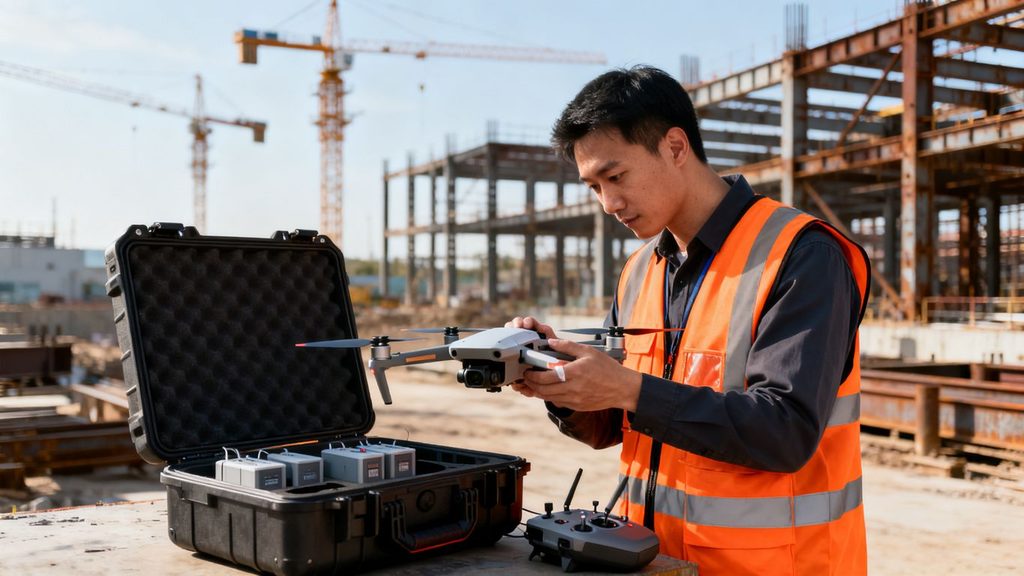
The best comparison is between equivalent outputs, not between an hourly rate and the purchase price of a drone.
Hourly, daily, project-based, and retainer pricing
Hourly pricing can fit a short capture session with a clearly defined site and limited processing. Daily pricing may be more practical when weather, access, or site size makes the schedule uncertain. Project-based pricing is often easier for a defined map, inspection package, or progress report because the buyer can compare the total deliverable rather than tracking every minute.
Retainers or recurring arrangements may suit organizations with predictable monthly demand. They can simplify scheduling and budgeting, although the agreement should state what happens to unused capacity, weather delays, extra visits, and changes in scope. A low headline rate can be less valuable if it excludes the work needed to turn imagery into a usable result.
Factors that increase or reduce service quotes
Quotes typically rise with site size, travel distance, difficult access, complex airspace, short notice, night work, specialized sensors, additional crew, or demanding accuracy requirements. Processing and reporting can also change the price substantially. A straightforward set of photographs is not equivalent to a measured map or a carefully reviewed inspection package.
Quotes may be lower when the site is close to the provider, the mission is repeatable, the area is accessible, and the deliverable is standardized. Clear boundaries, preferred dates, example outputs, and an identified decision-maker help a provider estimate the work without adding a large uncertainty margin.
What is typically included in a provider’s fee
A proposal may include mission planning, pilot labor, aircraft and sensor use, routine travel within a stated area, flight execution, basic processing, quality review, and delivery of agreed files. The exact contents vary, so buyers should ask whether the fee covers revisions, raw files, measurements, annotations, reports, and data retention.
The provider’s fee can also include overhead that an internal team would otherwise carry separately. That may include equipment maintenance, insurance, training, compliance administration, software subscriptions, and backup capacity. The value comes from receiving a defined result without building every supporting function inside the company.
Additional charges for travel, permits, and specialized deliverables
Travel beyond a stated service radius, special permits, additional mobilizations, expedited delivery, difficult site access, and specialized reporting may be billed separately. So may ground control, survey-grade requirements, thermal analysis, extensive editing, or requests for multiple file formats. None of these charges is inherently unreasonable; they become a problem when the scope is vague.
Before approving a quote, ask for a written list of assumptions. Confirm the site boundary, number of visits, weather policy, flight restrictions, processing level, delivery schedule, revision allowance, and ownership or licensing terms. That turns a seemingly cheap quote into a comparable business proposal.
Comparing startup costs and ongoing operating expenses
The financial contrast becomes clearer when startup expenses and recurring expenses are separated. An internal program usually requires early spending before the organization has proven its flight volume. Outsourcing converts much of that investment into variable spending tied to actual missions.
Neither structure is automatically superior. A company with steady demand may eventually benefit from ownership, while a company with irregular projects may pay less by purchasing only completed work. The comparison should use the same period, workload, quality standard, and delivery expectations.
One-time expenses for building an internal program
Initial internal costs can include aircraft, sensors, batteries, chargers, cases, safety equipment, software setup, training, legal review, operating procedures, and data infrastructure. Some organizations also need a dedicated workspace, secure devices, or integration work before results can move into existing project systems.
These expenses should be assigned to the missions expected to use them. If an aircraft supports only a handful of flights during its first year, its effective cost per mission will be high. If it supports frequent work for several years, the initial investment may become more reasonable, provided it remains suitable and available.
Recurring labor and compliance costs
Recurring costs include pilot wages, preparation and travel time, scheduling, maintenance, insurance, software, storage, training refreshers, records, and management oversight. A field employee may spend more time planning and processing than actually flying. That time still belongs in the cost model.
Compliance work is another recurring responsibility. Someone must maintain procedures, confirm qualifications, review weather and airspace conditions, preserve records, and respond to incidents or equipment changes. Treating this work as free will make the internal option appear artificially inexpensive.
Variable costs when outsourcing missions
Outsourced costs usually follow the number, size, and complexity of missions. That makes budgeting easier when demand fluctuates, since the company is not carrying a full flight operation during quiet periods. The tradeoff is that each request may have a mobilization charge, a minimum fee, or a schedule that depends on provider availability.
For a practical comparison, separate the provider’s variable cost into field capture, processing, travel, special equipment, and revisions. This structure helps reveal whether a recurring project is better suited to a standing agreement or individual work orders.
How equipment utilization affects total cost
Utilization is the hinge between ownership and outsourcing. An owned aircraft that flies weekly spreads fixed costs across many missions; one that flies quarterly does not. Utilization should be measured in completed, useful missions, not merely in the number of days equipment is available.
The following framework keeps the comparison grounded in operating reality:
| Cost question | In-house program | Service provider |
| Equipment | Purchased and maintained by the company | Included or allocated in the quote |
| Labor | Paid whether or not flights occur | Usually tied to contracted work |
| Compliance | Internal responsibility | Reflected in provider overhead and scope |
| Data processing | Software, staff, and storage are internal | Included only to the agreed deliverable |
| Capacity | Available when trained staff and equipment are free | Dependent on scheduling and provider capacity |
The table shows why a low purchase price does not settle the decision. Ownership offers control and potential savings at high utilization, while outsourcing limits fixed exposure when missions are occasional or specialized.
Calculating the break-even point
A break-even analysis asks how much recurring work is needed before owning and operating equipment costs less than buying equivalent services. It is not a single industry-wide number. The answer changes with mission type, quality requirements, staff rates, equipment life, and the price of an outsourced deliverable.
Use realistic assumptions and test several workload levels. A conservative case, expected case, and high-volume case will show whether ownership is broadly attractive or only works under unusually heavy use.
Estimating annual flight volume
Start with the number of sites, assets, projects, or scheduled visits that genuinely require aerial data each year. Then estimate the number of flights or field days per assignment. A monthly construction visit, for example, creates a different workload from occasional roof inspections spread across a large territory.
Separate predictable demand from one-off requests. Predictable work is easier to staff and schedule internally, while unusual work may still require outside expertise even after an internal program is established. The annual volume should also reflect seasonal access and the possibility that some planned missions will be postponed.
Assigning internal labor and management costs
Calculate the loaded cost of everyone involved, including the pilot, project manager, data processor, reviewer, and administrator. Add preparation, travel, site coordination, file management, and reporting time. If employees perform drone tasks alongside other work, use a reasonable allocation rather than assigning only the minutes spent in the air.
A useful internal rate includes benefits and payroll costs, not just base wages. It should also reflect management attention and the cost of pulling skilled employees away from their primary responsibilities. These adjustments often narrow the apparent gap between internal and outsourced work.
Comparing three-year ownership and outsourcing costs
A three-year view is long enough to capture training, software renewals, repairs, equipment replacement, and changes in demand. Add the initial purchase and setup costs to three years of labor, compliance, insurance, maintenance, storage, and processing. Then compare that total with three years of provider quotes for the same missions and deliverables.
A simple model can use this structure:
- Internal total equals startup investment plus three years of fixed and variable operating costs.
- Outsourced total equals the expected number of missions multiplied by the comparable provider cost.
- Break-even volume equals the internal fixed-cost difference divided by the per-mission savings from ownership.
- Sensitivity testing shows how the result changes when volume, labor, travel, or equipment life changes.
The calculation is only useful if both sides produce comparable outputs. A basic image set should not be used as the outsourced benchmark for an internal workflow that includes mapping, measurements, or a reviewed report.
Accounting for downtime and unexpected expenses
Downtime reduces the effective capacity of an internal program. Aircraft repairs, unavailable pilots, poor weather, restricted airspace, battery failures, and software problems can all delay a mission. A provider may face similar constraints, but the buyer may have access to a broader equipment pool or alternate personnel.
Include a contingency allowance in both models. For internal ownership, estimate replacement rentals, urgent repairs, rescheduled labor, and lost project time. For outsourcing, consider rush fees, additional mobilizations, change orders, and the cost of waiting for an available crew.

The break-even result should be treated as a range rather than a promise. If a small change in utilization reverses the conclusion, flexibility may be worth more than a narrow paper saving.
Cost differences by drone use case
Drone economics vary sharply by use case because the required data, accuracy, sensor, and interpretation all change. A repeatable visual record can be relatively simple, while a defensible inspection or measured model may require specialized equipment and review.
The construction drone workflow is a useful example of how surveying, inspections, progress monitoring, and site communication can sit within one broader operation. That range of applications can improve utilization, but it can also increase the skill and software requirements of an internal team.
Construction progress monitoring
Construction teams often value consistent site records, earthwork information, progress views, and documentation for coordination. The cost depends on visit frequency, site size, desired measurements, processing, and whether stakeholders need a simple image set or a repeatable map and model.
An internal program may work well for a large portfolio with predictable visits and staff already close to the sites. Outsourcing can be more practical for a contractor with scattered projects, irregular schedules, or a need for specialized mapping. A construction progress monitoring service can also help buyers define the outputs before comparing operating models.
Roof, infrastructure, and asset inspections
Inspection work may require close imagery, repeatable angles, thermal capture, or structured findings that maintenance teams can act on. Access, safety planning, asset height, and the consequences of a missed defect affect the value of the service. A cheaper flight is not necessarily cheaper if the images cannot support a decision.
For commercial properties, buyers may compare drone work with manual access methods, lifts, or scaffolding. The drone inspection comparison provides a useful way to think about safety, coverage, data quality, and regulatory considerations alongside direct price.
Mapping, surveying, and 3D modeling
Mapping and modeling usually demand more preparation and processing than ordinary photography. Ground control, positioning requirements, site conditions, accuracy expectations, file formats, and review standards can all affect cost. The deliverable may include a map, model, measurement, volume calculation, or a set of files prepared for another workflow.
This is an area where a provider’s experience may carry significant value, especially when internal staff would perform mapping only occasionally. If demand is frequent and technically consistent, however, the same workflow may justify investment in equipment, software, and training.
Agriculture, security, and emergency response
Agricultural work may involve repeated coverage across large areas, while security and emergency response place greater emphasis on timing, access, communications, and operational judgment. Specialized sensors, night operations, response windows, and data sensitivity can change the cost more than the flight duration itself.
An internal team may offer faster dispatch when personnel and equipment are already positioned. A provider may offer broader geographic reach, specialized sensors, or additional capacity during an unusual event. The right model depends on whether readiness is needed every day or only during occasional high-consequence situations.
Hidden financial and operational considerations
The quoted price is only one part of exposure. An internal program concentrates responsibility inside the company, while outsourcing shifts some operational burden to a contract but does not remove the buyer’s need to define, review, and use the data responsibly.
These considerations are harder to place in a spreadsheet, yet they can determine whether a program creates value. A missed deadline, weak dataset, or poorly managed incident may cost more than several ordinary missions.
Regulatory risk and compliance management
Commercial flights require appropriate procedures, qualified personnel, records, and attention to applicable operating restrictions. Internal teams must maintain that knowledge as rules, sites, equipment, and personnel change. The work is continuous rather than a one-time certification purchase.
A provider can take on much of the operational compliance work, but the buyer should still verify qualifications, insurance, permissions, and responsibilities in the agreement. Clear accountability prevents a contract from creating false confidence.
Data quality, cybersecurity, and ownership
Data quality depends on planning, weather, sensor condition, flight execution, processing, and review. A large volume of images does not guarantee a useful answer. Buyers should specify resolution, accuracy, file formats, naming, annotations, reports, retention, and who owns or may reuse the outputs.
Cybersecurity matters when imagery reveals facilities, construction plans, infrastructure, or sensitive operations. Internal systems may provide more control but require access management and backup discipline. Providers should explain how files are transferred, stored, protected, and deleted when the engagement ends.
Scheduling flexibility and response times
Internal ownership can appear highly flexible, but that advantage depends on available pilots, serviceable equipment, safe conditions, and competing work. A provider may be less immediate for a routine request yet faster for a technically demanding mission because the necessary capability already exists.
Measure response time against the business need. A weekly progress visit, a planned inspection, and an emergency assessment should not use the same scheduling assumption. Service-level terms, backup crews, cancellation policies, and escalation contacts are worth discussing before a time-sensitive need arises.
Liability, safety, and reputational exposure
A company operating its own aircraft carries responsibility for safe procedures, employee actions, equipment condition, and incident response. Outsourcing does not eliminate all exposure, since the buyer still controls site access, confidential information, and sometimes the operational purpose of the flight.
Contracts should address insurance limits, indemnity, reporting, data handling, site hazards, and responsibility for damage or delay. A provider with documented experience and suitable coverage may reduce practical exposure, but no contract replaces careful site planning.
How to choose the most cost-effective model
The most cost-effective model is the one that reliably produces the needed information at an acceptable total cost and risk. That may be internal ownership, outside support, or a deliberate combination. The answer should follow demand, not a preference for owning technology or avoiding procurement.
Start with a representative sample of missions. Price the complete internal workflow and request provider proposals with matching deliverables. Then compare not only totals, but also speed, quality, availability, compliance burden, and the consequences of failure.
When an in-house program makes financial sense
An internal program is more likely to make sense when flight demand is frequent, geographically concentrated, and predictable. It also helps when trained staff are already available, equipment can support several use cases, and fast access to data has operational value. High utilization is the central financial argument for ownership.
The company should still have enough volume to justify backup capacity and ongoing management. If the program depends on one employee or one aircraft, its apparent savings may disappear during absence, repair, or a change in project workload.
When a drone service provider offers better value
Outsourcing often fits occasional, geographically dispersed, technically specialized, or high-consequence missions. It avoids the need to purchase equipment for rare work and can provide access to experienced pilots, specialized sensors, processing skills, and established procedures.
For example, 1st Choice Aerials documents services including drone inspections, mapping, thermography, and construction data solutions, along with FAA-certified and insured personnel. Those documented capabilities may be relevant when a buyer needs several types of commercial aerial data without building each capability internally.
When a hybrid drone operating model works best
A hybrid model can reserve routine, time-sensitive documentation for an internal team while sending specialized mapping, thermography, difficult inspections, or overflow work to a provider. This arrangement can improve responsiveness without requiring the company to own every sensor or master every workflow.
The boundaries need to be explicit. Decide which missions are internal, which require outside approval, how data moves between teams, who reviews quality, and how the two sides use consistent naming and coordinate systems. In some organizations, 1st Choice Aerials may be considered for professional aerial photography when a project needs that documented service rather than a fully internal production process.
Questions to ask before making a final decision
A short set of practical questions can expose assumptions that a purchase comparison misses. Ask the following before signing a contract or approving equipment:
- How many completed missions will we need in a typical year, and how predictable is that demand?
- What exact data, accuracy, processing, reporting, and turnaround does each mission require?
- Who owns compliance, insurance, maintenance, quality review, cybersecurity, and incident response?
- What happens when weather, equipment failure, staff absence, or urgent work disrupts the plan?
- What is the three-year cost under low, expected, and high utilization scenarios?
The answers should be recorded in a shared business case rather than left as informal expectations. If the analysis shows that 1st Choice Aerials fits a need for documented services such as thermal inspections, aerial mapping, and construction site solutions in its stated market, that should be evaluated as a specific scope and not as a general promise about every drone mission.
Conclusion
The in-house drone program vs drone service provider cost decision is best made by comparing complete workflows over several years, not by weighing a drone purchase against a single invoice. Ownership can pay off with steady demand and high utilization, while providers can offer better value when work is irregular, specialized, or spread across locations. A hybrid arrangement often provides a practical middle ground, provided responsibilities and deliverables are clearly defined.
Frequently Asked Questions
Is an in-house drone program always cheaper over time?
No. Ownership can reduce the average cost of frequent missions, but training, labor, software, insurance, maintenance, compliance, downtime, and replacement costs may outweigh those savings when utilization is low.
What costs are most often missed in an internal program?
Companies commonly miss staff preparation and processing time, recurring training, software subscriptions, storage, insurance, battery replacement, repairs, compliance administration, and the cost of unavailable equipment or personnel.
How should a company compare a provider quote with internal costs?
Compare equivalent deliverables, including capture, processing, review, reporting, travel, revisions, turnaround, and data rights. Then include internal labor and management time rather than comparing only the provider’s flight fee with hardware prices.
When does project-based pricing make sense?
Project-based pricing works well when the site, scope, deliverable, and schedule are reasonably clear. It gives the buyer a defined total to compare, although assumptions about weather, access, revisions, and extra visits should still be documented.
Does owning equipment guarantee faster response times?
No. Faster response depends on qualified personnel, serviceable equipment, safe weather, airspace conditions, and competing priorities. A provider may sometimes respond faster to specialized work because the required capability is already organized.
Can an internal team and a provider share the same program?
Yes. A hybrid model can assign routine or urgent work internally and use outside specialists for complex, infrequent, or high-volume missions. Shared data standards, approval rules, and quality controls are essential.
What should a first break-even model include?
Include startup equipment and setup, loaded labor, training, software, storage, insurance, maintenance, compliance, travel, downtime, replacement reserves, and the comparable outsourced price over at least a three-year period. Test low, expected, and high mission volumes.