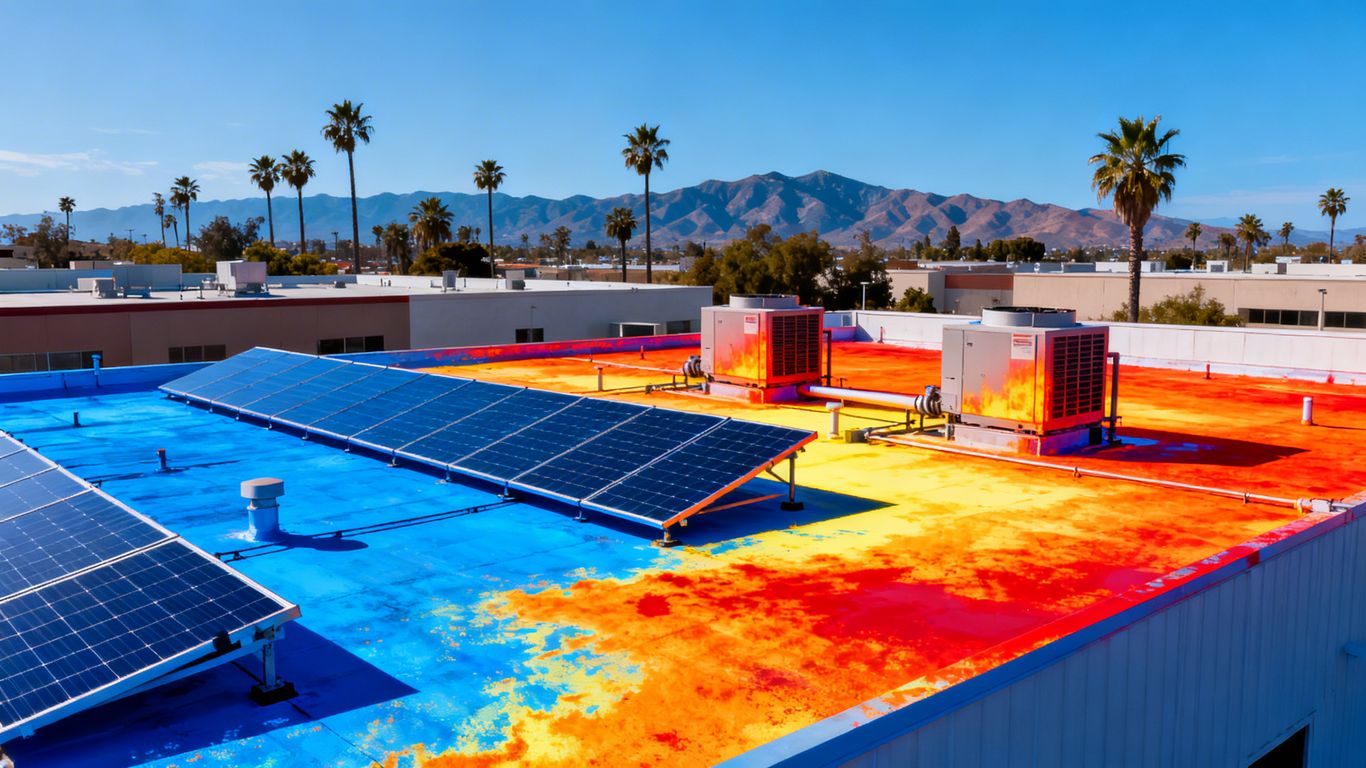
Expert Thermal Imaging for Commercial Roof Inspection in California
Keeping a commercial roof in good shape in California is super important, and sometimes what you see on the surface doesn’t tell the whole story. That’s where thermal imaging for commercial roof inspection California comes in. It’s like having X-ray vision for your building’s top layer, helping us spot problems you wouldn’t normally see. This tech can save you a lot of headaches and money down the road.
Key Takeaways
- Thermal imaging uses cameras that see heat, showing temperature differences on your roof that point to hidden issues like trapped moisture or bad insulation.
- Professional inspections with this technology are non-invasive, meaning we don’t have to damage your roof to find problems.
- Catching leaks and insulation failures early with thermal scans can significantly cut down on repair costs and improve your building’s energy use.
- We analyze the data from these inspections to give you a clear report with recommendations for fixing what’s wrong.
- Using thermal imaging for commercial roof inspection California is a smart way to maintain your building and make sure your roof lasts longer.
Understanding Thermal Imaging for Commercial Roofs in California
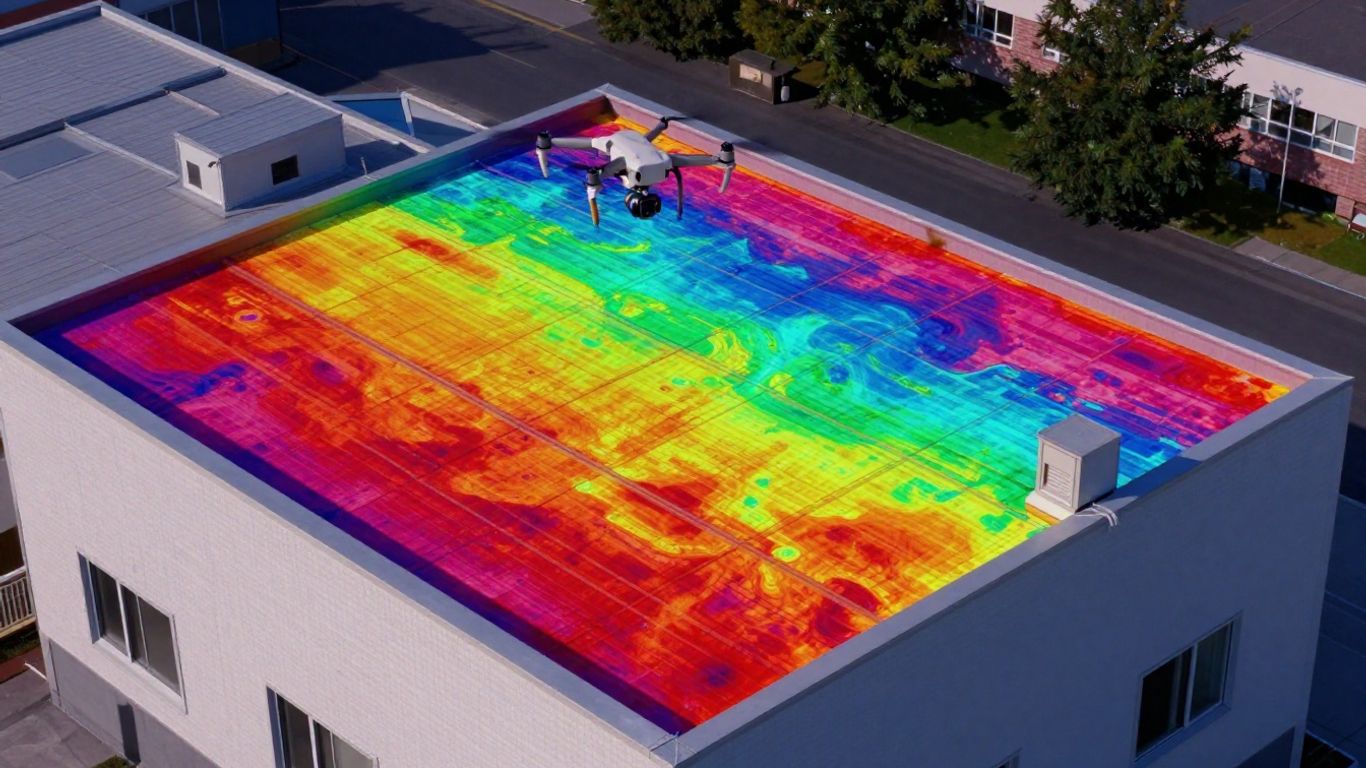
So, what exactly is thermal imaging when we talk about checking out commercial roofs here in California? It’s basically a way to see heat. Think of it like a special camera that doesn’t see light like our eyes do, but instead, it picks up on infrared radiation, which is basically heat energy. Everything gives off heat, and this camera turns those heat differences into a visual picture, usually in shades of color. It’s pretty neat because it lets us spot things that are totally invisible to just looking with your eyes or even a regular camera.
What is Thermal Imaging?
Thermal imaging, or thermography, uses a camera that detects infrared energy. This energy is emitted by all objects. The camera translates this energy into a visual image where different colors represent different temperatures. Warmer areas might show up as red or yellow, while cooler areas appear blue or purple. This technology allows us to visualize temperature variations across a surface. It’s like having X-ray vision, but for heat.
How It Detects Hidden Roof Issues
On a commercial roof, especially here in California where we get a lot of sun and sometimes sudden rain, things can go wrong under the surface. Moisture trapped under roofing materials is a big one. Wet insulation or water pockets absorb more solar heat during the day and then release it more slowly at night compared to dry areas. This temperature difference is what the thermal camera picks up. It can also show us where insulation might be missing or damaged, creating hot or cold spots that indicate energy loss. We can even spot air leaks or areas where the roof structure might be compromised, all thanks to these temperature variations.
The Science Behind Temperature Differences
The core idea is pretty straightforward physics. Different materials absorb, retain, and release heat at different rates. When moisture gets trapped in a roof system, it changes the thermal properties of that section. For example, during the day, a wet spot might appear cooler on the surface because the water is evaporating, taking heat with it. But later, as the sun goes down, that same wet area might appear warmer because the trapped moisture holds heat longer than the surrounding dry material. Understanding these patterns, and how they change with the time of day and weather conditions, is key to accurate roof inspections. Following standards like those from ASTM C1153 helps ensure our methods are reliable.
Thermal imaging works by detecting infrared radiation, which is emitted by all objects. Differences in temperature on the roof surface create variations in this radiation, which the thermal camera then visualizes. This allows us to see problems like trapped moisture or insulation gaps that are not visible to the naked eye.
Benefits of Professional Thermal Roof Inspections
When it comes to your commercial building in California, keeping the roof in good shape is a big deal. You don’t want surprises, especially when they involve water damage or high energy bills. That’s where professional thermal roof inspections really shine. They’re not just about finding leaks; they offer a whole lot more.
Early Detection of Moisture and Leaks
This is probably the most well-known benefit. Thermal imaging can spot moisture that’s gotten trapped under your roof layers, even when you can’t see any stains or drips inside. Think of it like this: wet insulation or roofing material holds heat differently than dry material. Our cameras pick up on these temperature differences, showing us exactly where moisture is hiding. Catching these wet spots early means you can fix a small problem before it turns into a huge, expensive mess involving damaged insulation, mold, and structural issues.
Identifying Insulation Problems
Insulation is key to keeping your building comfortable and your energy costs down. If your insulation is compressed, wet, or has gaps, it’s not doing its job. Thermal scans clearly show areas where the insulation isn’t performing as it should. This allows us to pinpoint exactly which sections need attention, whether it’s repair or replacement. Getting this right helps keep your building warm in the winter and cool in the summer without your HVAC system working overtime.
Assessing Structural Integrity
While thermal imaging primarily looks at temperature, the patterns it reveals can hint at underlying structural concerns. For instance, persistent moisture can weaken roof decks over time. Areas that consistently show up as problematic in thermal scans might indicate a need for a closer look at the structural components beneath the surface. It’s another layer of protection for your investment.
Improving Energy Efficiency
This ties into the insulation and moisture points. When your roof is performing optimally – meaning no hidden moisture, good insulation, and no air leaks – your building uses energy more efficiently. Less heat escapes in the winter, and less heat builds up in the summer. This directly translates to lower utility bills. We’ve seen buildings significantly cut down on their energy consumption after addressing issues found through thermal inspections.
Our Advanced Inspection Process
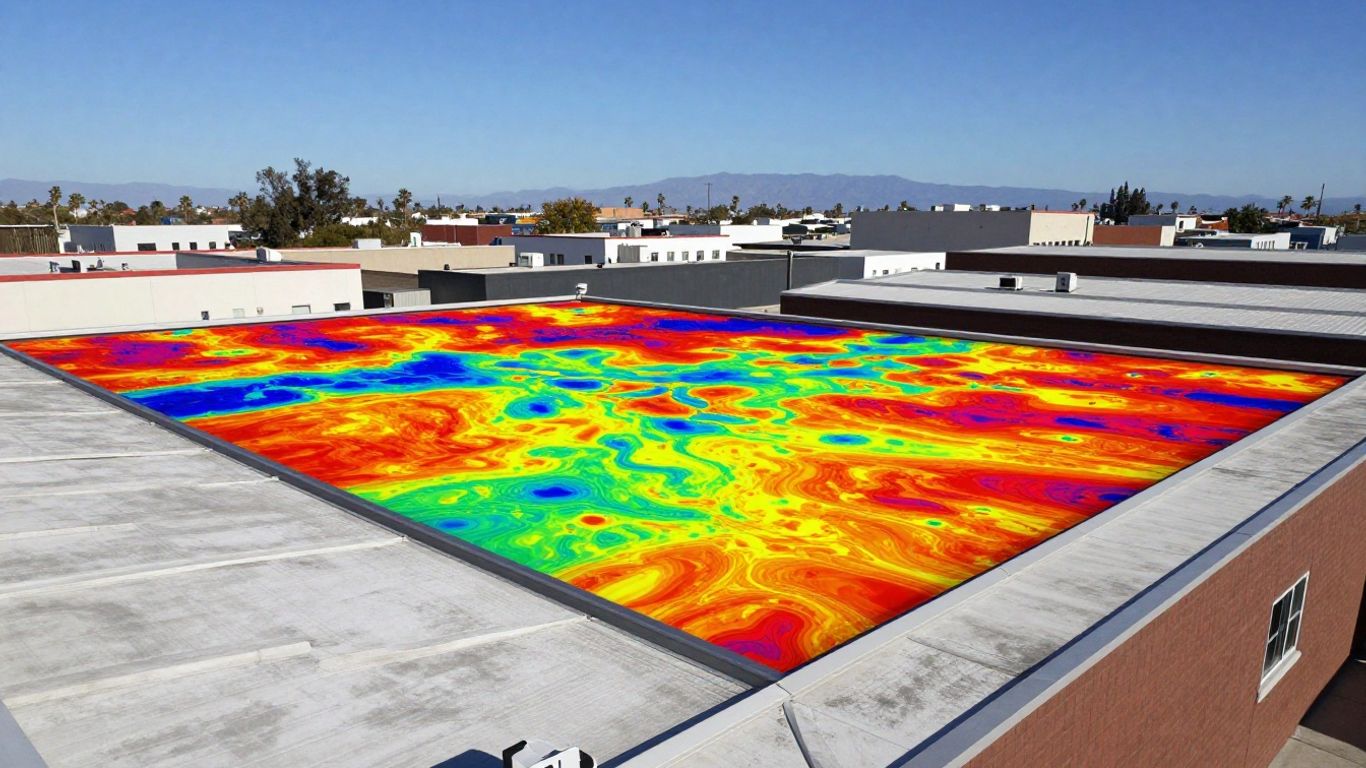
So, how do we actually go about finding those hidden problems on your commercial roof? It’s not just about walking around with a fancy camera. We’ve got a pretty solid system in place to make sure we’re not missing anything.
Comprehensive Data Collection
First off, we gather all the information we can. This isn’t just about pointing a thermal camera at your roof. We use a combination of tools to get the full picture. Think of it like a doctor doing a full check-up, not just looking at one symptom.
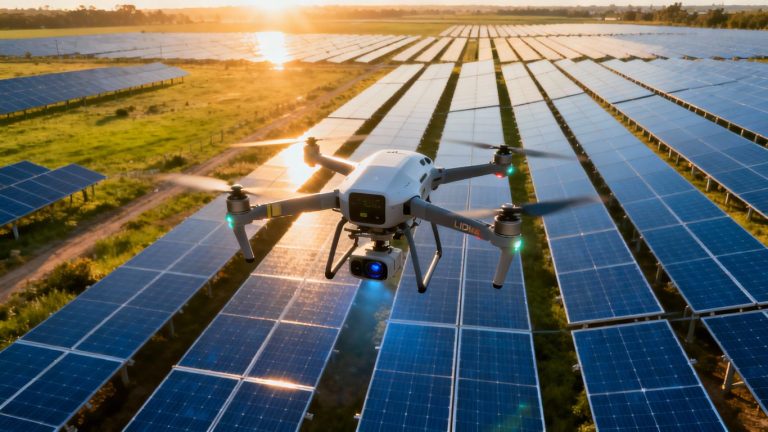
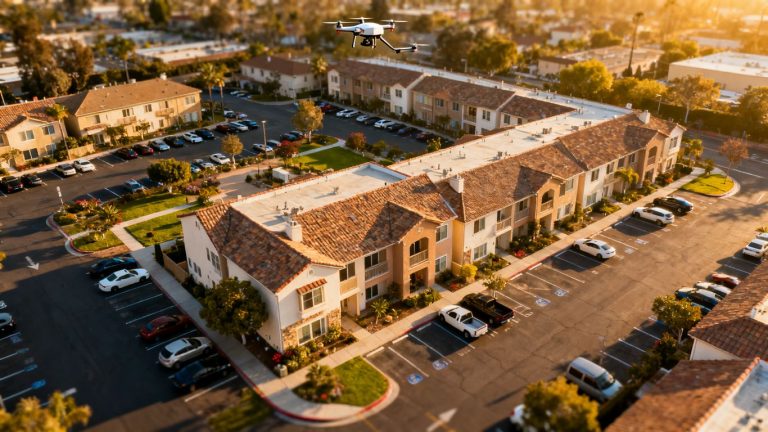
- Drone Imaging: We start with drones to get a complete aerial view. This lets us map out the entire roof, spotting obvious issues like cracked tiles or damaged flashing that might be hard to see from the ground. It’s a safe and thorough way to cover every inch.
- Thermal Scanning: This is where the magic happens. Our specialized infrared cameras detect temperature differences across the roof surface. These differences often point to moisture trapped beneath the surface or problems with insulation. We’re essentially looking for the roof’s ‘hot spots’ and ‘cold spots’ that signal trouble.
- Visual Inspection: Alongside the tech, our trained technicians still do a hands-on visual check. They’re looking for signs of wear, debris buildup, or anything that just doesn’t look right.
Expert Analysis of Thermal Data
Just having the images isn’t enough. Anyone can point to a colorful picture, but understanding what it means is key. That’s where our team comes in.
Our technicians are trained to interpret the thermal data. They know what different temperature patterns signify, whether it’s trapped water, poor insulation, or air leaks. This analysis is what turns raw data into actionable insights for your roof.
We look at:
- Moisture Detection: Identifying areas where water might be getting trapped under the roofing layers. This is a big one for preventing leaks.
- Insulation Performance: Spotting areas where insulation might be wet or not working as effectively as it should, which impacts energy use.
- Structural Anomalies: Sometimes, temperature variations can hint at underlying structural issues that need attention.
Detailed Reporting and Recommendations
Once we’ve collected and analyzed all the data, we put it all together for you. You’ll get a clear, easy-to-understand report. We don’t just hand you a bunch of pictures and walk away. Our goal is to give you the information you need to make smart decisions about your roof’s maintenance and repair. We’ll highlight the problem areas, explain what they mean, and suggest the best course of action. This helps you plan for future roof maintenance and avoid unexpected, costly repairs down the line.
Why Choose Expert Thermal Imaging Services
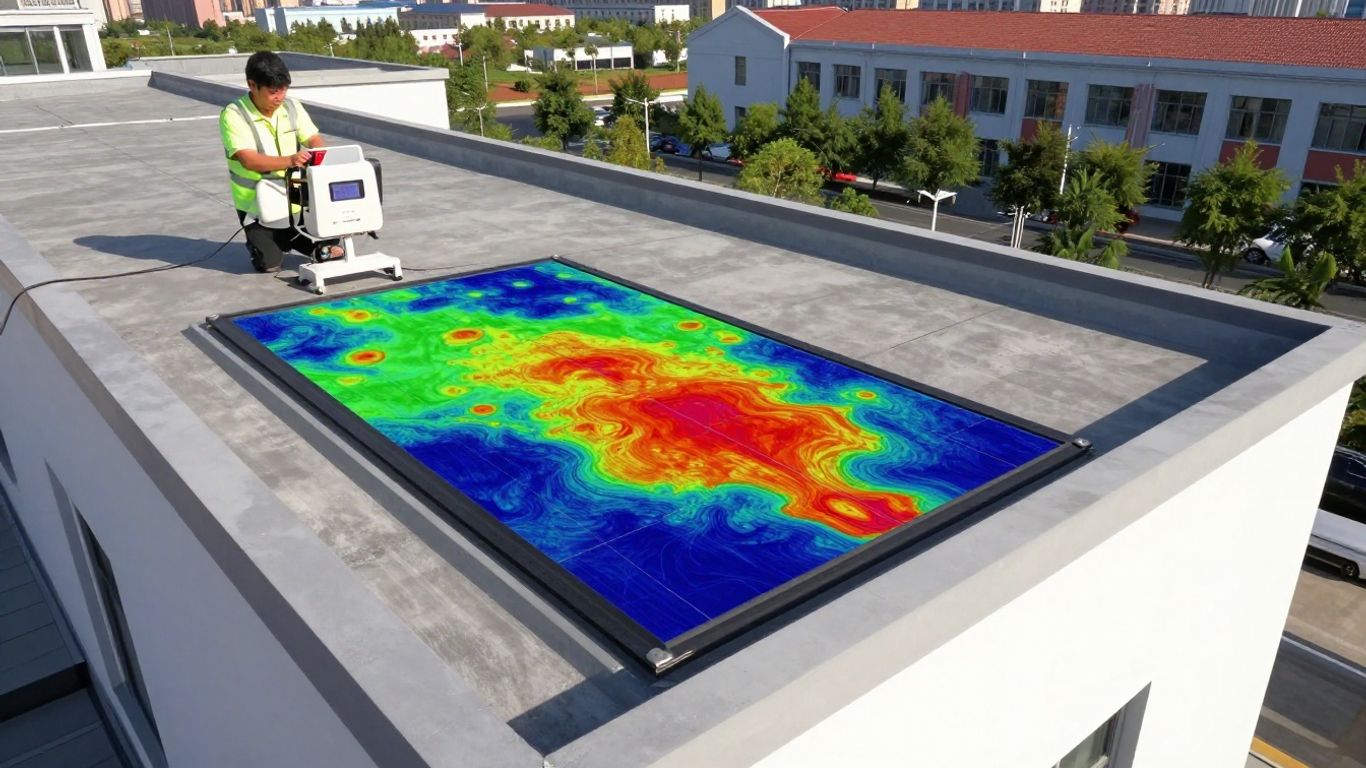
When it comes to keeping your commercial roof in good shape, especially here in California with its varied weather, you want to be smart about it. That’s where expert thermal imaging really shines. It’s not just about having a fancy camera; it’s about using that technology the right way to actually find problems before they get big and expensive.
Non-Invasive and Non-Destructive
One of the best things about thermal imaging is that it doesn’t mess with your roof. We don’t need to poke holes or tear things up to see what’s going on underneath. The camera picks up on temperature differences, which can tell us a lot about what’s happening below the surface. This means we can get a really good look at your roof’s condition without causing any damage. It’s like getting an X-ray for your roof, but without any of the cutting or drilling. This approach helps us identify hidden moisture problems, for example, which can lead to bigger issues down the line if not caught early. detect hidden moisture problems.
Cost-Effective Maintenance Strategies
Think about it: finding a small issue early on is way cheaper than fixing a huge leak or dealing with widespread water damage. Thermal imaging helps us pinpoint those small problems – like a bit of trapped moisture or an area where insulation isn’t working right – when they’re still manageable. This proactive approach saves you money in the long run by preventing costly repairs and reducing the need for emergency fixes. It’s all about smart, planned maintenance rather than reacting to disasters.
Extending Roof Lifespan
Your commercial roof is a big investment, and you want it to last as long as possible. By regularly inspecting it with thermal imaging, we can catch issues that might otherwise shorten its life. Addressing problems like insulation gaps or moisture intrusion promptly helps maintain the roof’s overall integrity. This means fewer major repairs, less frequent full replacements, and ultimately, a longer service life for your roof. It’s a straightforward way to protect your property and your budget.
Applications Across California Industries
Commercial Buildings
Commercial buildings, from office complexes to retail centers, have large, flat roofs that are prime spots for moisture intrusion and insulation issues. Thermal imaging is a game-changer here. It lets us spot water trapped beneath the surface, even if there are no visible leaks inside. This means we can fix small problems before they turn into big, expensive headaches, like mold growth or structural damage. Catching these issues early saves businesses a ton of money and prevents disruptions to operations. We can also check how well the insulation is working, which is key for keeping energy bills down, especially with California’s varied climate.
Industrial Facilities
Industrial sites often have complex roofing systems with lots of equipment, vents, and pipes. These can create tricky spots where water can get in or insulation can fail. Thermal imaging helps us get a clear picture of the entire roof, including those hard-to-reach areas around machinery. We can identify hot spots that might indicate electrical problems or areas where heat is escaping inefficiently. This is super important for safety and for making sure the facility runs smoothly and efficiently. Think about warehouses or manufacturing plants – keeping the temperature stable and dry is usually a big deal for the products and processes inside.
Property Management Needs
For property managers, keeping multiple buildings in good shape is a constant challenge. Thermal imaging offers a non-invasive way to regularly check on the condition of roofs across their portfolio. It provides objective data that can be used to prioritize maintenance, budget for repairs, and even negotiate with contractors. Instead of just reacting to tenant complaints about leaks, property managers can be proactive. This approach helps maintain property value, keeps tenants happy, and avoids those emergency repair bills that can really mess up a budget. It’s all about smart, data-driven property upkeep.
Choosing the Right Thermal Imaging Provider
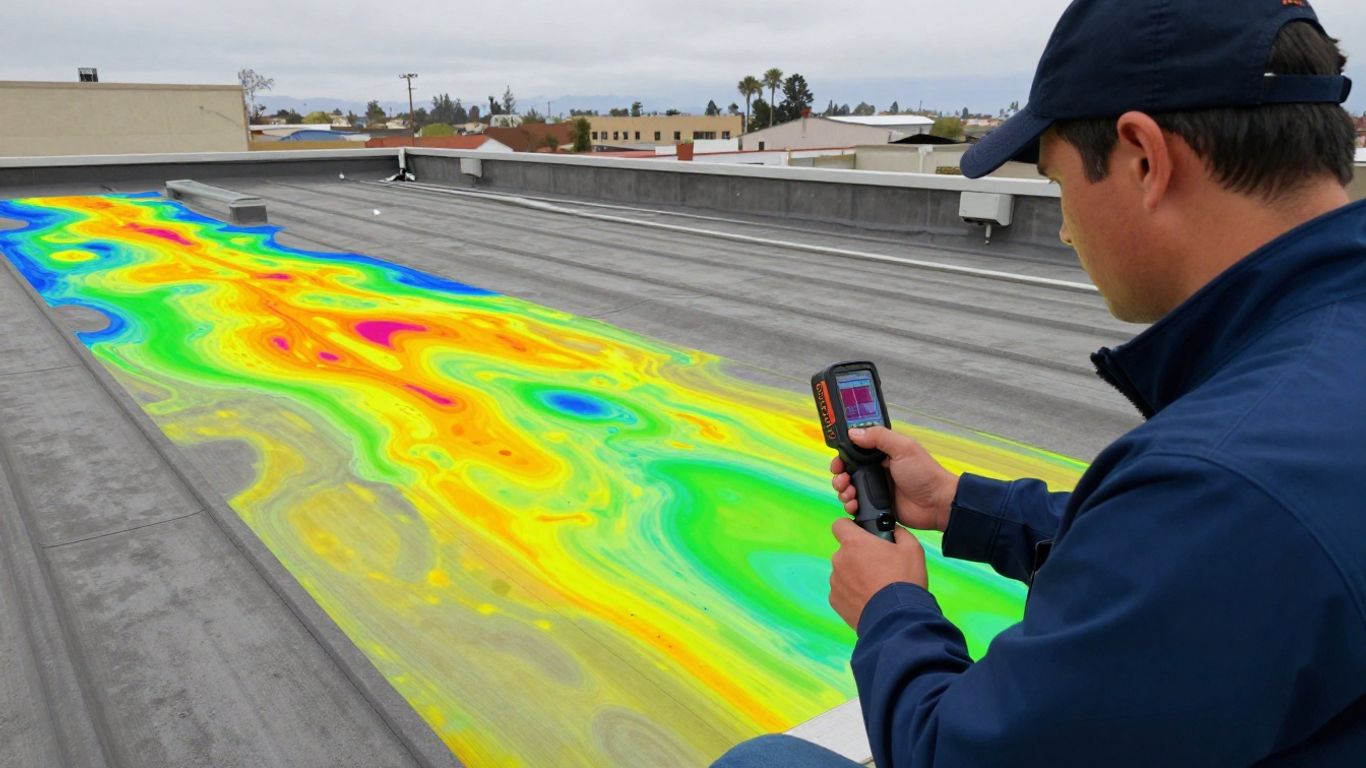
So, you’ve decided thermal imaging is the way to go for your commercial roof in California. That’s smart. But not all thermal imaging services are created equal. Picking the right provider makes a huge difference in what you actually get out of the inspection.
Credentials and Expertise Matter
Think about it: thermal cameras capture images, sure, but those images are just raw data. It takes training and a good amount of experience to actually read those thermal patterns and know what they mean. You want someone who knows their stuff, not just someone with a fancy camera. Look for inspectors with solid training and current certifications from recognized organizations. This is your best bet for getting an unbiased evaluation of your roof’s condition. It’s like hiring a doctor; you want someone who’s been through the proper schooling and has practical experience. You can check out resources for inspectors with comprehensive training to get a feel for what to look for.
Understanding Equipment Capabilities
Not all thermal cameras are built the same. Some high-end systems can pick up on the tiniest temperature differences, which is exactly what you need for spotting subtle issues. Cheaper or lower-resolution cameras? They just aren’t as sensitive. It’s worth asking about the equipment they use. Are they using radiometric cameras that can give you exact temperature readings at specific points, or just something that shows general color changes? The quality of the gear directly impacts the detail and accuracy of the inspection. Professionals often use equipment that costs significantly more than what hobbyists might use, and the results reflect that difference.
The Value of Radiometric Cameras
When you’re looking at thermal imaging reports, you might see a lot of colors. While these color variations can point to general problem areas, the real power comes from radiometric cameras. These are the top-tier tools that can actually measure the temperature at specific spots within an image. This level of detail is super helpful for pinpointing the exact location and severity of issues like moisture intrusion or insulation gaps. It’s not just about seeing a hot or cold spot; it’s about knowing the precise temperature to understand the problem better. This data is what allows for more accurate analysis and better recommendations for repairs or maintenance.
Wrapping Up Your Roof’s Health Check
So, when it comes to keeping your commercial building in California in good shape, don’t overlook what’s going on up top. Thermal imaging really does show you things you just can’t see with the naked eye. It’s like getting an X-ray for your roof. By using this tech, you can catch small problems before they turn into big, expensive headaches. It helps you plan maintenance better and keeps your building protected. Think of it as a smart investment to make sure your roof lasts as long as it should.
Frequently Asked Questions
What exactly is thermal imaging for roofs?
Thermal imaging is like using a special camera that can see heat. For roofs, it helps us spot areas that are hotter or colder than they should be. These temperature differences often point to hidden problems like wet insulation or leaks that you can’t see just by looking.
How does thermal imaging find hidden roof problems?
When rain or dew gets trapped under your roof materials, it stays wet and holds heat differently than dry areas. A thermal camera picks up on these temperature changes. So, even if a leak isn’t dripping inside yet, the thermal camera can show us where the moisture is hiding.
Why do different parts of the roof show up as different colors in thermal images?
The colors in a thermal image represent different temperatures. For example, a blue or purple area might be cooler, while a red or yellow area is warmer. We use these color maps to understand where heat might be escaping, where moisture is trapped, or where insulation isn’t working right.
Is thermal roof inspection safe for my roof?
Yes, it’s completely safe! Thermal imaging is a non-invasive method. We don’t need to touch or step on your roof to get the information we need. Our cameras capture heat patterns from a distance, so your roof stays perfectly intact.
How does this help save money?
By finding small problems early, like tiny leaks or bad insulation, we can fix them before they turn into big, expensive repairs. Also, a well-insulated and leak-free roof helps your heating and cooling systems work less, which can lower your energy bills.
What kind of buildings can benefit from this type of inspection?
Any building with a flat or low-slope roof can benefit! This includes places like office buildings, warehouses, retail stores, and apartment complexes. Basically, any commercial or industrial building in California can use this technology to protect their investment.