Drone inspection for warehouse roofs in the Central Valley: A practical guide for safer, faster assessments
Key Takeaways
A warehouse roof inspection is most useful when it produces clear information that a facility team can act on. Drone imagery can improve access and documentation, but it works best as part of a broader inspection plan.
- Aerial imagery can reveal visible roof defects, drainage concerns, damaged equipment, and hard-to-reach areas.
- Thermal data may identify heat anomalies associated with moisture concerns, but it requires careful interpretation.
- Central Valley heat, dust, rooftop equipment, and large building footprints affect inspection planning.
- A qualified provider should explain flight safety, licensing, deliverables, limitations, and follow-up steps.
- Inspection findings become more valuable when they are organized into repair priorities and recurring maintenance records.
What drone inspection can reveal about warehouse roofs
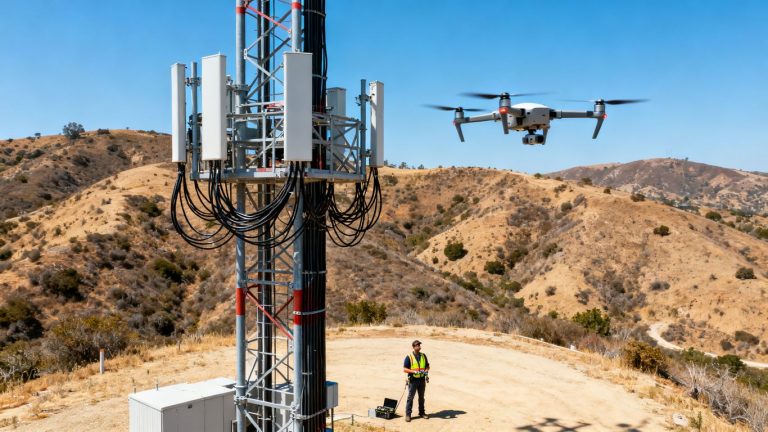
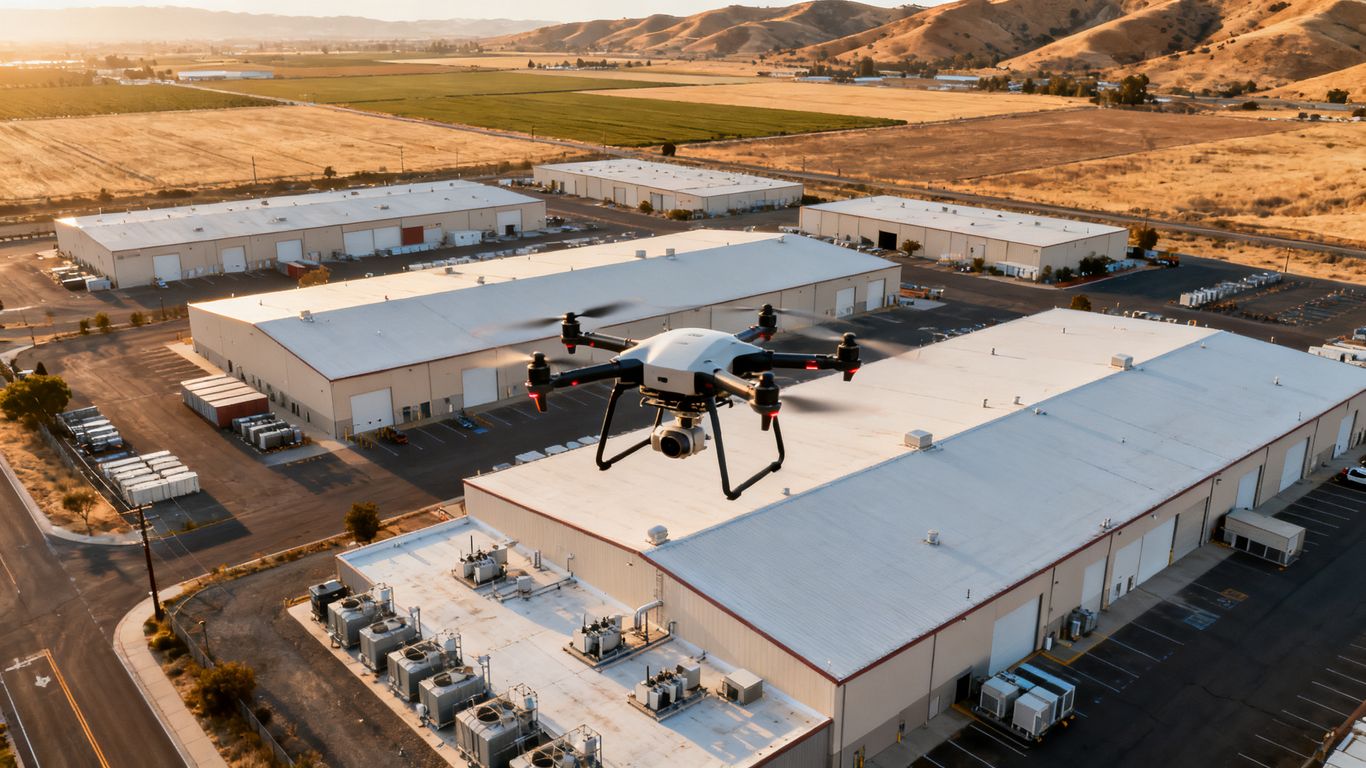
A warehouse roof can cover hundreds of thousands of square feet, with visibility limited by parapets, rooftop units, skylights, and surrounding structures. A drone offers a broad view of the surface while documenting details that may be difficult to capture from the ground. For teams researching drone inspection for warehouse roofs central valley, the goal should be useful evidence rather than impressive footage alone.
Common defects visible from the air
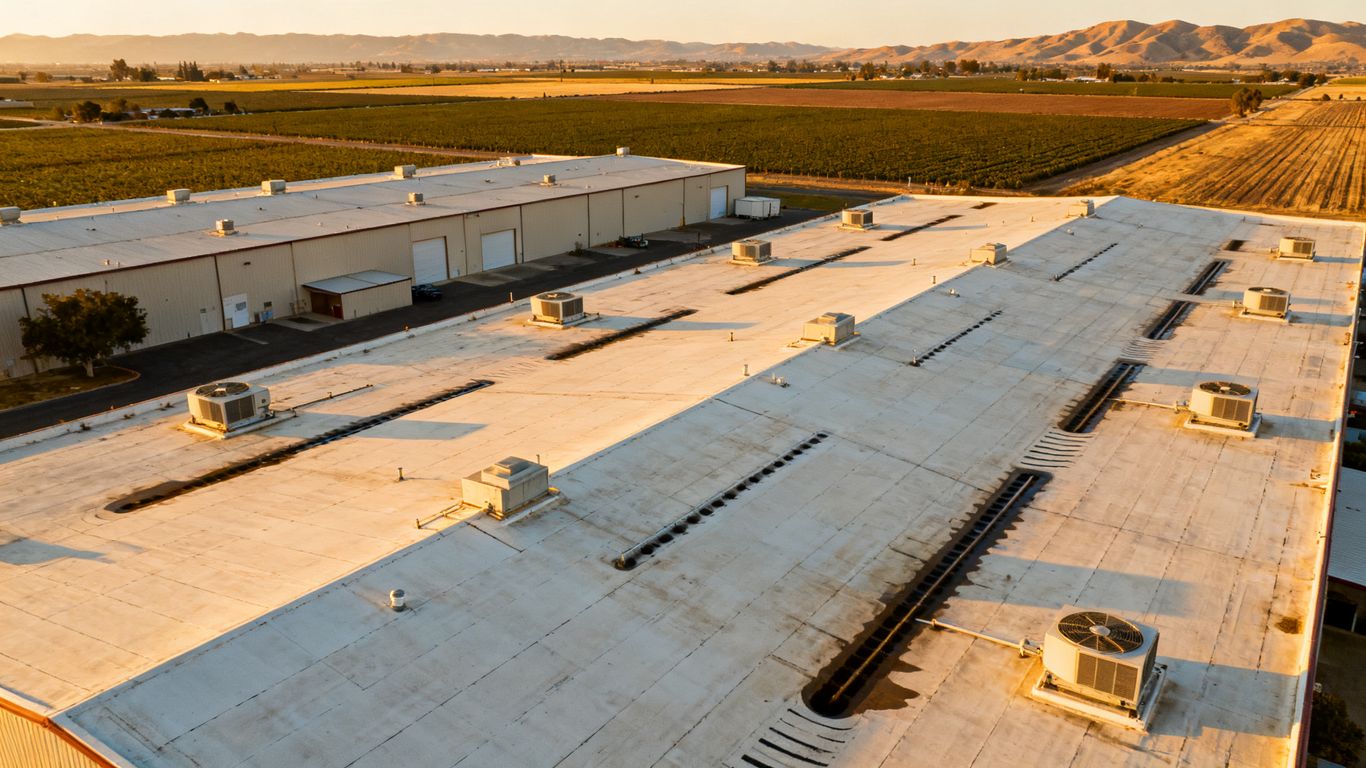
High-resolution aerial imagery can show lifted or damaged membrane sections, open seams, cracked coatings, ponding areas, blocked drains, deteriorated flashing, and debris accumulation. It may also reveal changes around penetrations and rooftop equipment that deserve closer review. These observations do not automatically establish the cause of a failure, but they provide a practical starting point for maintenance discussions.
Areas that are difficult or unsafe to access
Large flat roofs often include fragile surfaces, steep transitions, edges, skylights, and congested mechanical zones. Walking every area can expose personnel to fall hazards or create unnecessary foot traffic on aging materials. A drone can inspect these locations from above and reduce the need to send people into areas that are difficult to reach safely.
How aerial imagery supports maintenance planning
A well-organized image set gives a facility manager a visual record tied to roof zones, equipment areas, or observed conditions. That record can help compare findings over time, communicate with contractors, and decide whether an issue calls for immediate attention or routine monitoring. The value increases when photos are labeled consistently and paired with notes that distinguish visible conditions from professional conclusions.
Aerial records can also support broader project documentation. For example, commercial drone inspection services can provide real-time, high-resolution imagery, terrain visualization, and 3D aerial modeling for construction projects; those capabilities are relevant when a warehouse roof is part of a larger development or improvement program.
When a drone inspection should be paired with hands-on testing
A drone cannot determine every condition beneath a roof membrane, inside insulation, or below a surface that appears intact. Suspected leaks, soft decking, hidden deterioration, and structural questions may require moisture testing, core sampling, interior review, or a qualified roofing assessment. Treat aerial imagery as a screening and documentation tool, then use hands-on methods where the evidence or risk calls for them.
How the drone roof inspection process works
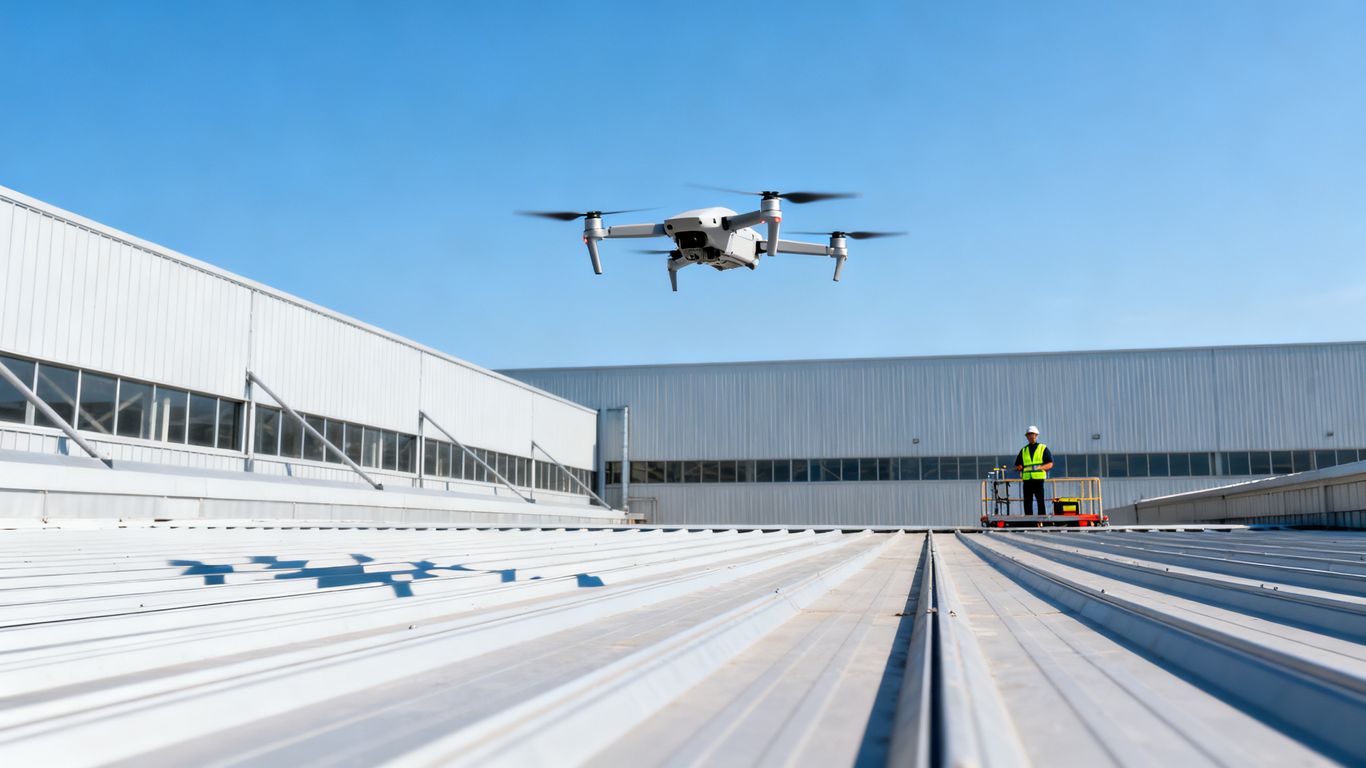
A useful inspection starts before the aircraft leaves the ground. The provider and property team should agree on the roof areas, access points, operating constraints, desired outputs, and the decisions the inspection needs to support. Clear planning keeps the flight focused and makes the resulting data easier to interpret.
Defining the inspection scope and property boundaries
The scope should identify building footprints, roof sections, adjacent parcels, staging areas, rooftop assets, and any locations that need special attention. It should also account for tenant activity, vehicle movement, restricted zones, and nearby people or structures. A written scope reduces omissions and helps the operator plan a safe, compliant flight.
Before scheduling, ask whether the assignment is limited to visual documentation or also includes thermal imagery, mapping, repeat flights, or a structured report. The answer affects equipment, flight time, processing, and the level of review required.
Capturing high-resolution photos and videos
The operator typically follows planned flight paths and captures overlapping views of roof surfaces, edges, penetrations, drainage points, and equipment. Still photos are useful for close examination, while video can provide context across a larger roof area. Consistent angles and lighting make later comparisons more meaningful.
A practical field sequence often includes:
- Establishing safe launch and recovery areas away from routine traffic.
- Capturing broad roof views before documenting individual conditions.
- Recording close views of drains, seams, penetrations, edges, and equipment.
- Noting lighting, wind, weather, and access conditions that may affect interpretation.
The sequence matters because context helps prevent an isolated image from being mistaken for a complete diagnosis. After the flight, the inspection team should connect notable images to roof zones and recommended next steps.
Using thermal imaging to identify moisture concerns
Thermal imaging detects differences in surface temperature that may warrant further investigation. Under suitable conditions, those patterns can help identify areas associated with retained moisture, insulation concerns, or heat loss. They are indicators, not proof of a specific defect, so findings should be reviewed alongside visible imagery and other evidence.
Aeroskape provides Thermal Drone Inspections that use infrared drone inspections to capture high-resolution thermal images and identify hidden heat anomalies in structures and equipment. The available source also states that these deliverables are for informational purposes, which makes qualified interpretation and follow-up testing especially important.
Reviewing findings with a qualified roofing professional
The final review should separate what the camera recorded from what a roofing professional concludes about condition, cause, and repair. A reviewer can assess whether a pattern is consistent with a leak, surface wear, drainage problem, installation issue, or another concern. This step turns a collection of images into a defensible maintenance conversation.
Ask for a report that identifies locations, includes representative images, describes limitations, and recommends the next level of investigation. That format is more useful than a folder of unlabeled files, particularly when several people share responsibility for the property.
Central Valley factors that affect warehouse roof inspections
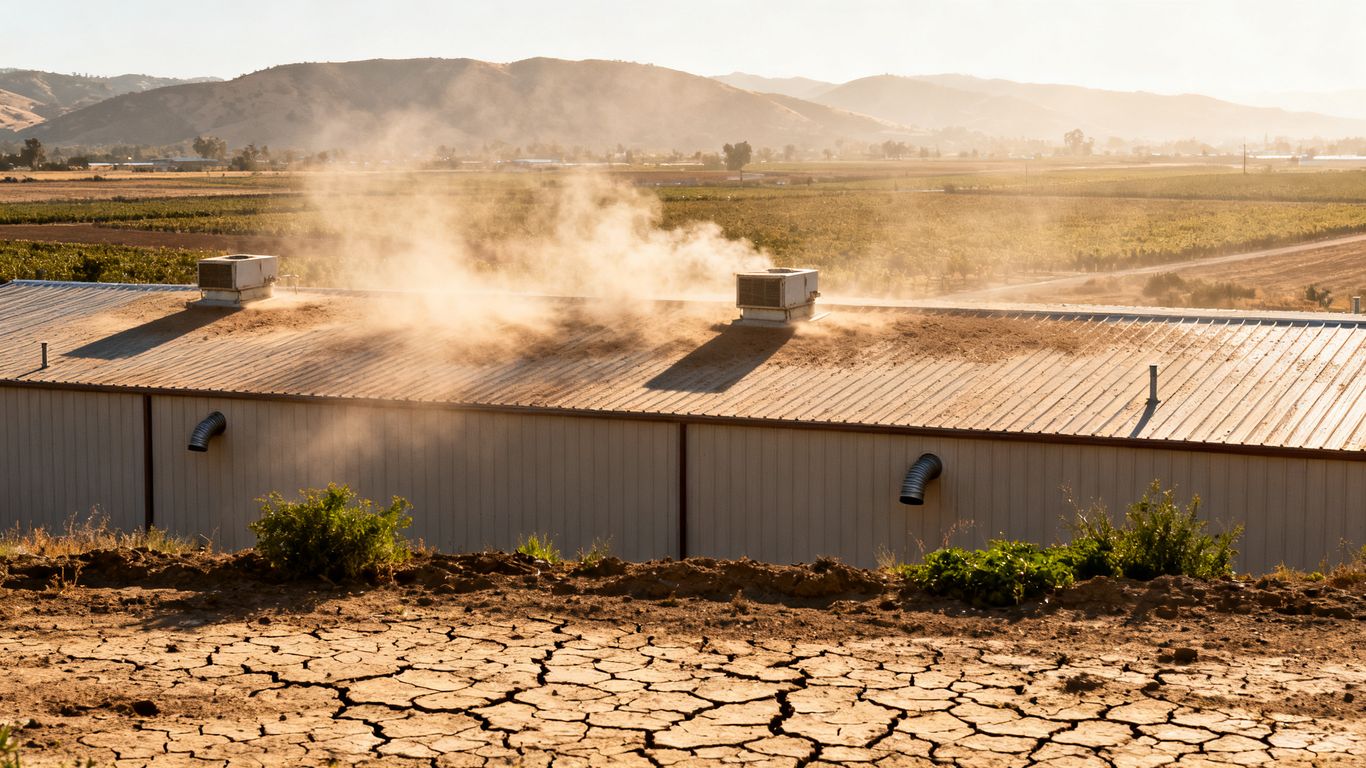
Central Valley conditions can shape both roof deterioration and flight planning. Heat, ultraviolet exposure, dust, seasonal wind, agricultural activity, and large industrial sites all affect what an operator can capture and how findings should be interpreted. Local context belongs in the inspection plan rather than being treated as an afterthought.
Heat, UV exposure, and seasonal weather patterns
Extended heat and strong sun can accelerate surface aging, dry out sealants, and increase thermal differences across roof materials. Seasonal rain may expose drainage problems that were less visible during dry periods, while wind can move debris or make flight conditions less predictable. Scheduling should consider recent weather as well as the forecast on the inspection date.
Thermal observations are also sensitive to timing and surface conditions. A qualified provider should explain when the imagery was captured and what environmental factors could affect the results, rather than presenting every color variation as a confirmed defect.
Dust, agricultural activity, and airborne debris
Warehouses near fields, processing facilities, or busy transport corridors may collect dust and organic debris around drains, roof penetrations, and equipment. These materials can obscure surface details and contribute to drainage maintenance needs. They may also require the inspection team to distinguish temporary buildup from damage to the roofing system.
Regular documentation helps establish whether accumulation is recurring, seasonal, or linked to a nearby operation. That distinction can guide cleaning schedules and conversations with facility or tenant teams.
Large warehouse layouts and rooftop equipment
A broad roof is rarely a single uniform surface. It may include multiple membrane sections, expansion joints, skylights, HVAC units, vents, solar equipment, access paths, and different drainage zones. The inspection plan should divide the roof into understandable areas so that findings can be located and revisited.
Rooftop equipment can also block sightlines and create safety constraints. Flight paths should account for obstacles, while the report should identify whether an observed concern belongs to the roof assembly, equipment, flashing, or surrounding surface.
Inspection considerations in Modesto, Fresno, and Bakersfield
Facilities in Modesto, Fresno, and Bakersfield may share broad Central Valley conditions while differing in access, surrounding development, tenant activity, and rooftop complexity. A site-specific review should confirm launch locations, nearby people and structures, restricted airspace considerations, and any property rules before the flight. Operators should not assume that a workflow suitable for one city transfers unchanged to another site.
Local service-area knowledge can make coordination easier, but the deliverables still need to be defined in practical terms. The facility team should know what will be captured, how findings will be organized, and who will review conditions that need more than aerial observation.
What to evaluate when choosing a drone inspection provider
The right provider brings together aviation safety, imaging technique, property awareness, and disciplined reporting. A low price may not be useful if the flight misses critical roof areas or produces files that no one can interpret. Evaluate the workflow from pre-flight planning through delivery and review.
Experience with commercial and industrial roofing
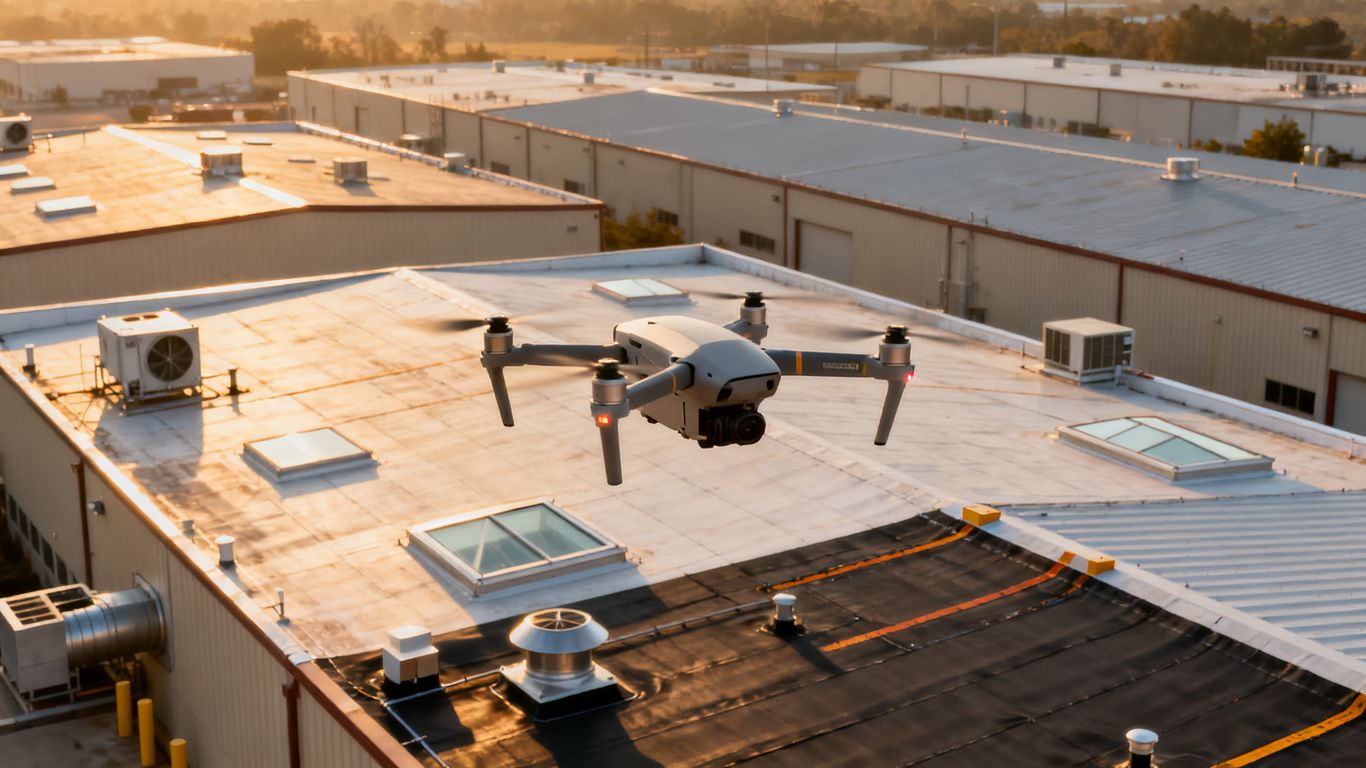
Commercial warehouse roofs differ from residential roofs in scale, access, equipment density, drainage design, and operational constraints. Ask whether the provider has a process for dividing large roofs into zones and documenting penetrations, edges, drainage features, and equipment areas. Experience should be reflected in the questions the provider asks before the flight, not only in a portfolio of attractive images.
Aeroskape provides Commercial Drone Inspection services for construction projects, with documented capabilities including real-time, high-resolution imagery, terrain visualization, and 3D aerial modeling. Those capabilities may fit a warehouse project connected to construction, redevelopment, or broader site oversight, provided the proposed deliverables match the inspection objective.
Pilot licensing, insurance, and safety procedures
Commercial drone work should be planned around applicable aviation rules, site hazards, privacy considerations, and the presence of workers or the public. Request evidence of pilot qualifications, insurance, operating procedures, and a clear approach to emergency situations. The provider should also explain how launch areas, exclusion zones, and communications will be managed.
Safety is not separate from data quality. A cautious flight plan can reduce interruptions, avoid rushed captures, and create more consistent imagery across the roof.
Imaging technology and reporting capabilities
Ask which sensors will be used, what resolution is expected, whether thermal imaging is appropriate, and how files will be organized. A strong report should make it easy to connect an image to a roof area, condition, or recommended follow-up. It should also state limitations so decision-makers do not mistake visual evidence for a complete engineering or roofing diagnosis.
The provider should be able to explain whether the deliverable is a photo set, video, map, model, annotated report, or combination of these. The best format depends on how the facility team intends to use the information.
Familiarity with local building and access requirements
The operator should confirm property permissions, tenant coordination, nearby hazards, and any local or site-specific access requirements before arriving. Warehouses may operate around the clock, making timing and communication especially important. A provider familiar with the region can ask useful questions, but compliance remains a project-specific responsibility.
For California facilities, request a concise explanation of the planned operating controls and any information the property team must provide. Clear expectations help prevent a technically successful flight from becoming an operational disruption.
Costs, timelines, and potential savings
Inspection pricing depends on more than roof area. Access, building height, sensor selection, reporting depth, travel, weather, and the condition of the site can all affect the proposal. Treat estimates as planning numbers until the provider understands the property and the intended use of the data.
Factors that influence drone inspection pricing
A provider may price a project according to the number of buildings, roof complexity, flight time, sensor package, processing requirements, and review time. Repeat inspections may also require a consistent capture plan so that changes can be compared accurately. Ask which costs are included and whether follow-up interpretation or additional site visits are separate.
The following comparison helps frame a request for proposal without pretending that every warehouse fits one standard rate.
| Cost factor | Why it matters | Question to ask |
|---|---|---|
| Roof area and number of buildings | Larger sites require more flight planning and data review | Is pricing based on total area or building count? |
| Sensor and imagery needs | Thermal or mapped outputs may require additional equipment and processing | Which deliverables are included? |
| Access and site complexity | Equipment, obstacles, tenants, and nearby hazards can slow the work | What site conditions could change the estimate? |
| Reporting and professional review | Annotated findings take more time than a raw image folder | Who interprets and organizes the findings? |
After reviewing these factors, compare proposals by usable output rather than by flight duration alone. A modestly higher fee may be reasonable if it produces a report that supports repair decisions and future comparisons.
Comparing drone inspections with traditional methods
A drone can reduce ladder use, scaffolding needs, and exposure to difficult roof areas when the objective is visual documentation. Traditional methods remain necessary for conditions that require touch, probing, interior access, or material testing. The practical comparison is therefore not drone versus every other method, but the right combination for the question being asked.
A roof inspection cost guide can help facility teams think through access, documentation, safety, and measurement considerations when comparing inspection approaches. Use any generalized pricing information as a starting point, then obtain a site-specific proposal.
How roof size and complexity affect turnaround time
A small, unobstructed roof may be captured quickly, while a multi-building industrial site can require more planning, multiple flight areas, and a longer review. Weather, airspace constraints, tenant schedules, and the need for thermal conditions can also affect timing. Ask for separate expectations for field capture, processing, report delivery, and review meetings.
Repeatable flight paths can make later inspections more efficient because the team already understands the property. The first visit may take longer if it establishes the baseline and reporting structure.
Estimating savings from early problem detection
Potential savings usually come from better timing and better information, not from the drone alone. Early visibility may help a team address a drainage issue before interior damage spreads, coordinate repairs during a planned shutdown, or avoid sending personnel onto a hazardous area unnecessarily. These are possibilities to evaluate, not guaranteed outcomes.
To estimate value, compare the inspection cost with likely avoided disruption, emergency response, access equipment, tenant impact, and repeated site visits. Keep the calculation conservative and connect it to a specific decision the inspection will support.
Turning inspection data into a roof maintenance plan
Aerial imagery becomes useful when it changes what the facility team does next. The final report should help people prioritize work, preserve a record, and decide when conditions need another look. Without that step, even clear imagery can sit unused in a project folder.
Prioritizing urgent repairs and safety risks
Start by separating immediate safety or active water-intrusion concerns from conditions that can be monitored. A damaged edge, blocked drain, exposed opening, or area near an occupied work zone may deserve faster attention than cosmetic wear. The roofing professional and facility team should agree on priorities and document the reasoning.
Avoid treating every marked image as equally urgent. A tiered system—such as immediate action, planned repair, and routine observation—makes budgets and work orders easier to manage.
Documenting roof conditions for property records
Store the report, original imagery, date, weather notes, roof plan, and follow-up decisions together. Consistent naming and location references help future teams understand what changed and what remained stable. Records can also support conversations with owners, tenants, contractors, insurers, or internal risk teams.
The documentation should preserve uncertainty as well as findings. If an image suggests a concern but does not establish its cause, say so clearly and record what additional testing was recommended.
Scheduling follow-up inspections and preventive maintenance
The inspection date should lead to a calendar entry, not just a completed report. Follow-up timing may depend on roof age, observed defects, seasonal weather, recent repairs, and the consequences of failure. A baseline image set is especially valuable when later flights follow similar paths and capture comparable areas.
Routine maintenance can include clearing debris, checking drainage, reviewing equipment penetrations, and confirming that repairs addressed the original concern. The schedule should be adjusted when site conditions change.
Coordinating repairs with tenants, facility teams, and contractors
Warehouse roofs often sit above active operations, so repair planning must account for loading areas, shifts, stored materials, HVAC access, and tenant responsibilities. Share only the information each group needs, while keeping one controlled record for the property team. Clear location references reduce confusion when several contractors are working from the same findings.
Before work begins, confirm the repair scope, access plan, safety controls, and documentation expectations. Afterward, capture closeout information so the next inspection can distinguish repaired areas from unresolved conditions.
Plan the Next Inspection
When a warehouse roof needs a clearer, safer assessment, contact Aeroskape to discuss the property, inspection goals, and data your team needs. A focused scope can help turn aerial capture into practical maintenance information.
Conclusion
Drone inspection can give Central Valley warehouse teams a faster way to view broad roof areas, document hard-to-reach conditions, and organize information for maintenance decisions. It does not replace qualified roofing review or hands-on testing where those methods are necessary, but it can make the overall assessment safer, more consistent, and easier to communicate.
Frequently Asked Questions
What can a drone roof inspection identify?
It can document visible surface damage, debris, drainage concerns, flashing issues, equipment areas, and other conditions that can be seen from the air. It cannot confirm every concealed or structural problem.
Can drones inspect an entire warehouse roof?
They can capture broad coverage across large roof areas, but the actual scope depends on building layout, obstacles, weather, access, operating restrictions, and the selected deliverables.
Does thermal imaging prove that a roof is leaking?
No. Thermal patterns may indicate areas that deserve further investigation, but they can have multiple causes. Findings should be compared with visible imagery and confirmed using appropriate testing.
How often should a warehouse roof be inspected by drone?
There is no universal interval. Timing may depend on roof age, weather exposure, maintenance history, recent repairs, observed risks, and the consequences of a failure.
Do drone inspections replace roofing professionals?
No. Drones provide aerial documentation and screening. Roofing professionals are still needed to interpret conditions, determine causes, recommend repairs, and perform hands-on testing when required.
What should a roof inspection report include?
A useful report generally includes the inspection date, scope, imagery, location references, observed conditions, limitations, and recommended next steps. The format should match how the facility team will use the information.
How should a facility prepare for a drone roof inspection?
Provide accurate property boundaries, access instructions, tenant and safety information, rooftop equipment details, known problem areas, and any timing constraints. Confirm the desired outputs before the flight so the operator can plan appropriately.