Drone inspection for cold storage facilities Salinas: A practical guide to safer, faster assessments
Key Takeaways
A drone inspection for cold storage facilities salinas can give facility teams a safer way to review hard-to-reach areas without treating aerial data as a substitute for professional judgment.
- Aerial inspections can reduce roof access, ladder, and lift exposure.
- Visual and thermal imagery can reveal conditions that deserve closer review.
- Flight planning must account for people, vehicles, equipment, and FAA requirements.
- Useful deliverables connect images to locations, findings, and maintenance priorities.
- The best provider understands both drone operations and active industrial facilities.
Why cold storage facilities in Salinas use drone inspections
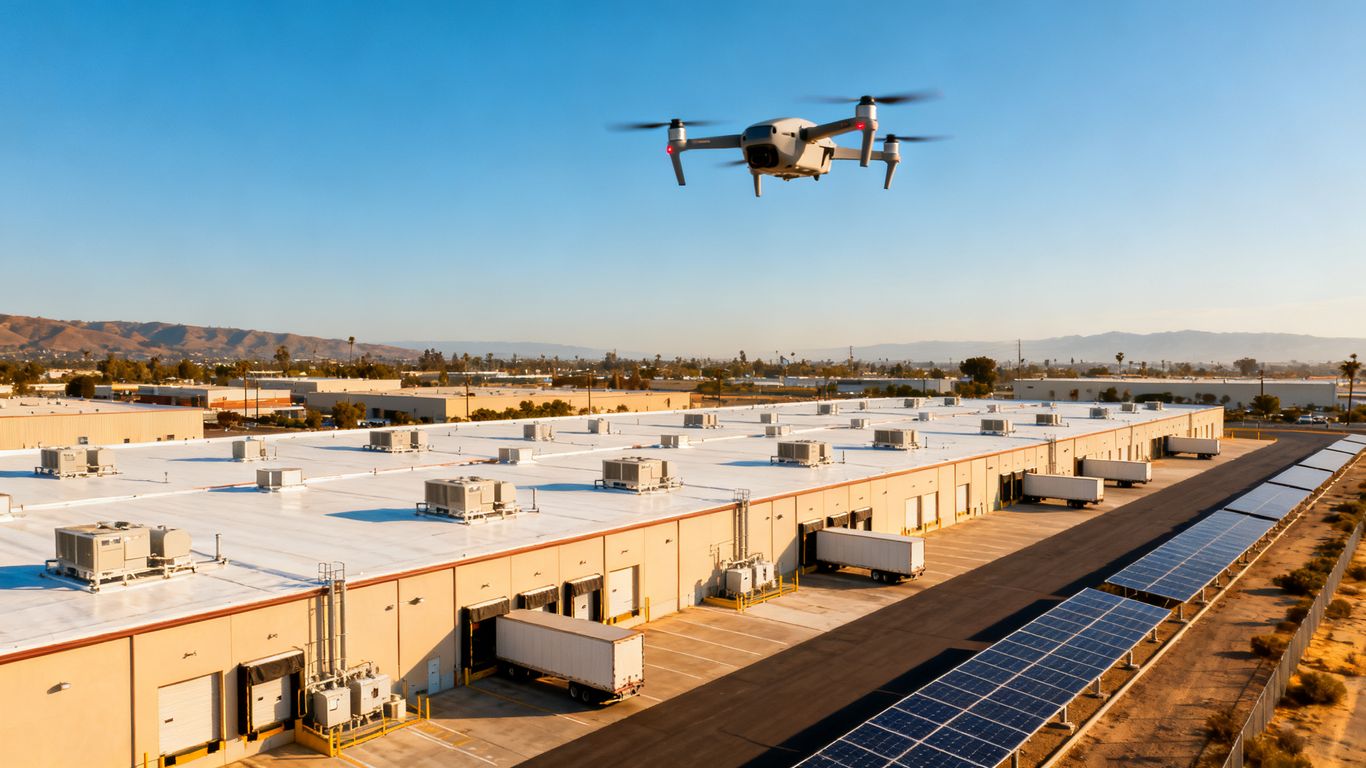
Cold storage buildings combine large roofs, insulated walls, loading activity, and critical refrigeration systems. Reviewing those assets from the ground can leave gaps, while a full manual inspection may require access equipment and operational interruptions. Aerial data gives maintenance and engineering teams another way to understand site conditions before deciding what needs hands-on follow-up. The goal is not simply more imagery; it is clearer information for safer decisions.
Risks of inspecting refrigerated warehouses manually
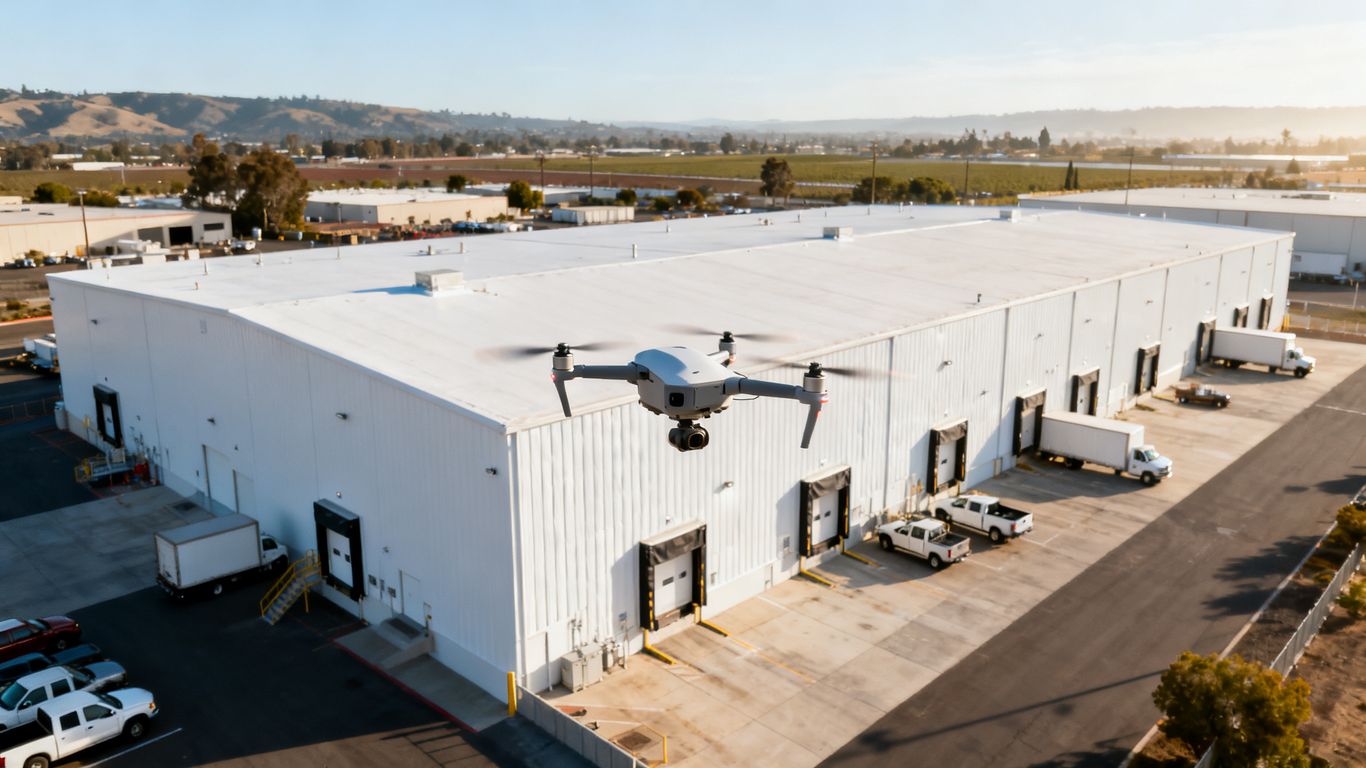
Manual inspections can put workers near roof edges, fragile surfaces, elevated equipment, vehicle traffic, and active loading zones. Cold, wet, or windy conditions may also make access more difficult. Lifts, scaffolding, and repeated setup can add cost and disrupt normal movement around the facility. Ground-level observations remain useful, but they do not always provide a complete view of roof membranes, upper façades, or equipment placed above normal working height.
How drones reduce downtime and worker exposure
A planned flight can collect exterior imagery while keeping crews on the ground and limiting the need for access equipment. It may also allow a facility to schedule data capture around receiving, dispatch, and refrigeration activities rather than opening a large work area for inspection. The resulting images can help a team decide which locations require a closer visit. Reduced initial exposure does not mean every repair becomes remote; it means the first assessment can be more deliberate.
Facility types that benefit from aerial inspections
The approach can suit refrigerated warehouses, food distribution centers, produce packing sites, freezer buildings, and mixed-use industrial properties with temperature-controlled areas. It is also useful where several buildings, canopies, solar arrays, or paved service areas need to be reviewed together. A provider should adapt the scope to the property rather than assume that every facility needs the same flight. For Salinas projects, this practical commercial inspection guide offers a useful framework for matching data collection to building and infrastructure needs.
When drone inspections provide the greatest value
Aerial inspections are especially helpful before seasonal weather, after a major storm, before budgeting cycles, or when recurring leaks and temperature complaints need visual context. They can also establish a baseline for a newly acquired property or support an investigation before maintenance crews are dispatched. The value rises when images are geotagged, consistently captured, and reviewed against known trouble spots. A one-time flight can answer a narrow question; repeat flights can support condition tracking.
What drones can inspect across a cold storage facility
A cold storage facility is more than a roof and a box-shaped exterior. Its inspection scope may include drainage, mechanical areas, loading interfaces, insulation details, site circulation, and equipment that is difficult to view from below. Before flying, the facility team and operator should define which assets matter most and what evidence will support a maintenance decision. That keeps the flight focused and the final report useful.
Roof membranes, seams, drains, and flashing
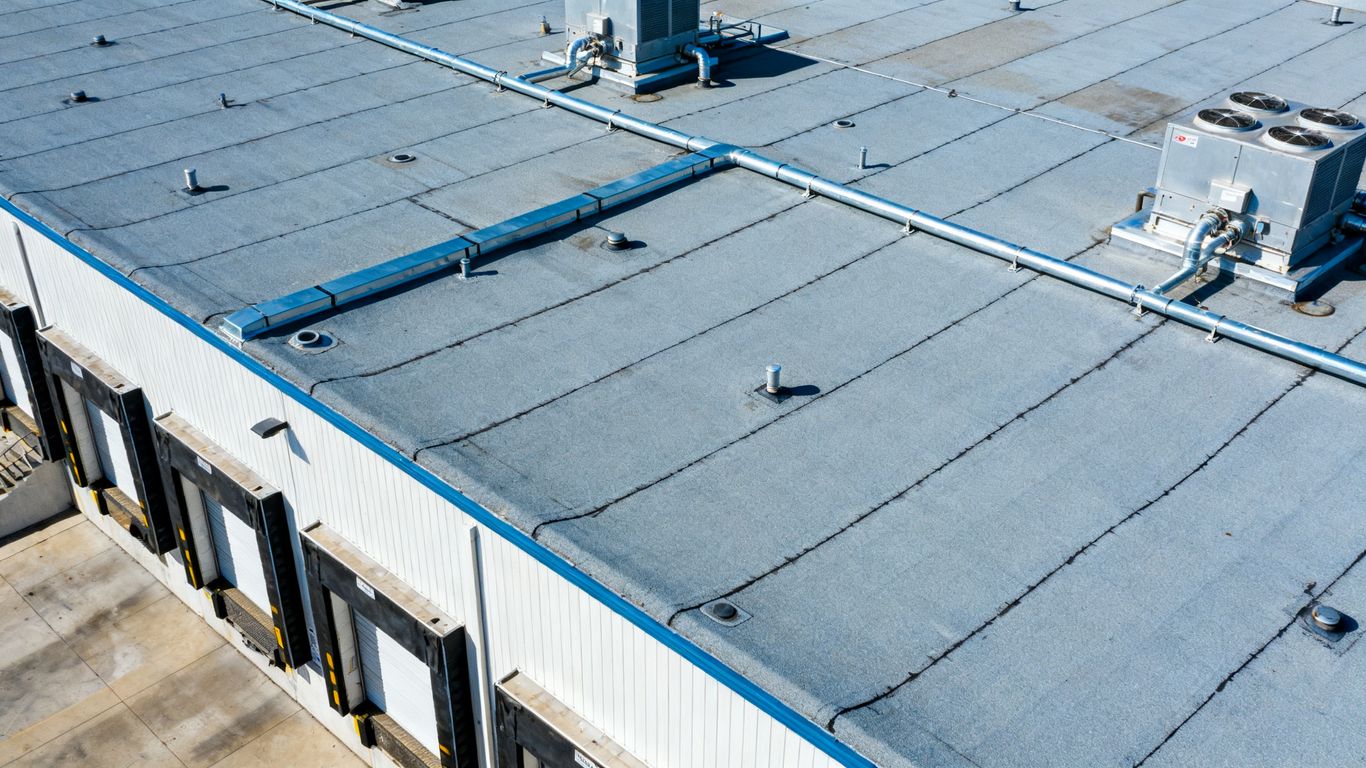
Roof imagery can document membrane wear, open seams, ponding areas, punctures, perimeter conditions, drains, curbs, and flashing. A drone can provide close visual views without sending a worker across every roof section during the initial review. Images should be interpreted in context, since surface appearance alone does not establish the full condition of a roofing assembly. Suspected defects can then be assigned for ground verification or repair review.
Refrigeration equipment and mechanical infrastructure
Exterior mechanical areas may include condensers, piping, supports, penetrations, vents, and service platforms. High-resolution imagery can show corrosion, physical damage, loose components, or blocked areas that warrant attention. Aerial review should not replace lockout procedures, equipment-specific testing, or qualified refrigeration work. It is a way to see and document conditions before a specialist decides what action is appropriate.
Exterior walls, loading docks, and insulation systems
Wall panels, joints, corners, dock shelters, doors, and transitions between conditioned and unconditioned spaces can all affect building performance. Visual inspection may identify dents, failed sealants, damaged panels, or gaps around openings. Thermal imagery can add another layer when conditions are suitable, but unusual patterns still need interpretation. The most helpful report ties each observation to a building elevation or recognizable facility feature.
Solar panels, parking areas, and surrounding property
Many facilities also have rooftop or ground-mounted solar, large parking areas, trailer circulation, stormwater features, and perimeter fencing. These assets may be included when they affect access, drainage, energy performance, or site safety. A single coordinated flight can provide a broader property record, although each asset may require its own sensor and review method. A focused scope prevents unrelated imagery from obscuring the issues the facility team actually needs to address.
Using thermal imaging to identify hidden problems
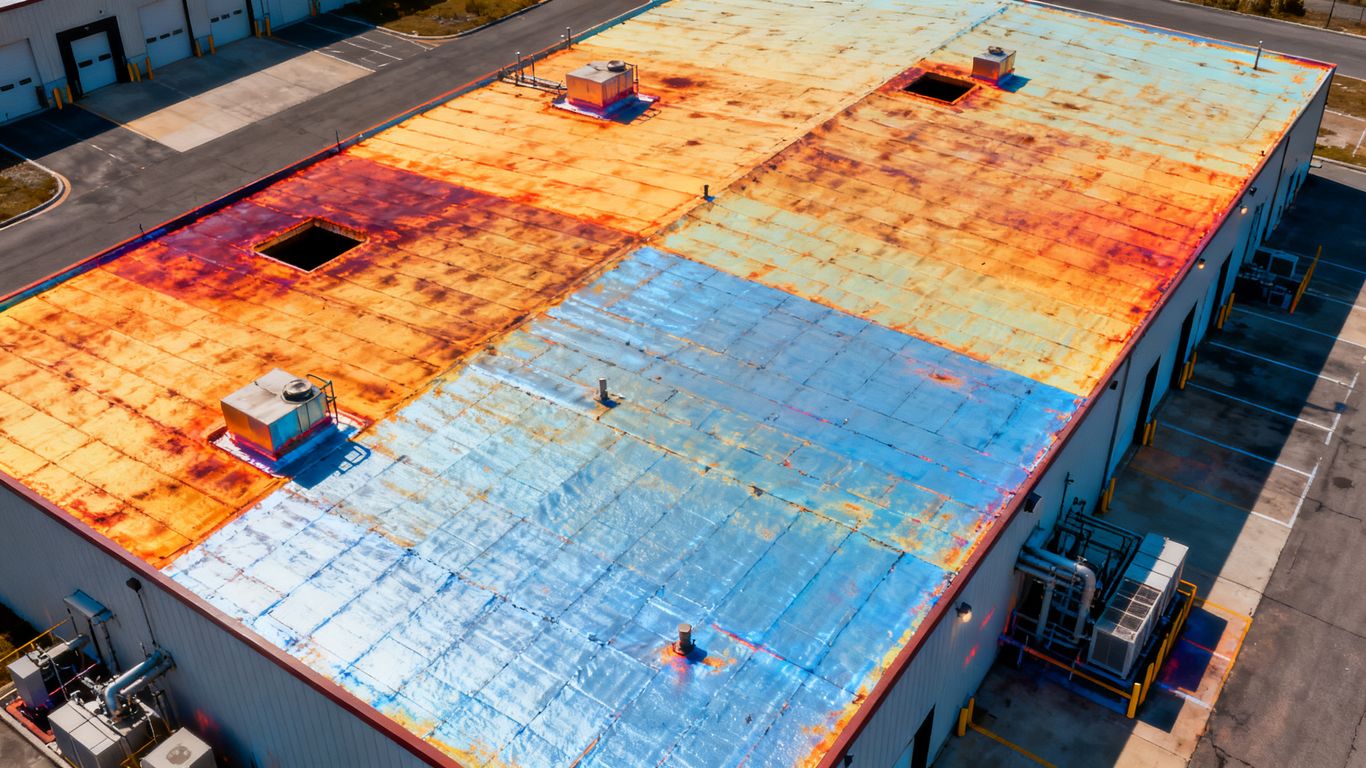
Thermal imaging measures patterns of infrared energy rather than showing a defect directly. On a cold storage site, those patterns may help point toward insulation discontinuities, moisture, electrical heating, or equipment irregularities. Weather, surface materials, operating conditions, time of day, and camera quality all affect what the sensor records. Thermal data is therefore best treated as a screening and prioritization tool, followed by appropriate confirmation.
Detecting insulation gaps and thermal bridging
Areas with missing, compressed, or discontinuous insulation may appear different from adjacent surfaces when there is enough temperature contrast. Thermal bridging around fasteners, structural connections, penetrations, and door assemblies can also create patterns worth investigating. The operator should record environmental conditions and capture corresponding visual imagery. Without that context, a color difference can be mistaken for a building defect.
Finding moisture intrusion and roof leaks
Moisture can change how a roof surface stores and releases heat, sometimes leaving a thermal pattern after surrounding areas have stabilized. Those patterns may help narrow a search for suspected intrusion, especially when paired with roof history and recent weather information. A thermal anomaly is not proof of a leak, however. It should guide targeted testing, repair review, or a closer inspection by the appropriate roofing professional.
Identifying overheating electrical components
Thermal views can help flag unusual heat around accessible electrical equipment, connections, or other operating components. The flight plan must maintain safe separation, and the analysis should distinguish load-related temperature differences from potentially abnormal conditions. Any suspected electrical issue requires qualified personnel and proper procedures. The drone supplies a view; it does not authorize contact with energized equipment.
Understanding the limits of thermal drone data
Thermal results depend on timing, emissivity, reflected energy, wind, cloud cover, surface condition, and equipment settings. A shaded wall, reflective metal panel, or recently changed operating load may produce a misleading appearance. Professional reporting should identify limitations and avoid presenting screening results as definitive diagnoses. Aeroskape describes thermal drone inspections as a way to identify hidden heat anomalies and provide informational data for maintenance decisions, which is the appropriate boundary for this kind of evidence.
How a professional drone inspection works
A professional inspection starts with a question, not a flight. The operator needs to understand the property, its operating constraints, the assets being reviewed, and how the facility team intends to use the deliverables. That preparation shapes the sensors, flight paths, weather window, and reporting format. A well-run process leaves the client with organized evidence rather than a folder of disconnected photographs.
Defining the inspection scope and deliverables
The scope should identify buildings, elevations, roof zones, mechanical areas, solar equipment, and any known concerns. It should also state whether the deliverable includes visual photographs, thermal imagery, a map, a 3D model, annotations, or a written findings summary. Clear exclusions matter too, particularly where physical testing or interior access is outside the assignment. This is where the facility manager can prevent a broad but unfocused capture effort.
Planning flight paths around an operating facility
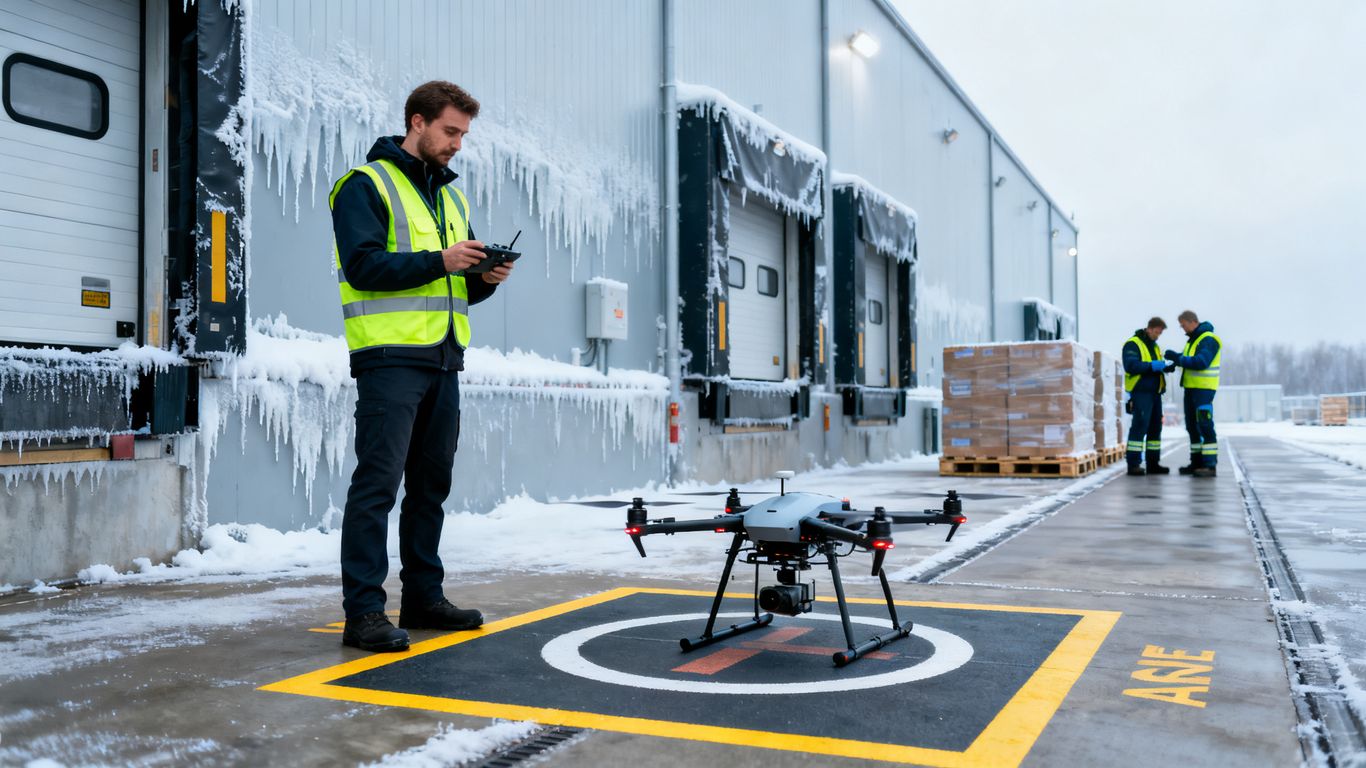
Flight planning should account for access points, active docks, cranes, vehicles, people, neighboring properties, and overhead obstructions. The operator and facility contact can establish a launch area, exclusion zone, communication plan, and stop-work conditions before the aircraft is deployed. Flights may need to be divided into smaller sessions to avoid conflicts with receiving or dispatch. Local weather and FAA requirements also belong in the plan, not as afterthoughts.
Capturing visual, thermal, and 3D documentation
Visual imagery records physical appearance, while thermal imagery can identify patterns that merit investigation. Photogrammetry may add a three-dimensional view when the scope calls for measurable spatial context, but it should not be described as professional land surveying. Consistent camera angles, overlap, file naming, and location references make the data easier to compare and review. Commercial Drone Inspection materials describe high-resolution imagery, terrain visualization, and 3D aerial modeling as deliverables that can support planning and decision-making.
Reviewing findings with maintenance and operations teams
The final review should connect observations to the people who know the facility’s history and constraints. Maintenance staff can explain recurring leaks, repairs, alarms, or equipment changes that alter the meaning of an image. Operations leaders can help sequence work around inventory movement and temperature-critical activities. A short discussion after delivery often turns a technically accurate report into a practical next step.
Safety and compliance considerations in Salinas
A drone inspection at an operating cold storage site involves more than piloting skill. It requires coordination with the facility, attention to airspace and people on the ground, protection of products and equipment, and an honest understanding of what the aircraft cannot safely do. Conditions can change quickly around docks and service yards. A written plan gives everyone a shared basis for pausing or changing the work.
FAA rules for commercial drone operations
Commercial drone work in the United States generally requires compliance with applicable FAA rules, including the requirements associated with Part 107 when that framework applies. The operator should evaluate airspace, aircraft limitations, pilot qualifications, operating conditions, and any required authorizations before the flight. Facility permission does not replace aviation compliance. Clients should ask how the provider documents its operating process rather than assuming that a small aircraft is exempt from the rules.
Managing flights near people, vehicles, and active loading areas
Loading docks create moving hazards: trailers reposition, doors open, forklifts cross sightlines, and drivers may not know a flight is underway. A designated contact should coordinate with supervisors, establish notifications, and keep nonparticipants away from the operating area. The pilot must retain control and be prepared to land when separation cannot be maintained. A short delay is preferable to forcing a flight through an unsafe movement pattern.
Protecting food, inventory, and refrigeration operations
The aircraft and associated equipment should be managed to avoid contact with product, packaging, roof debris, and sensitive machinery. The team should consider prop wash, noise, dust, weather, and the possibility that a flight could interrupt a critical operation. Exterior inspection does not automatically permit access to controlled interiors or hygienic areas. Facility procedures remain in force throughout the assignment.
Addressing ammonia systems and other hazardous environments
Ammonia refrigeration systems, electrical equipment, roof edges, and confined service zones may present hazards that require site-specific controls. A drone can reduce the need to place workers in some exposed positions, but it does not eliminate the need for hazard communication, emergency planning, or qualified personnel. The operator should receive relevant site orientation and know when the facility’s safety lead must approve the work. If conditions are uncertain, the inspection should stop until the responsible team resolves them.
Turning inspection data into maintenance decisions
Raw images rarely change a maintenance plan by themselves. They become useful when findings are located, described, ranked, and connected to the facility’s budget and operating calendar. A good report separates observed conditions from interpretations and recommended follow-up. That distinction helps decision-makers move quickly without overstating what the data proves.
Prioritizing urgent structural and equipment repairs
Teams can begin by separating conditions that threaten safety, weather resistance, product protection, or continuous operation from items that can be monitored. Location, apparent severity, recurrence, and consequences all matter. An isolated cosmetic issue should not compete with an active roof opening near temperature-controlled space. Review meetings are most productive when the report makes those differences visible.
Estimating costs from annotated inspection reports
An annotated image cannot provide a complete repair estimate, but it can improve the information given to contractors and internal planners. Marked locations, dimensions where appropriate, access notes, and related photographs reduce site rediscovery and help define the work package. Cost remains dependent on materials, labor, access, testing, and the final repair method. Inspection cost factors provides a helpful reminder to consider setup, downtime, safety, processing, reporting, and possible hidden costs.
Comparing current images with historical inspection data
Repeat imagery is most valuable when the operator follows comparable flight paths, camera perspectives, and documentation conventions. Side-by-side views can show whether a seam, stain, panel, or piece of equipment has changed since the previous review. Dates and weather conditions should accompany the comparison because visual and thermal appearance can vary. Historical context supports a more defensible decision than a single image viewed in isolation.
Using inspection results for preventive maintenance planning
A facility can use findings to schedule targeted repairs, add locations to routine rounds, and coordinate follow-up testing before a small issue grows. A simple register might include the asset, location, observed condition, priority, owner, action, and due date. That structure makes the inspection part of a maintenance workflow instead of a one-time archive. It also gives the next inspection a clear set of questions to answer.
A practical priority register often looks like this:
- Immediate safety or operational risk requiring prompt escalation.
- Active water, insulation, or enclosure concern requiring verification.
- Equipment condition that should be reviewed during the next service window.
- Lower-priority observation suitable for monitoring and future comparison.
This ranking is a starting point, not a diagnosis. The facility team should validate each item with the appropriate trade, operating record, and physical inspection before authorizing work.
Choosing a drone inspection provider for a cold storage facility
Provider selection should center on the quality of the decision support, not just the aircraft or camera. Cold storage sites require careful coordination, sensible limits, and reporting that maintenance and operations staff can use. Ask for a clear scope, sample deliverable, safety process, and explanation of how findings will be reviewed. The right fit is a provider that can work within an active facility without making unsupported claims about what the data proves.
Experience with industrial and refrigerated properties
Look for experience around large roofs, mechanical infrastructure, loading areas, insulated panels, and operational constraints. A provider should be comfortable gathering information from facility contacts before flight and adjusting the plan when site conditions change. Familiarity with industrial environments is more relevant than a generic promise of fast aerial images. Ask how the team handles recurring inspections and follow-up questions.
Thermal camera, mapping, and reporting capabilities
Confirm which sensors are available and what each deliverable actually contains. Thermal capture, visual photography, mapping, and 3D documentation serve different purposes and should not be bundled together without explanation. Ask whether files are organized by location, whether anomalies are annotated, and whether limitations are stated in the report. The useful test is simple: can a maintenance manager identify what to inspect next?
Insurance, certifications, and local operating knowledge
A provider should be prepared to discuss commercial insurance, pilot qualifications, FAA compliance, site safety procedures, and data handling. Local operating knowledge can help with weather, airspace, access, and coordination, but it should complement—not replace—a written flight plan. Salinas facilities may have busy agricultural, logistics, and food-handling surroundings, so nearby activity should be considered. References are helpful when they describe process quality rather than promise a particular result.
Questions to ask before scheduling an inspection
Before approving the work, ask who defines the scope, who reviews the imagery, how long deliverables take, and what happens when a suspected defect needs confirmation. Also ask whether the team will provide a location-based report, what conditions could postpone the flight, and how the facility should prepare. Schedule an inspection only after those practical details are clear. A short planning call can prevent an expensive mismatch between the requested outcome and the delivered data.
Request an Inspection Plan
If your Salinas cold storage facility needs a safer, more organized first look at roofs, exteriors, equipment, or surrounding assets, contact Aeroskape to discuss the site, operating constraints, and information your team needs for maintenance planning.
Conclusion
Drone inspection for cold storage facilities Salinas works best when flight planning, visual and thermal capture, safety controls, and maintenance review are treated as one process. Used that way, aerial data can reduce unnecessary exposure, clarify hard-to-reach conditions, and help facility teams decide where hands-on follow-up belongs.
Frequently Asked Questions
Can a drone inspect an entire cold storage facility?
A drone can capture many exterior areas, including roofs, walls, loading interfaces, mechanical zones, solar equipment, and surrounding property. The final scope depends on access, weather, airspace, safety conditions, and the sensors selected.
Does a drone inspection replace a manual roof inspection?
No. Aerial imagery can screen broad areas and identify locations for closer review, but physical inspection, testing, and repair decisions may still require qualified personnel on site.
What can thermal imaging reveal at a refrigerated warehouse?
Thermal imaging may show patterns associated with insulation discontinuities, thermal bridging, moisture, or unusual equipment heating. These patterns are indicators for investigation, not definitive diagnoses.
When is the best time to schedule a drone inspection?
Useful times may include before seasonal weather, after a storm, ahead of budgeting, during a recurring leak investigation, or before planned maintenance. The operator should also consider lighting, wind, temperature contrast, and facility activity.
How should a facility prepare for the flight?
The facility should identify a contact, share known hazards and restricted areas, coordinate with loading and maintenance teams, select a safe launch area, and communicate the planned operating window to affected personnel.
What should an inspection report include?
A useful report commonly includes organized visual imagery, thermal findings when applicable, location references, annotations, stated limitations, and recommended follow-up categories. The exact deliverables should be agreed upon before the flight.
Can drone data support preventive maintenance?
Yes, when imagery is captured consistently and connected to an asset register or maintenance workflow. Repeat documentation can help teams compare conditions, track unresolved observations, and plan targeted follow-up.