Weekly vs monthly drone progress flights: How to choose the right schedule for construction monitoring
Key Takeaways
The right cadence depends on how quickly the site changes and how quickly your team needs reliable information. Weekly and monthly flights can both work when they are tied to clear project decisions.
- Weekly flights suit fast-moving phases, complex sites, and active coordination risks.
- Monthly flights can be enough for stable work with slower visible change.
- Consistent flight paths and capture settings make comparisons more useful.
- The value of earlier detection should be weighed against processing and reporting costs.
- A practical schedule can change as the project moves through different phases.
What weekly and monthly drone progress flights measure
Drone progress flights create a repeatable visual record of what is changing on a construction site. The difference between weekly and monthly drone progress flights is less about the aircraft than the time between decisions: weekly imagery can support near-term coordination, while monthly imagery often supports broader reporting. Aeroskape’s Aerial Data Collection for Project Managers is relevant when teams need aerial data for site intelligence, progress monitoring, documentation, and stakeholder communication.
Site visibility and day-to-day activity
Aerial imagery gives project teams a wider view than a walk-through can provide, particularly when materials, equipment, access routes, and work areas are spread across a large site. A weekly record can show whether staging areas are moving, whether haul roads remain usable, and whether several trades are occupying the same space. A monthly record still provides useful context, but it may not reveal short-lived conditions that have already changed.
The useful question is not simply whether a flight captures attractive images. It is whether the resulting information helps someone decide where to visit, what to ask about, or which condition deserves attention.
Milestone tracking and schedule verification
Progress imagery is most valuable when it is compared with the project schedule rather than viewed in isolation. Repeated views can help teams discuss whether excavation, foundations, framing, paving, or exterior work appears to be progressing in the expected sequence. The imagery does not replace contractual schedule controls, but it can give managers a shared visual reference for conversations about status.
Monthly flights are often adequate when milestones are separated by several weeks and the project team mainly needs a periodic record. Weekly flights make more sense when a milestone can be reached, missed, or obscured between monthly visits.
As-built documentation and recordkeeping
A consistent flight program can preserve a time-stamped record of conditions that later become covered, altered, or difficult to inspect. That record may support internal documentation, owner updates, and discussions about when visible work was present. It should be organized with dates, locations, and project context so that people can retrieve the relevant view later.
The quality of the record depends on more than frequency. Similar viewpoints, stable capture settings, and a clear naming convention make a sequence far easier to compare than a collection of unrelated aerial photographs.
Communication with owners, contractors, and stakeholders
A shared aerial view can make remote project conversations more concrete. Owners can see broad site conditions, contractors can discuss sequencing, and stakeholders can understand progress without every person needing to enter an active work zone. For teams that need a wider operational view, construction site monitoring can be a useful reference point when considering how aerial information supports progress tracking and coordination.
The reporting rhythm should match the audience. A superintendent may need frequent images during a congested phase, while an executive or lender may prefer a concise monthly update tied to major milestones.
When weekly drone progress flights make sense
Weekly flights are most useful when conditions can change materially in seven days. They create a tighter feedback loop for teams managing several trades, short handoffs, or work that will soon be concealed. The goal is not to collect more data for its own sake, but to give the right people current information before a small discrepancy becomes expensive.
Fast-moving construction phases
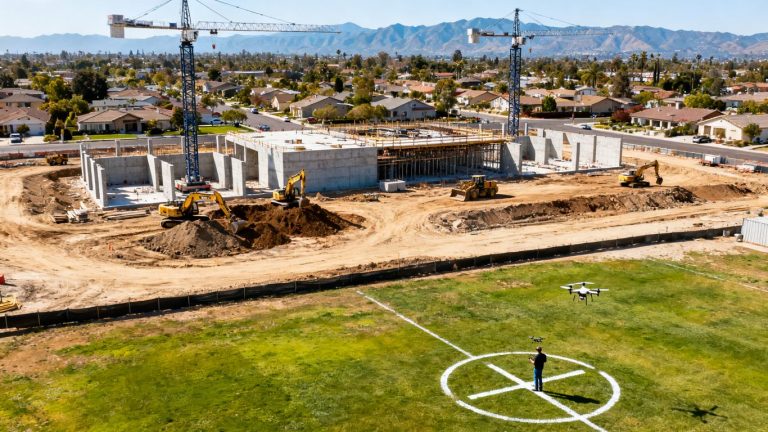
Earthwork, structural activity, utility installation, and other rapid phases can look substantially different from one week to the next. During these periods, a monthly image may confirm that work occurred without showing when a key change happened or how the sequence developed. Weekly capture helps maintain a more continuous visual history while decisions are still timely.
A schedule can also be temporary. Teams may use weekly flights during a critical phase, then reduce the cadence once visible changes slow or the next milestone is farther away.
Complex sites with multiple active work zones
Large or divided sites can make ground-based visibility uneven. One area may be receiving materials while another is being graded, inspected, or prepared for the next trade. Weekly flights give project managers a regular opportunity to review the whole site and notice relationships between work zones that are easy to miss in separate field reports.
They are particularly useful when access is constrained or when walking the entire site would consume time that the team needs for active coordination. The aerial record does not remove the need for field knowledge; it helps direct that knowledge more efficiently.
Projects with frequent coordination risks
A weekly cadence can support conversations where timing matters: a subcontractor’s work depends on another trade clearing an area, a delivery route may conflict with ongoing operations, or a temporary condition may affect safety planning. Current imagery gives participants a common reference instead of relying solely on memory or descriptions from different vantage points.
Aeroskape provides Construction-Specific Drone Solutions, and the relevant value here is organized aerial information for site monitoring, progress tracking, decision-making, and collaboration. The flight schedule should still be set around the project’s actual coordination needs.
Early detection of delays and rework
Frequent imagery can expose visible signs that work is not unfolding as expected, such as an incomplete area remaining unchanged across successive captures or materials appearing in an unexpected location. These observations do not prove the cause of a delay, but they can prompt a focused follow-up while options remain open.
A useful weekly review typically asks a few direct questions:
- What changed since the previous flight?
- Which planned milestone is visibly progressing or stalled?
- Are access, staging, or material conditions affecting the next activity?
- Who needs the imagery before the next coordination meeting?
Those questions turn recurring imagery into a management routine. Without that review step, a weekly flight can become an archive rather than an early-warning tool.
When monthly drone progress flights are enough
Monthly flights can be a sensible choice when the site changes gradually and the reporting requirement is periodic rather than operationally immediate. They reduce the volume of imagery that teams must review while preserving a useful record across a long project. The right test is whether a month-old view still supports the decisions the audience needs to make.
Stable projects with predictable schedules
A site with a settled sequence, limited active work fronts, and predictable milestones may not benefit from weekly capture throughout the entire project. Monthly imagery can document broad progress and provide a regular checkpoint for owners or internal reporting. The team can still increase the cadence if the project enters a more active or uncertain phase.
This approach works best when someone has identified what the monthly flight is expected to confirm. A general record is useful, but a defined reporting purpose makes it easier to judge whether the cadence remains adequate.
Long-duration developments with slower changes
Some developments unfold over many months or years, with visible changes concentrated around specific stages. In those cases, monthly flights can provide continuity without producing large amounts of repetitive imagery during quiet periods. The record becomes especially useful when paired with milestone notes and consistent views.
A longer interval does require discipline. If the project has a sudden schedule shift, weather event, access issue, or major change in site activity, the next flight should be moved forward rather than kept on an inflexible calendar.
Budget-conscious documentation programs
A monthly schedule lowers recurring capture and processing volume, which may suit a project with a limited documentation budget. But the saving should be compared with the cost of missing a condition that could have been addressed earlier. The least expensive schedule is not necessarily the one with the lowest total project cost.
Teams can make the tradeoff clearer by listing the decisions the imagery must support, the delay a missed observation could create, and the cost of reviewing each deliverable. That makes the budget conversation specific instead of treating flight frequency as a habit.
Milestone-based reporting requirements
When owners, lenders, or internal leaders request updates at defined milestones, flights can be scheduled around those dates rather than weekly by default. A monthly rhythm may fit projects where progress reports, payment reviews, or governance meetings already occur on that cycle.
The record should still be captured consistently enough to show change between milestones. If a milestone is unusually important or the work will soon be concealed, an additional flight may be justified even when the standard schedule remains monthly.
Comparing the costs and return on investment
The cost of a progress program includes more than the flight itself. Capture planning, field operations, processing, quality review, storage, and reporting all affect the value of a weekly or monthly schedule. A practical comparison considers what the information changes, not just what each visit costs.
Flight, processing, and reporting costs
A weekly program generally creates more frequent field and production work, while a monthly program creates fewer recurring deliverables. The exact balance depends on site size, capture requirements, output format, and the amount of interpretation the project team expects. Comparing a simple image set with a fully processed project deliverable would produce a misleading price comparison.
A useful planning table can keep the decision grounded:
| Consideration | Weekly cadence | Monthly cadence |
|---|---|---|
| Review interval | Frequent visibility for active work | Periodic visibility for broad change |
| Data volume | Higher recurring capture and storage | Lower recurring capture and storage |
| Best fit | Fast changes and coordination risk | Stable phases and milestone reporting |
| Main tradeoff | More production effort | Greater time between observations |
The table is not a universal recommendation. It is a prompt to compare each cadence against the project phase, reporting obligation, and cost of acting late.
Financial impact of detecting delays earlier
Earlier visibility can matter when a problem affects sequencing, access, materials, or rework. A weekly flight may reveal that a planned activity has not begun while the team can still adjust labor, deliveries, or coordination. A monthly flight may show the same condition later, after other work has been scheduled around it.
That does not mean weekly imagery prevents every delay. It means the team has more frequent opportunities to ask whether visible progress matches the plan and to investigate deviations before they spread.
Reducing site visits and manual inspections
Aerial information can help managers decide which areas require an in-person visit and which can be reviewed remotely first. That may reduce unnecessary travel and limit exposure in areas that are difficult or hazardous to access, while keeping field inspections focused on conditions that need hands-on verification.
Aeroskape describes Commercial Drone Inspection as providing high-resolution imagery, terrain visualization, and 3D aerial modeling for planning and decision-making, including work around hard-to-reach or hazardous areas. The appropriate service and cadence still depend on the site, the requested deliverable, and applicable operational requirements.
Matching flight frequency to project value
Frequency should be proportional to the decisions at stake. A small cost difference between monthly and weekly capture can be insignificant on a major project, but the value of weekly information is also limited if nobody reviews it or acts on it. Conversely, a modest documentation program may be worthwhile when a single missed condition could create substantial disruption.
Before approving a cadence, write down the decision the imagery is meant to support, the latest useful time to make that decision, and who owns the response. That simple exercise often reveals whether the schedule is too frequent, too slow, or appropriately targeted.
Choosing the right flight frequency for each project
There is no universal answer to the weekly versus monthly question. The best schedule follows the pace of visible change, the consequences of missing information, and the way the project team already works. A short pilot period can also help teams compare the usefulness of different cadences before committing to a full-project program.
Project size, duration, and construction complexity
A large site with several structures, long travel distances, or many concurrent trades usually creates more opportunities for conditions to diverge. A smaller, simpler site may be easier to understand through field reports and less frequent aerial capture. Project duration matters too: a long program may reasonably use different cadences during different phases.
Complexity is not limited to physical size. Tight sequencing, unusual logistics, constrained access, and many stakeholders can all increase the value of current visual information.
Weather, site access, and operational constraints
Weather, airspace, site activity, and safe launch conditions can affect when a flight is practical. A calendar that ignores these constraints may produce gaps or rushed capture. The schedule should include enough flexibility to shift a visit without losing the intended comparison with prior imagery.
Project teams should also establish who coordinates access, where operations can occur safely, and how weather-related changes are communicated. Good planning protects both the usefulness of the data and the people working below it.
Required accuracy and reporting deadlines
The required output should shape the schedule. A simple visual update may need less production time than a carefully processed dataset used for detailed comparison or formal reporting. Deadlines should account for capture, processing, review, corrections, and distribution rather than treating the flight date as the delivery date.
When a report is due monthly, a monthly flight may fit naturally, but it is not automatically sufficient. If the report covers a fast-moving phase, the team may need weekly capture while still issuing a consolidated monthly summary.
Stakeholder expectations and contract obligations
Owners, contractors, lenders, and internal leaders may all want different levels of visibility. Contract language or project procedures may also establish documentation requirements that should be understood before the schedule is set. Agreeing on the audience, delivery format, and review date prevents a recurring flight from producing information nobody is prepared to use.
A clear schedule should state what is captured, when it is delivered, who reviews it, and how exceptions are handled. That turns an informal practice into a dependable project process.
Building a practical drone progress monitoring schedule
A useful monitoring program begins before the first recurring flight. The team needs a reference condition, a repeatable method, and an agreed deliverable before it can make meaningful comparisons. The schedule can then become more or less frequent as the project’s information needs change.
Establishing a baseline flight before construction
A pre-construction flight can document existing site conditions, access points, surrounding context, and visible features before work changes the property. It gives later imagery a reference point and helps the team distinguish pre-existing conditions from construction activity. The baseline should be labeled clearly and stored with the project record.
The timing matters. If substantial clearing, grading, or staging has already occurred, the first capture may no longer represent the true starting condition, so the project team should record what had changed before the baseline was made.
Defining repeatable flight paths and capture settings
Repeatability makes a time series easier to interpret. The operator and project team should agree on the areas to cover, useful viewpoints, timing preferences, and capture settings that can reasonably be maintained across visits. Changes may still be necessary for safety or site conditions, but they should be documented rather than left unexplained.
The purpose is not to force every flight into an identical pattern. It is to make meaningful differences in the images more likely to reflect site change instead of a different angle, altitude, or field of view.
Standardizing deliverables and progress reports
A recurring program should define what arrives after each flight and how it will be used. Deliverables might include selected aerial views, a dated image set, a progress narrative, or other agreed project information. The important point is consistency: recipients should know where to find the files and what the report does and does not cover.
A brief report template can include the flight date, areas captured, notable visible changes, unresolved questions, and any limitations. This keeps the visual record connected to project conversations instead of leaving it as a disconnected folder of images.
Reviewing and adjusting the schedule over time
The initial cadence should be reviewed after a few reporting cycles and at major phase changes. Ask whether the imagery arrived early enough, whether people used it, whether it answered the intended questions, and whether the production effort was justified. Those answers may support a temporary move from monthly to weekly, or the reverse.
A schedule that changes deliberately is stronger than one that remains fixed simply because it was written at project kickoff. Documenting the reason for each adjustment also helps stakeholders understand the program’s value.
Avoiding common mistakes with drone progress flights
Recurring capture can create a false sense of control if the underlying process is inconsistent or disconnected from project management. The most useful programs are selective about what they capture, careful about how they compare images, and clear about who acts on the information. A flight calendar should serve the project rather than become the project’s objective.
Flying frequently without a clear business purpose
Weekly imagery is not automatically better than monthly imagery. If no one reviews the files, if the site changes too slowly to matter, or if the deliverable does not support a decision, additional flights may add cost without adding useful insight. Start with the question the team needs answered, then choose the shortest practical interval for answering it.
This also protects attention. Project teams already manage large volumes of information, so each recurring deliverable should have a defined audience and a clear place in the workflow.
Changing camera settings or flight paths
A different viewpoint can make two otherwise similar dates difficult to compare. Moving the flight path, changing the height, or altering the capture settings without recording the change may create apparent differences that come from the method rather than the site. Standardization is especially valuable when the purpose is visual progress comparison.
There will be legitimate reasons to change a route or setting. The mistake is not the change itself; it is failing to document what changed and why.
Overlooking data processing and storage needs
Every recurring flight creates files that need to be transferred, reviewed, named, stored, and eventually retrieved. Teams should decide who owns those steps before the program begins. They should also consider retention, access permissions, and how the imagery will be connected to the project’s other records.
A flight that arrives late or cannot be found later has less practical value than its capture quality might suggest. Processing and storage belong in the schedule and budget from the beginning.
Failing to connect imagery with project KPIs
Aerial images become more useful when they are reviewed alongside schedule milestones, work-zone status, quantities, safety observations, or other project measures. The imagery should not be forced to answer questions it cannot answer, but it can provide visual context for the indicators the team already tracks.
For example, a project manager might compare a milestone date with visible site activity, then note whether the image supports a follow-up request. That small connection turns documentation into part of the management system rather than a separate media exercise.
Plan Your Monitoring Cadence
If your project needs organized aerial information for progress tracking, inspections, or stakeholder updates, request a quote from Aeroskape and discuss a schedule suited to the site and its reporting needs.
Conclusion
The right choice between weekly and monthly drone progress flights follows the project’s pace, complexity, reporting obligations, and cost of delayed awareness. Use weekly capture when conditions change quickly or coordination risks are high; use monthly capture when the work is stable and milestone-based reporting is enough. In either case, consistent methods and a clear review process matter as much as the calendar.
Frequently Asked Questions
Is weekly drone monitoring always better than monthly monitoring?
No. Weekly monitoring is useful when the site changes quickly or decisions depend on current conditions, while monthly monitoring may be sufficient for stable phases with slower visible change.
What construction phases usually benefit from weekly flights?
Fast-moving phases such as active earthwork, structural work, major utility installation, or tightly coordinated trade sequencing often benefit from more frequent visual updates.
When is a monthly progress flight usually enough?
Monthly flights can work when the project follows a predictable schedule, visible changes are gradual, and stakeholders primarily need milestone-based or periodic reporting.
Can the flight frequency change during a project?
Yes. Many projects use a higher cadence during critical phases and reduce it when activity slows, then increase it again around major milestones or periods of uncertainty.
What makes progress imagery easy to compare?
Repeatable flight paths, similar viewpoints, consistent capture settings, clear dates, and standardized file organization make changes easier to distinguish from differences caused by the capture process.
Does drone imagery replace site inspections?
No. Aerial imagery can improve broad visibility and help direct field attention, but it does not replace inspections, professional judgment, or verification of conditions that require hands-on review.
What should a progress monitoring schedule include?
It should identify the cadence, areas to capture, operating constraints, expected deliverables, processing timeline, recipients, review responsibilities, storage method, and conditions that would trigger an extra flight.