Drone inspection for insurance roof claims California: A homeowner’s guide
Key Takeaways
A drone inspection can make roof conditions easier to see and document, but it does not decide whether an insurance claim is covered.
- Aerial images can document visible roof damage without putting someone on a steep or fragile surface.
- Policy language, deadlines, deductibles, and exclusions still control the claim.
- Good evidence connects the observed condition to a particular covered event.
- Drone imagery works best alongside contractor findings, interior photos, and repair records.
- Homeowners should protect privacy, preserve original files, and avoid unnecessary repairs before inspection.
How drone inspections fit into California roof insurance claims
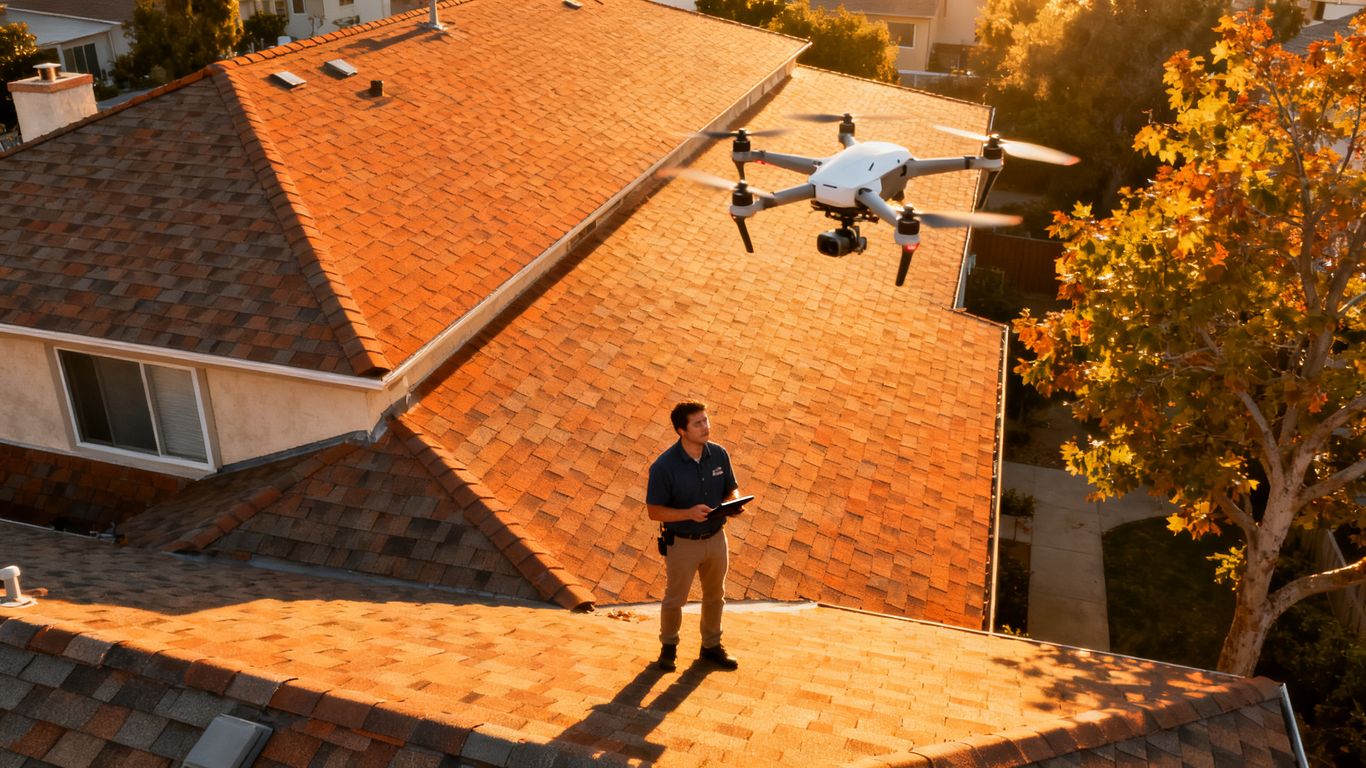
A drone inspection for insurance roof claims california homeowners can use is primarily a documentation tool. It may provide a broad view of the roof, nearby structures, and visible conditions that are difficult to assess from the ground. The resulting images can help organize a conversation with an insurer, adjuster, or roofing professional, but they do not replace the policy or the claim investigation.
The most useful report is clear about what was observed, when it was captured, and what remains uncertain. Aeroskape provides Commercial Drone Inspection services that focus on high-resolution imagery, terrain visualization, and organized data for decision-making; homeowners should still confirm that any inspection deliverable fits their insurer’s requirements.
What a drone inspection can document
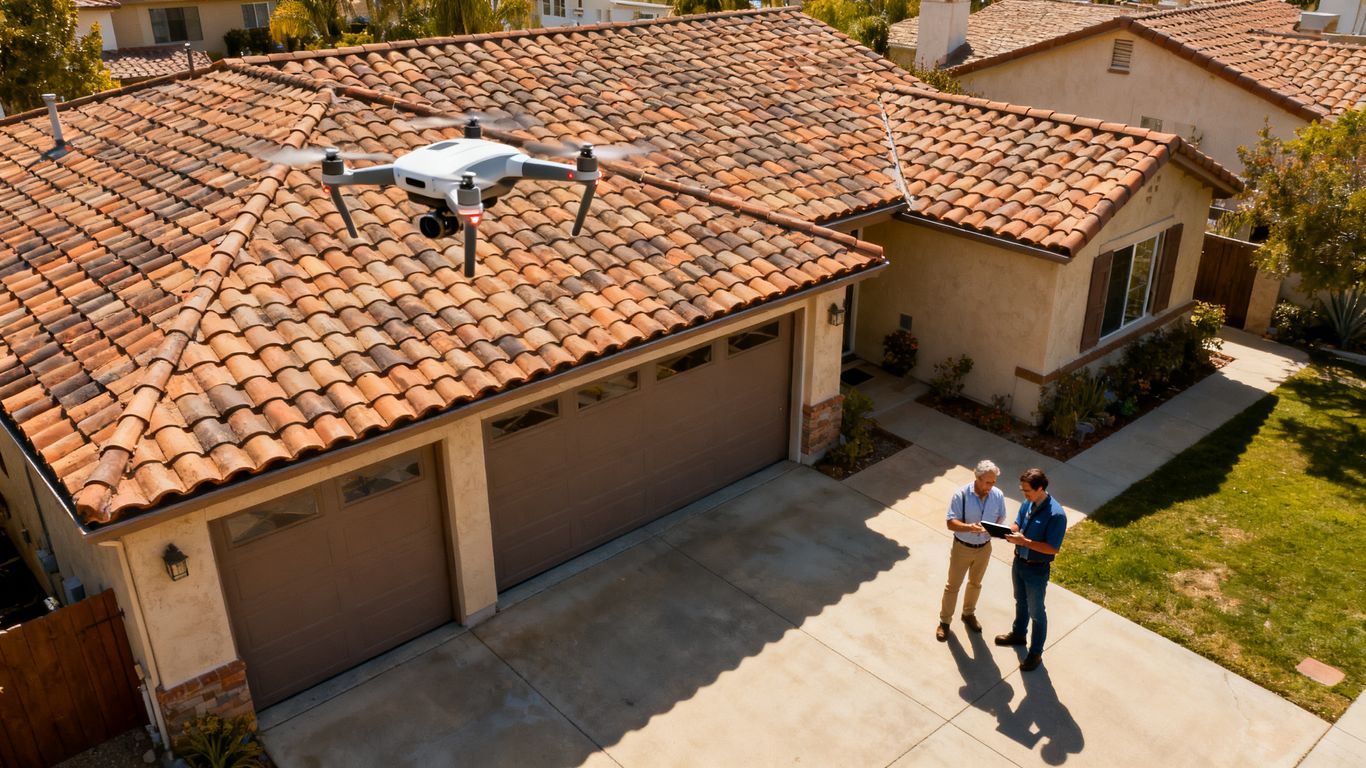
Aerial photography can record missing materials, displaced components, punctures, staining, debris, and apparent changes across a roof plane. It can also show the relationship between roof damage and trees, neighboring structures, or other possible sources of impact. The report should distinguish visible facts from conclusions about cause.
For a homeowner, that distinction matters. A photograph may show a broken tile, for example, while a licensed roofing professional may be better placed to explain whether it is consistent with a recent event or long-term deterioration.
Why insurers and adjusters use aerial imagery
Aerial imagery lets an adjuster review large or difficult-to-access areas without immediately sending a person onto every roof surface. It can support an initial risk review, help identify areas needing closer attention, and create a visual record for comparison with other evidence. The image itself is not a coverage decision.
This is also why homeowners should read inspection conclusions carefully. Aerial views can be useful and still be incomplete, especially where trees, roof geometry, glare, or resolution obscure a detail.
How drone evidence differs from a ground inspection
A drone generally views the roof from above and around its perimeter. A ground inspection can include attic observations, interior symptoms, close tactile checks, and a closer look at seals or fasteners. Neither perspective automatically answers every question about causation, age, or repairability.
Used together, the two approaches create a more balanced record. The aerial view establishes overall condition and location, while ground-level observations add context that a camera cannot reliably provide.
When a drone inspection is especially useful
Aerial documentation can be particularly helpful after a windstorm, hail event, wildfire-related exposure, falling-tree incident, or other situation where the homeowner needs a timely condition record. It may also help when the roof is steep, fragile, wet, or otherwise unsafe to walk.
A practical next step is to request a consultation before scheduling work, so the operator can discuss the property, access conditions, deliverables, and timing. The inspection should support the claim record rather than create an unsupported promise of payment.
What drone inspections can reveal about roof damage
A drone can cover a roof systematically and show patterns that are easy to miss from a driveway. High-resolution photographs may reveal visible changes across shingles, tiles, roof edges, penetrations, and drainage components. They cannot, by themselves, establish every hidden defect or prove exactly when damage occurred.
The quality of the findings depends on flight planning, weather, camera position, and the person interpreting the images. For specialized moisture questions, Aeroskape describes Thermal Drone Inspections as producing high-resolution thermal images that can help pinpoint issues such as water infiltration, energy loss, faulty electrical systems, and compromised insulation; thermal information remains an aid to informed decision-making, not a substitute for opening a roof or investigating an interior.
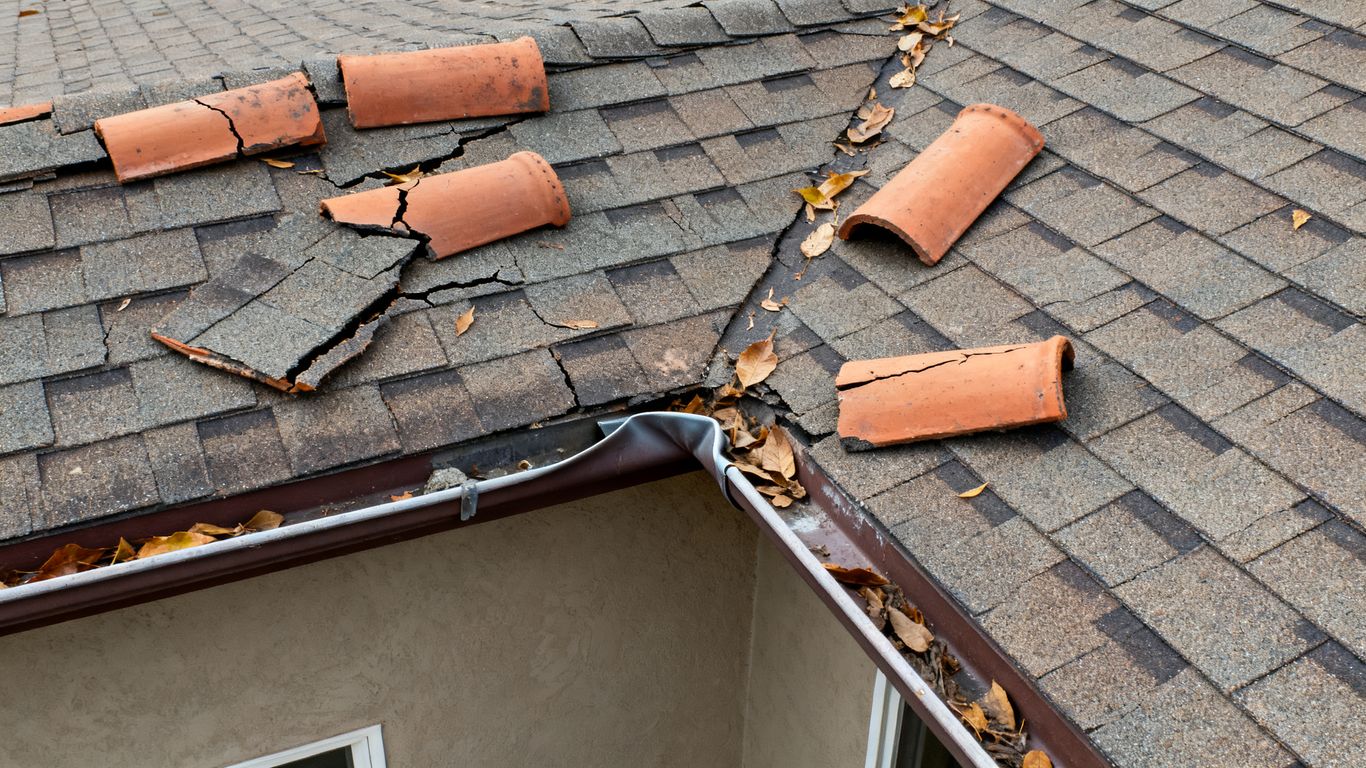
Missing, lifted, or damaged shingles
Overhead imagery may show exposed underlayment, irregular shingle lines, lifted tabs, missing granules, or shingles that appear displaced. Broad roof views can help identify whether a condition is isolated or repeated across multiple slopes.
Close images are still needed for fine details. A report should identify the roof plane and approximate location of each observation so a contractor or adjuster can find it again.
Cracked or displaced tile roofing
Tile roofs can be difficult to walk without causing additional breakage. A drone may document cracked, slipped, or missing tiles while keeping the initial inspection non-contact. It can also show whether damage appears concentrated around an edge, valley, ridge, or exposed slope.
The images do not necessarily reveal what lies beneath a tile. Underlayment, battens, flashing, and deck conditions may require a qualified hands-on assessment.
Storm impact marks and punctures
Hail marks, punctures, dents, and impact debris may appear differently depending on the material, light, and image angle. Aerial photographs can preserve a visual record soon after the suspected event, when debris and temporary conditions are still present.
Because similar marks can have different causes, the claim file should also include the event date, weather information if available, and professional observations. Context strengthens visual evidence without turning an image into a conclusion it cannot support.
Flashing, vents, gutters, and edge damage
Roof damage is not limited to the field of shingles or tiles. Images may show displaced flashing, bent vents, damaged gutters, detached edge metal, blocked drainage paths, or debris near penetrations. These details can help a contractor plan a closer inspection.
A consistent naming system makes the record easier to use. Photos should identify the side of the house, roof slope, approximate location, and whether the item is an observation or a recommended follow-up.
Signs of leaks and hidden moisture
Dark areas, staining, ponding, and unusual surface patterns can justify further investigation, but they do not always prove an active leak. Moisture may enter at a penetration and appear somewhere else inside the building. Conversely, a roof can have visible damage without producing an interior symptom yet.
When thermal imagery or other specialized data is used, the report should explain the conditions during capture and the limits of interpretation. Interior photos, attic observations, and repair estimates remain valuable corroborating evidence.
Preparing for a drone inspection
Preparation starts with the claim, not the aircraft. Before anyone visits, clarify what happened, what the policy may cover, and what records already exist. A short, organized file helps the operator capture relevant areas and helps the insurer understand the resulting images.
The homeowner should also ask what will be delivered: original photographs, video, annotated images, a written report, or another format. Aeroskape offers Drone Service Guides covering aerial data capture, inspections, 3D aerial modeling, and related applications; homeowners can use that kind of general information to frame questions without assuming every service is designed for an individual insurance claim.
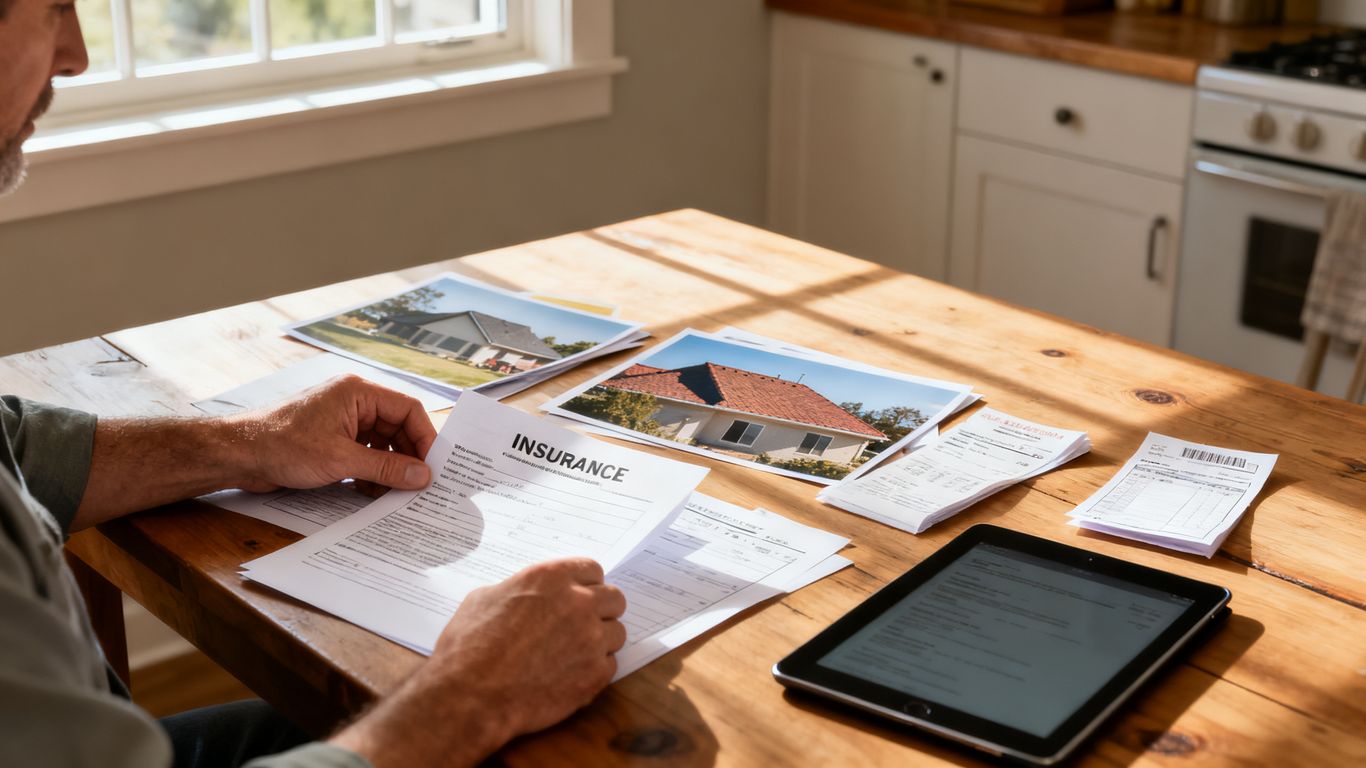
Review your policy’s roof and storm-damage coverage
Read the declarations page and the relevant policy sections before the inspection. Look for covered perils, roof-specific limitations, matching provisions, exclusions, reporting duties, and whether payment may be based on replacement cost or actual cash value.
Do not rely on a contractor’s description of coverage as a substitute for the policy. If wording is unclear, ask the insurer for an explanation and keep a written record of the response.
Record the date and cause of the suspected loss
Write down when the damage was first noticed and what event may have caused it. Include severe weather, falling branches, fire exposure, nearby construction activity, or any other relevant circumstance, while separating what you personally observed from what you inferred.
If the exact date is uncertain, say so. A careful timeline is more credible than a precise date that cannot be supported.
Gather photos, repair records, and maintenance documents
Earlier photographs can help establish the roof’s condition before the suspected loss. Keep invoices, inspection reports, warranties, maintenance notes, contractor communications, and records of prior claims together with the new imagery.
A simple file structure prevents important evidence from being buried in a phone gallery. Consider organizing records by date and labeling each image with the roof area shown.
Identify safety, privacy, and access concerns
Tell the operator about neighboring structures, people who may be outside, pets, trees, power lines, locked gates, and any areas where flight or photography could raise concerns. The operator should explain the planned flight area and how collected media will be handled.
It is also sensible to ask whether the inspection can be completed from a safe launch point without entering restricted areas. Safety and privacy planning should happen before the flight, not after images have been captured.
Choose a qualified and properly insured operator
Ask about pilot qualifications, applicable flight compliance, insurance, experience with roof documentation, and the form of the final report. Confirm whether the operator will provide original files and whether any analysis is informational or intended for another professional’s review.
A low price is not useful if the images are poorly labeled or the operator cannot explain limitations. Choose someone who can produce an organized record that another person can follow.
Understanding California insurance claim requirements
California homeowners must begin with their own policy because deadlines and duties vary by contract. State rules and consumer resources may provide important protections, but they do not erase the need to report a loss, mitigate further damage, preserve evidence, and cooperate with a reasonable investigation.
Drone images can support those steps, yet they do not change the burden of showing what happened under the policy. Keep communications factual, save claim numbers, and ask questions in writing when a coverage position is unclear.
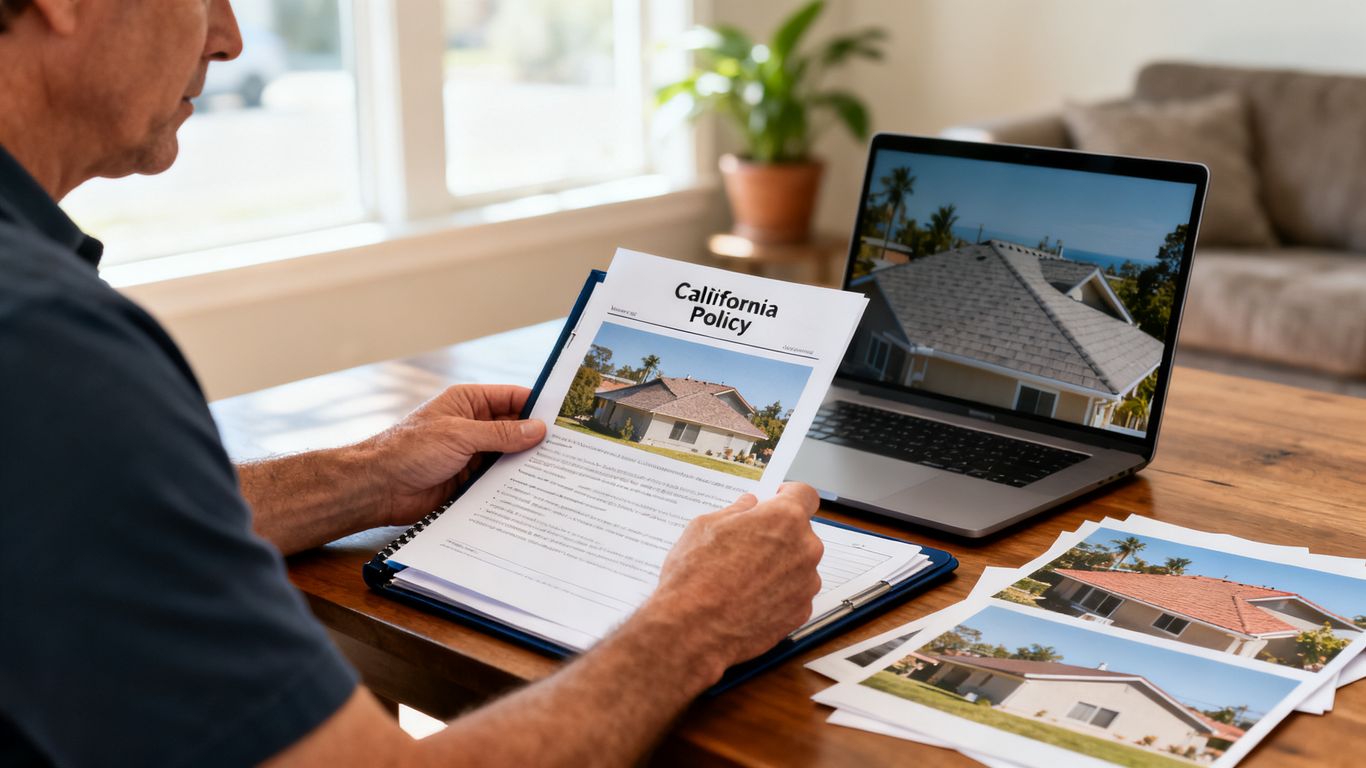
Reporting damage within the policy’s deadline
Notify the insurer as soon as reasonably possible under the policy’s reporting language. Waiting for a drone inspection should not cause a missed deadline, especially when temporary measures are needed to prevent additional damage.
Give the insurer the known facts and explain what remains under investigation. Later evidence can supplement the initial notice.
Confirming whether wind, hail, fire, or other perils are covered
A damaged roof is not automatically a covered roof. Ask which peril the insurer is evaluating and whether the policy contains exclusions or special conditions for that cause. The same visible condition may be treated differently depending on how it occurred.
Do not let an image caption stand in for a coverage analysis. The policy language and the facts surrounding the loss must be considered together.
Distinguishing sudden damage from wear and tear
Insurers commonly examine whether a condition resulted from a sudden event or gradual aging, maintenance issues, deterioration, or faulty installation. Aerial images may show the condition but often cannot establish its age without supporting records.
That is why pre-loss photos, maintenance history, weather dates, and a qualified professional’s observations can be as important as the drone footage itself.
Understanding deductibles, exclusions, and actual cash value
Even when damage is covered, the payment may be reduced by a deductible, an exclusion, depreciation, or an actual-cash-value calculation. Ask for the estimate, the basis for the valuation, and an explanation of any line items that are omitted or reduced.
The following comparison can help organize questions, although the policy controls the result:
| Claim issue | What to check | Useful supporting record |
|---|---|---|
| Deductible | Amount and applicable loss category | Declarations page |
| Exclusion | Cause or material excluded | Policy wording and claim letter |
| Valuation | Replacement cost or actual cash value | Estimate and depreciation calculation |
| Scope | Areas accepted, disputed, or omitted | Annotated imagery and contractor estimate |
A clear written comparison makes it easier to identify a genuine disagreement instead of treating every difference as a denial. Ask the insurer to explain any conclusion that does not match the documented roof area or event.
Checking California-specific consumer protections
California homeowners can review guidance from the California Department of Insurance and may contact the department with questions about claim handling or available consumer assistance. Keep in mind that an agency inquiry is not the same as a coverage ruling, and individual circumstances matter.
For a significant or disputed loss, professional advice may be appropriate. Preserve the complete file before escalating, including letters, estimates, photographs, inspection notes, and call logs.
Using drone evidence to support a roof claim
The strongest claim file is chronological and easy to verify. It shows the reported event, the observed condition, the inspection method, and the requested repair scope without overstating what any one photograph proves. Aerial evidence becomes more useful when it is labeled and matched to other records.
The goal is not to overwhelm an adjuster with files. It is to provide relevant evidence in a form that allows the adjuster to locate each issue and understand why it matters.
Requesting original images, video, and inspection notes
Ask for the original files rather than relying only on compressed screenshots or social-media exports. Request capture dates, notes about weather and flight conditions, image annotations, and any report describing the method used.
Keep an untouched copy and make a separate working copy for highlights or labels. That preserves the original record if the claim later becomes disputed.
Connecting visible damage to the reported event
A claim narrative should explain what changed, when it changed, and why the suspected event is relevant. Compare the drone findings with prior photographs, weather records, debris observations, and the contractor’s assessment.
Avoid claiming certainty where the evidence only shows possibility. A precise, cautious description is more useful than a sweeping statement that an insurer can easily challenge.
Comparing drone findings with contractor estimates
Place the aerial report beside the repair estimate and check whether both identify the same roof slopes, quantities, materials, and related components. If the estimate includes work that is not visible in the imagery, ask the contractor to explain the additional basis.
Likewise, if the imagery shows an area missing from the estimate, flag it promptly. A shared location system—such as slope names or photo numbers—can reduce confusion during revisions.
Documenting interior damage and related repairs
Photograph ceilings, walls, insulation, attic areas, and personal property affected by water or another covered event. Record when symptoms appeared and what temporary steps were taken. Keep receipts for reasonable emergency work.
Interior evidence does not prove that every exterior defect caused the damage, but it can help show the practical consequences and urgency of the loss.
Avoiding alterations before the insurer’s inspection
Do not replace or discard damaged materials before the insurer has had a reasonable opportunity to inspect, unless immediate action is needed to protect people or prevent further harm. Photograph conditions first and keep removed materials when practical.
If emergency repairs cannot wait, notify the insurer, document the original condition, and save invoices and receipts. Mitigation and permanent replacement are not always the same step.
Handling disagreements with an insurer
A disagreement does not always mean the evidence is useless. It may involve scope, cause, valuation, timing, or a policy interpretation. Start by identifying the exact point of disagreement rather than responding to a general statement that the claim is “not covered.”
Stay organized and professional. A written response that cites the relevant image, estimate line, date, or policy provision is easier to evaluate than a long exchange without reference points.
Responding when the claim is denied or underpaid
Request the denial or payment explanation in writing and review each reason separately. Compare the insurer’s scope with your documentation, then provide additional evidence that directly addresses the stated issue.
You may ask for reconsideration, a supplemental inspection, or a revised estimate. Do not assume that sending more photographs alone will resolve a disagreement if the central issue is policy language or causation.
Requesting the adjuster’s inspection findings
Ask for photographs, measurements, estimates, notes, and the basis for any excluded or depreciated item, subject to applicable claim procedures. Understanding the adjuster’s record can reveal whether both sides inspected the same area.
If an image appears to show a different condition, identify the roof plane and capture date rather than making a broad accusation. Specific questions tend to produce more useful answers.
Obtaining a second opinion from a licensed roofing professional
A licensed roofing professional can evaluate materials, installation, repairability, and likely causes within the scope of that person’s expertise. Request a written report that separates direct observations from opinions and identifies areas that could not be accessed.
A second opinion is most helpful when it addresses the insurer’s stated reason for disagreement. It should not simply repeat the requested outcome without explaining the evidence.
Escalating concerns through the California Department of Insurance
If communication breaks down, a homeowner can review California Department of Insurance resources and learn whether a consumer inquiry or complaint process may fit the situation. Assemble the claim correspondence and supporting records before contacting the department.
Regulatory assistance may help clarify process concerns, but it does not guarantee a particular payment. Continue observing policy deadlines while seeking assistance.
Knowing when to consult a qualified claim attorney
An attorney may be worth consulting when the loss is substantial, the coverage language is complex, the denial remains unexplained, or a dispute involves significant legal or financial consequences. Bring the complete claim file, including the policy, photographs, inspection reports, estimates, and communications.
A consultation can help determine available options without requiring the homeowner to decide immediately how to proceed.
Costs, limitations, and privacy considerations
The price of an aerial inspection depends on the property and the deliverable, not simply on the number of minutes a drone is in the air. A homeowner should compare the cost with the likely usefulness of the evidence and ask exactly what is included. The inspection is one part of a claim record, not a guarantee of coverage or payment.
A careful operator will also explain when a drone is not the right tool. Some questions require close contact, attic access, moisture testing, destructive investigation, or a licensed professional’s opinion.
Typical factors that affect drone inspection pricing
Pricing may reflect roof size, building height, access, travel, flight complexity, image resolution, thermal equipment, processing, annotations, and reporting. A basic image set and a detailed, organized report are different deliverables.
Ask for a written scope before scheduling. It should state whether the price includes original files, edited images, a report, repeat visits, and any special equipment.
Situations drones cannot diagnose on their own
Aerial imagery cannot reliably determine every hidden leak path, fastener condition, underlayment defect, structural weakness, or installation problem. It also cannot decide whether a policy covers the observed condition.
Use the images to identify questions and locations for follow-up. Where safety or access permits, combine them with appropriate ground, attic, or professional inspections.
Weather, flight restrictions, and image-quality limitations
Rain, wind, smoke, glare, shadows, foliage, low light, and obstructions can reduce image quality. Flight restrictions, nearby airports, power lines, crowded areas, and property boundaries may also affect the plan.
A credible report records these limitations instead of presenting every image as equally reliable. If an important area was obscured, schedule a safer and more suitable follow-up rather than guessing.
Protecting personal information in aerial footage
Aerial footage can incidentally capture neighbors, vehicles, people, backyards, and household routines. Ask how files will be stored, who can access them, how long they will be retained, and whether unnecessary frames can be removed or restricted.
Share only the material needed for the claim. Preserve original evidence securely while limiting broad distribution of files that contain unrelated personal information.
Weighing inspection costs against potential claim value
Consider the likely claim amount, the roof’s accessibility, the safety benefit, and whether the images will answer a disputed question. An inspection may be worthwhile when it documents a large, dangerous, or difficult-to-see area, but it may add little when the issue requires an interior or hands-on diagnosis.
Before spending money, ask what decision the inspection is meant to inform. That simple question keeps the service focused and helps avoid paying for imagery that does not change the claim record.
Conclusion
Drone imagery can give California homeowners a clearer visual record of roof conditions, especially after a suspected storm or other sudden event. Used carefully with policy documents, timelines, contractor findings, and interior evidence, it can make a claim easier to review while still leaving coverage decisions to the policy and the insurer’s process.
Frequently Asked Questions
Can a drone inspection prove that a roof claim is covered?
No. It can document visible conditions, but coverage depends on the policy, the reported cause, exclusions, deadlines, and the full claim investigation.
Should I notify my insurer before scheduling a drone inspection?
Notify the insurer according to the policy’s reporting requirements and ask whether it has inspection procedures or documentation preferences. Do not delay required notice while arranging an inspection.
Can drone images show a roof leak?
They may show staining, ponding, or patterns that justify further investigation, but they usually cannot establish the complete path or source of a leak by themselves.
What should I do if my insurer disagrees with the drone findings?
Ask for the insurer’s inspection findings and the specific reason for the disagreement. Then compare that explanation with the imagery, contractor report, policy language, and other claim records.
Is a drone inspection safer than walking on a roof?
It can reduce the need for an initial walk on steep, fragile, wet, or otherwise hazardous surfaces. It does not eliminate the need for qualified professionals when close inspection is necessary.
Should I repair my roof before the insurance inspection?
Take reasonable steps to prevent further damage, but document the original condition and notify the insurer before permanent repairs when practical. Keep photographs, removed materials when possible, and receipts.
How long should I keep drone inspection files?
Keep original images, reports, invoices, and related communications for as long as they may be relevant to the claim, repairs, policy questions, or a later dispute. Store copies securely and label them clearly.
Get a Clearer Roof Record
If aerial documentation would help clarify a difficult roof condition, contact Aeroskape to discuss an inspection approach suited to the property and the information you need to make the next decision.