Boosting Solar Efficiency: The Power of Drone Thermal Mapping
Solar farms are getting bigger, and keeping them running smoothly is a big job. You know, like trying to keep track of all your socks after laundry day. It’s easy for things to go wrong, and sometimes you don’t even know it until your energy bill is through the roof. That’s where drones come in. Specifically, drones with special cameras that can see heat. This drone thermal mapping for solar efficiency is changing the game for how we keep these solar giants in top shape. It’s all about spotting problems before they turn into major headaches.
Key Takeaways
- Drone thermal mapping helps find problems like dirt, bad connections, and hot spots on solar panels that you can’t see with your eyes.
- Using drones is way faster and safer than having people walk around large solar farms to check things.
- The detailed heat maps from drones give you clear information to decide what maintenance needs to be done and when.
- This technology helps prevent energy loss and keeps your solar farm working at its best, saving you money.
- Future drone tech will make inspections even smarter, with more automation and better data analysis for solar farms.
Boosting Solar Efficiency With Drone Thermal Mapping
Solar farms are a big deal these days, and keeping them running at their best is super important. You know, like making sure your car is always tuned up. For a long time, checking on all those panels was a real chore. People had to walk around, squinting at everything, which took ages and wasn’t always the safest. But now, we’ve got drones, and they’re changing the game.
Understanding The Need For Advanced Solar Inspections
Think about a huge solar farm. It’s got thousands of panels, all working together. If even a few of them aren’t pulling their weight, or worse, if there’s a problem brewing, it can really mess with the whole operation. Stuff like dirt buildup, shading from trees that grew a bit too much, or even just a loose wire can cause issues. Catching these problems early is key to making sure you’re getting all the power you can out of your investment. Without a good way to spot these things, you’re basically flying blind, and that can lead to lost energy and, well, lost money. It’s why we need better ways to check on these systems, ways that are faster and more thorough than just walking around.
How Drone Thermal Mapping Enhances Solar Farm Productivity
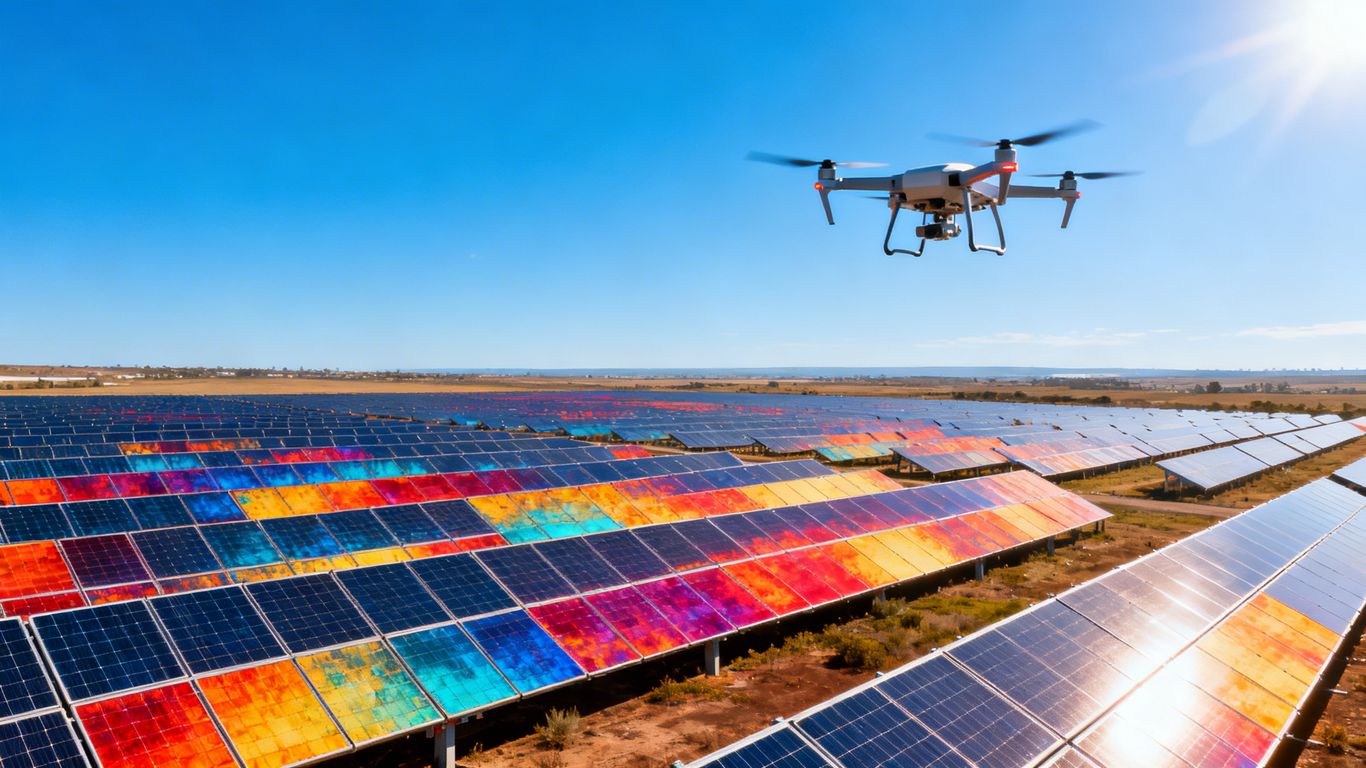
This is where drones with thermal cameras come in. They fly over the farm and take pictures that show heat. Healthy panels usually have a pretty even temperature, but if something’s wrong, like a cell that’s not working right or a connection that’s getting too hot, it shows up as a different color on the thermal map. This lets technicians know exactly where to look. It’s way faster than manual checks, covering large areas in no time. Plus, it’s safer because nobody has to climb around on roofs or walk through potentially tricky terrain. This means less downtime for the farm and more consistent energy production. It’s a pretty neat way to keep things running smoothly and get the most out of your solar setup. You can find out more about how this technology is transforming solar panel inspections in places like India here.
The Role Of Drone Thermal Mapping In Maximizing Energy Generation
So, how does this all add up to more power? By spotting those little issues early, drones help prevent bigger problems down the line. A panel that’s overheating slightly might not seem like a big deal, but over time, it can degrade and produce less energy. Thermal mapping helps identify these underperforming panels so they can be fixed or replaced. It also helps pinpoint areas with dirt or shading that might need cleaning or trimming. All these small adjustments add up, helping to keep the entire solar farm operating at its peak potential. It’s all about making sure every single panel is doing its job as efficiently as possible, which directly translates to more electricity generated and a better return on your solar investment. This kind of advanced diagnostics is really what solar operators need today.
Identifying Common Solar Panel Issues With Drones
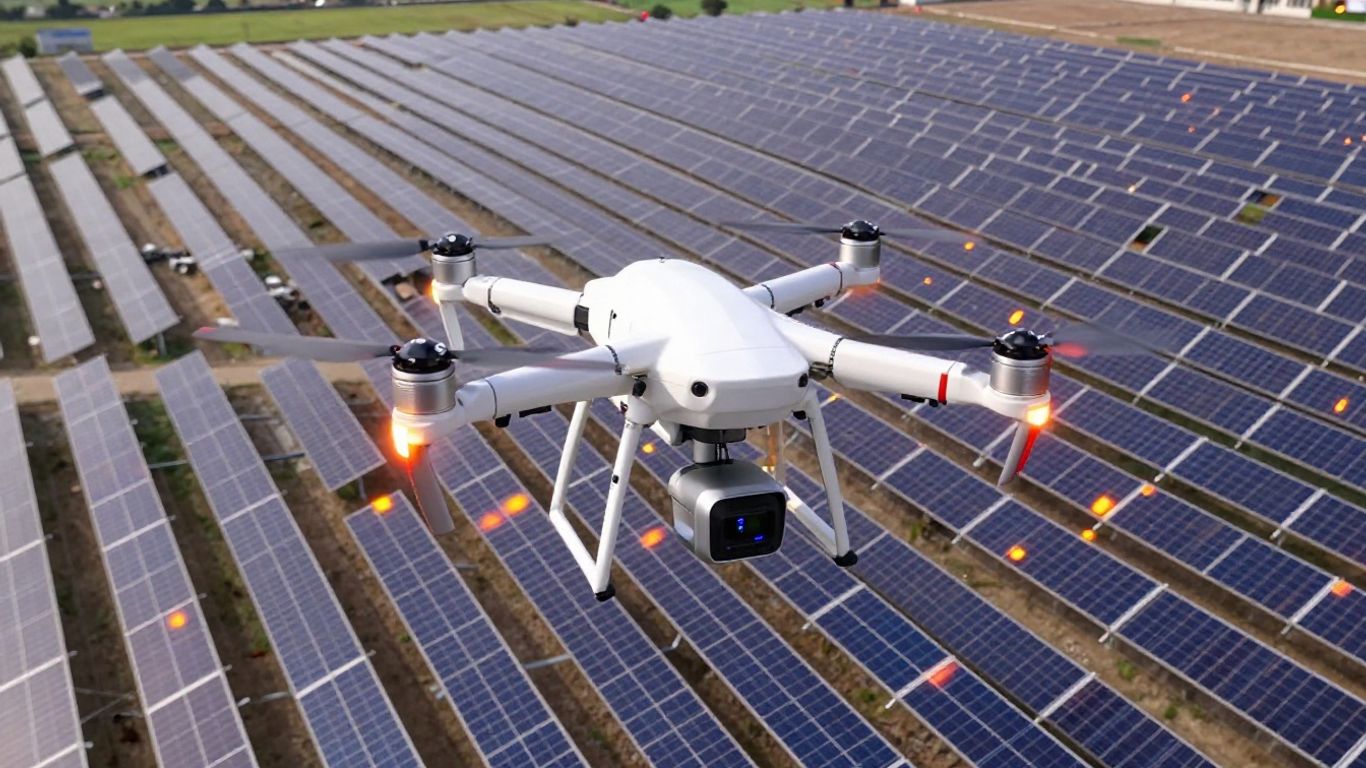
When you’re running a solar farm, keeping all those panels in tip-top shape is a big job. Things can go wrong, and sometimes you can’t even see the problems with your own eyes. That’s where drones with thermal cameras really shine. They can spot issues that would otherwise go unnoticed, saving you time and preventing bigger headaches down the road.
Detecting Shading And Dirt Accumulation
It’s pretty straightforward: if sunlight can’t hit a panel, it can’t make electricity. Shading from trees that have grown too tall, new buildings nearby, or even just a thick layer of dust and dirt can really mess with how much power your farm produces. Thermal imaging from a drone can quickly show these cooler, less productive areas. This lets you know exactly where to trim back branches or schedule a cleaning. It’s a simple fix that makes a big difference in energy output.
Pinpointing Connector And Junction Box Problems
Inside those junction boxes and connecting wires, things can get a bit tricky. Loose connections, corrosion, or even slight damage can create extra electrical resistance. This resistance makes those spots heat up more than they should. A drone’s thermal camera can pick up these hot spots, which are like little warning signs. Catching these early means you can get a technician to check them out before a small electrical issue turns into a major failure or, worse, a fire hazard. It’s all about finding those hidden electrical gremlins.
Spotting Hotspots And Module Failures
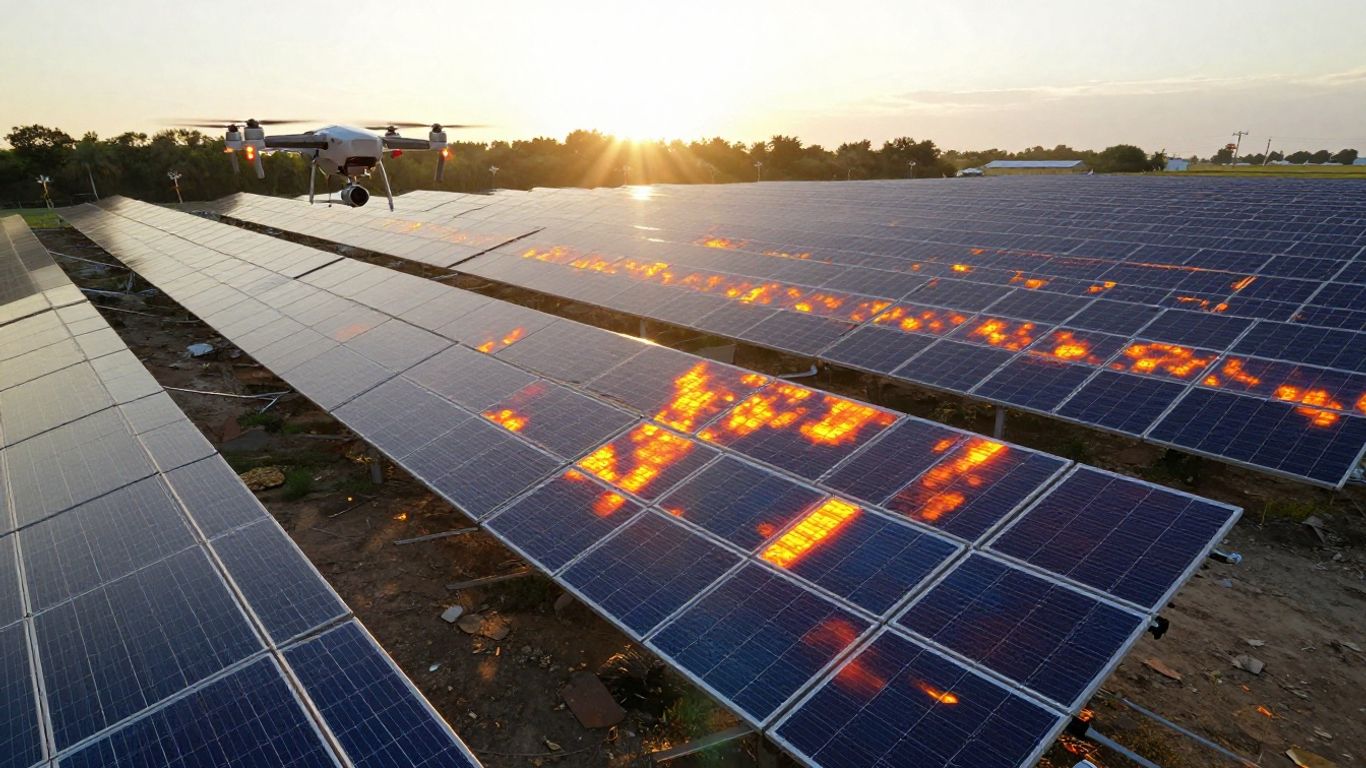
Sometimes, a solar panel itself has a problem. This could be a manufacturing defect, a tiny crack in a cell that you can’t see, or damage from something like hail. These issues can cause certain parts of the panel, called "hotspots," to get much hotter than the rest. These hotspots are bad news because they can damage the panel permanently and reduce its efficiency. Thermal drones are fantastic at spotting these temperature differences. They can also help identify entire modules that have failed and aren’t working at all. Getting this information quickly means you can replace or repair faulty panels before they drag down the whole system’s performance. It’s a key part of keeping your solar farm running smoothly and efficiently. For more on how this tech works, check out some of the top solar inspection software.
Thermal imaging is like giving your solar farm a health check-up, revealing issues that are invisible to the naked eye. It allows for targeted maintenance, preventing minor problems from becoming costly failures and ensuring your panels operate at their best.
Traditional methods for inspecting large solar arrays are often slow and can put workers at risk. Drone inspections offer a much safer and more effective way to get a clear picture of your solar assets’ health, providing detailed data for proactive solar maintenance. This advanced approach helps maximize energy generation and prolong the life of your equipment.
Advantages Of Drone Thermal Inspections Over Traditional Methods
Drone thermal inspections are changing the way solar farms check for problems, and it’s easy to see why. Instead of slow, manual walks through acres of solar panels, drones can sweep over entire sites, collect detailed heat maps, and find even small faults—all in a fraction of the time. Let’s break down the key advantages compared to the old-school approach.
Enhanced Inspection Efficiency And Speed
Drones slash inspection times from days to hours, especially for big installations. They don’t just work faster—they also don’t miss hard-to-reach panels, and every part of your array gets seen. Here’s a quick comparison:
| Method | Panels Inspected Per Hour | Typical Labor Needed | Site Downtime |
|---|---|---|---|
| Manual (on foot) | 20-50 | 2+ people | High |
| Drone-based | 1,000+ | 1 operator | Minimal |
Drones simply make large-scale solar panel inspection less of a hassle and keep operations running smoothly.
Improved Data Accuracy And Detail
Manual inspections can miss small cracks, hidden hotspots, or loose connectors. Drone cameras—especially thermal ones—catch temperature changes and irregularities you just can’t spot by eye. These high-res images and data sets let you:
- Identify hotspots before they cause power losses
- Spot module or wiring failures early
- Keep track of small anomalies that might turn into big headaches
Having all this data in one place with mapped imagery makes follow-up repairs and warranty claims easier to manage for everyone.
Getting reliable data means you’re not left with guesswork—you can act fast, fix what matters, and keep your solar plant healthy for the long haul.
Increased Safety For Inspection Personnel
Sending techs onto rooftops or across big fields, sometimes in harsh weather, is always a risk. With drones, most inspections are done remotely, from a safe ground position. Key safety benefits include:
- No climbing or dangerous roof work
- Less exposure to electrical equipment
- Fewer hours spent outdoors in tough conditions
Switching to drone-based thermal mapping makes solar inspection work safer and means fewer injuries or incidents on the job.
Key Takeaways
- Drone thermal inspections radically speed up and improve the accuracy of solar maintenance.
- The data you get is much richer, allowing for quicker fixes and smarter planning.
- Safety is a major upgrade—no more risky roof walks or offshore climbs.
- Overall, you get more done, in less time, with less worry for your team.
For utility-scale operations, adopting revolutionary drone inspection methods is quickly becoming the industry standard for performance, reliability, and safety.
Leveraging Data For Smarter Solar Maintenance
Drone thermal mapping has made it much easier for solar operators to make smarter maintenance decisions. When you get detailed thermal data from drones, you aren’t just seeing images; you’re holding the keys to more efficient scheduling, faster repairs, and less downtime. Here’s how smart data use is shaping the future of solar maintenance.
Comprehensive Data Analysis For Informed Decisions
High-resolution thermal imaging doesn’t just show a ‘hot’ or ‘cold’ panel—it reveals trends, subtle patterns, and even slight performance dips that often go unnoticed by routine checks. Once collected, this drone data can be processed into easy-to-read reports, giving teams a clear action plan.
- Each inspection covers hundreds (sometimes thousands) of panels, scanning for even minor defects
- Data reports prioritize issues by urgency, helping maintenance teams target the biggest risks first
- Geo-tagging pinpoints affected modules for quick follow-up
- Integration with management software keeps everything organized
Gaining instant insight from drone surveys means crews spend less time searching for problems and more time fixing them, making maintenance both faster and more successful.
For solar farms and utility companies, using data-driven approaches to asset management allows for precise and proactive care.
Predictive Maintenance Through Thermal Insights
Drone data isn’t just about what’s wrong now—it’s about predicting what might go wrong soon. Consistent drone inspections create a history of the farm’s condition, revealing patterns that lead up to faults. Now, maintenance can move from reactive to proactive, thanks to:
- Historical temperature trends to spot degrading panels before they fail
- Early alerts for hotspots, helping stop major problems before they spread
- Seasonal comparisons that help teams schedule cleanings, repairs, and upgrades at just the right time
Instead of guessing when to act, teams can use real evidence to prevent future trouble. This approach helps avoid outages and even extends the life of solar assets.
Cost-Effective Maintenance Planning
Thermal data from drones lets managers focus resources where they’re needed most. Rather than spending time and money on blanket repairs, crews can target only the panels or wiring that data says are at risk. Here’s what that really means for a solar farm budget:
| Maintenance Type | Traditional Cost | Drone-Optimized Cost |
|---|---|---|
| Blanket site repairs | High | Low |
| Reactive troubleshooting | High | Medium |
| Scheduled by data | Medium | Lowest |
Key steps to efficient maintenance planning include:
- Scheduling repairs based on drone data frequencies and trends
- Prioritizing assets with recurring or serious issues
- Reducing emergency call-outs by preventing failures
Using drone thermal inspection services, like those for quick detection of hotspots and faulty cells, makes solar maintenance easier on the wallet and keeps performance high.
Regular drone-based analysis is turning solar maintenance from a guessing game into a science—one that saves time, cuts costs, and keeps energy flowing when it’s needed most.
Key Technologies Driving Drone Thermal Mapping
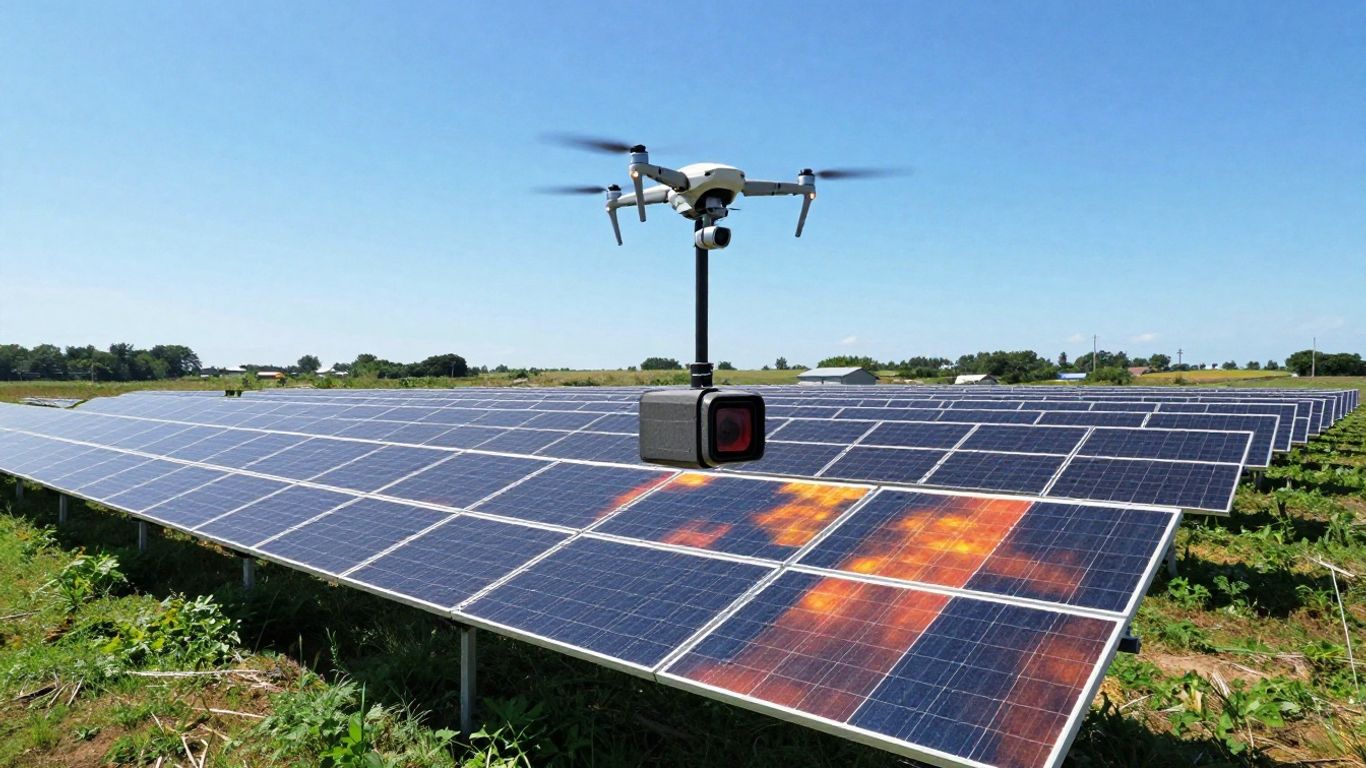
So, how exactly do these drones pull off those super detailed thermal maps of solar farms? It’s not just about sticking a camera on a flying toy. There’s some pretty neat tech involved that makes it all work.
High-Resolution Cameras and Thermal Imaging Systems
At the heart of it all are the cameras. We’re talking about high-resolution visual cameras that can zoom in and see tiny details, like a small crack on a panel that you might miss from the ground. But the real magic comes from the thermal imaging systems. These cameras don’t see light like our eyes do; they see heat. They pick up on temperature differences across the solar panels, which is super important. A panel that’s running hotter than its neighbors often means something isn’t quite right, like a faulty cell or a bad connection. To get a good read, you really want the camera to see at least 5×5 pixels for each solar cell. This level of detail is what helps pinpoint issues accurately, unlike older methods that took ages and weren’t as thorough for modern solar setups.
Machine Learning and AI Integration for Fault Detection
Okay, so you’ve got all this thermal data. What do you do with it? That’s where machine learning and AI come in. Instead of a person staring at thousands of images trying to spot every little anomaly, AI can be trained to recognize patterns that indicate a problem. It’s like having a super-fast assistant who’s an expert at spotting faulty solar panels. This tech helps automate the process, making inspections quicker and more accurate. It can even help predict when a panel might fail, so you can fix it before it causes bigger problems. This is a big step up from just looking at pictures; it’s about making sense of the data in a smart way.
Advanced Drone Features for Diverse Conditions
These drones aren’t just standard models. They’re built tough to handle different weather. Think about flying a drone on a windy day or in dusty conditions – it needs to be robust. Features like good wind resistance and durable construction are key. Some drones have advanced navigation systems that allow for autonomous flights, meaning they can follow a pre-set path without constant human control. This is super helpful for covering large solar farms efficiently. Plus, these advanced features mean the drones can keep track of panel performance over time, giving you a history of your solar farm’s health. This kind of detailed tracking is invaluable for long-term maintenance planning and keeping your solar farm running smoothly.
The technology behind these inspections is constantly evolving. What was cutting-edge a few years ago is now standard. The focus is on getting more detailed data, faster, and with less human effort, all while keeping inspection personnel safe from hazards.
These advanced systems are really changing the game for solar farm maintenance, making it more efficient and reliable. It’s all about using the right tools to keep renewable energy sources performing at their best. For utility companies, this kind of tech is also vital for maintaining grid reliability, as seen in substation maintenance. It’s a similar principle, just applied to a different part of the energy infrastructure.
The Future Of Drone Thermal Mapping In Solar Energy
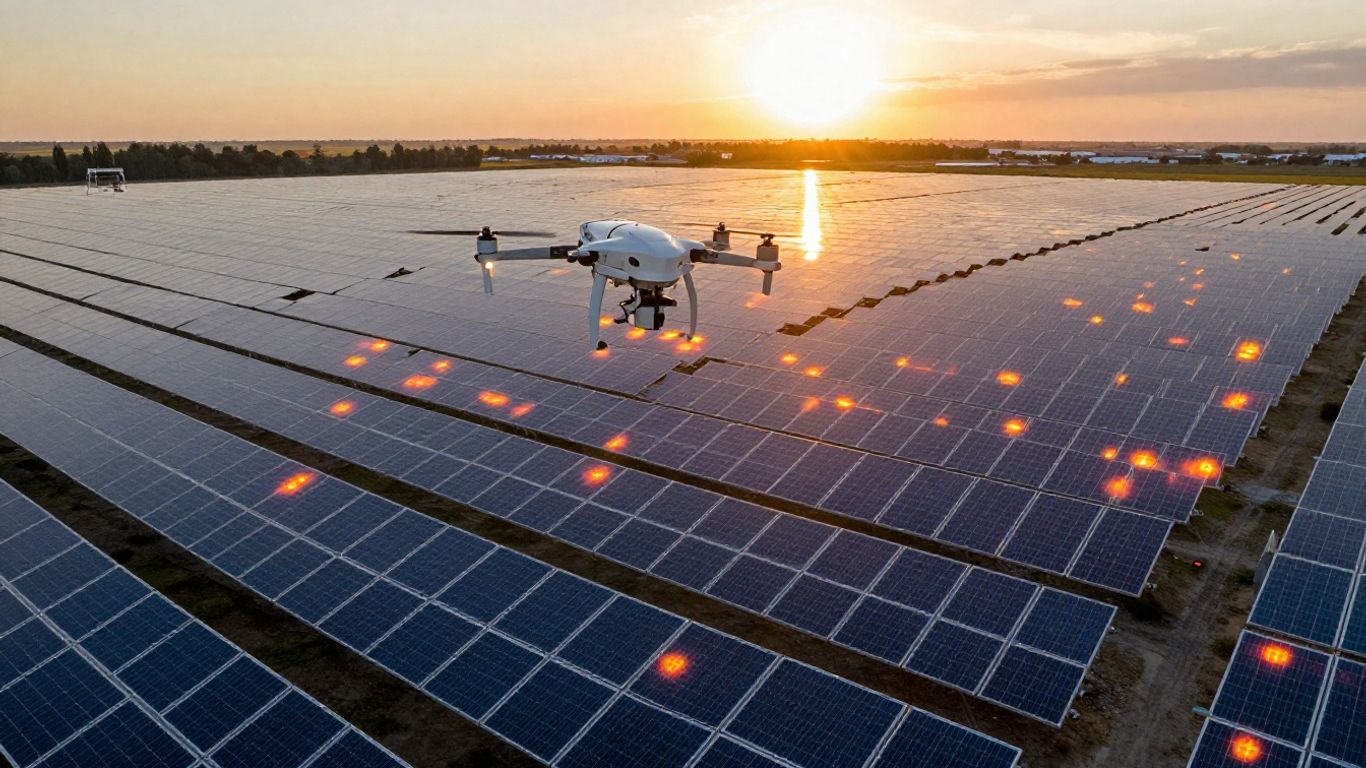
So, where’s all this drone tech headed in the solar world? It’s pretty exciting, honestly. We’re not just talking about flying cameras anymore; we’re looking at a future where drones are practically running the show, making solar farms smarter and more productive than ever.
Autonomous Drones and Enhanced Analytics
Imagine drones that don’t just fly a pre-set path but can actually think for themselves. That’s the direction we’re going with autonomous drones. They’ll be able to navigate complex solar arrays, identify issues, and even decide the best way to fix them, all without a human pilot holding the remote. This ties right into advanced analytics. We’re talking about AI that can look at the thermal data and not just spot a problem, but predict when it might happen again or how bad it could get. It’s like having a crystal ball for your solar farm.
- Self-navigating flight paths: Drones will map and adjust routes on the fly.
- AI-powered fault diagnosis: Machine learning will get better at spotting even subtle issues.
- Automated reporting: Reports will be generated instantly, with clear action items.
The goal is to move from simply inspecting to actively managing and optimizing solar assets with minimal human intervention.
Smart Grid Integration for Optimized Performance
This is where things get really interesting. What if your solar farm could talk directly to the power grid? That’s what smart grid integration is all about. Drones will feed real-time performance data, gathered through thermal mapping, directly into the grid’s management system. This means the grid can adjust power flow based on exactly how much energy your farm is producing at any given moment, taking into account any minor dips in performance that might not even be visible to the naked eye. It’s all about making the whole energy system work together more smoothly. This kind of integration can help stabilize the grid and make renewable energy sources more reliable. Check out how LiDAR drone surveying is revolutionizing solar farm management here.
Supporting Renewable Energy Goals with Technology
Ultimately, all these advancements in drone thermal mapping are about one big thing: helping us reach our renewable energy targets faster and more effectively. By making solar farms more efficient, reliable, and easier to maintain, we can deploy more solar power without the usual headaches. It’s technology like this that makes large-scale solar projects more feasible and attractive, contributing to a cleaner energy future for everyone. It’s a win-win, really – better for the planet and better for the bottom line.
Wrapping It Up
So, there you have it. Using drones for thermal mapping isn’t just some fancy new tech; it’s a really practical way to keep solar farms running smoothly. We’ve seen how it can spot problems like hot spots or dirty panels way faster than just walking around and looking. This means less money spent on fixing big issues later and more power being generated. It’s a win-win for keeping our solar energy efforts on track and making sure we’re getting the most out of these big investments. Pretty neat stuff, right?
Frequently Asked Questions
How do drones help solar farms work better?
Drones with special cameras can quickly fly over big solar farms and take pictures that show where panels are too hot or not working right. This helps fix problems faster, like dirt blocking the sun or bad wires, so the farm makes more electricity.
What kind of problems can drones find on solar panels?
Drones can spot many issues. They can see if dirt or shadows are making panels less effective. They can also find problems with wires and connections that might be overheating, and they’re great at finding ‘hot spots’ on panels that show something is wrong and could break.
Are drone inspections safer than checking panels by hand?
Yes, definitely! Instead of workers climbing on roofs or walking through large fields, drones do the checking from the air. This means fewer risks for people and less chance of them getting hurt.
How are drone inspections faster than old ways?
Imagine checking hundreds of panels one by one versus a drone flying over them all in a short time. Drones can cover huge areas much quicker than people walking around, saving a lot of time and effort.
Can drones help save money on solar farm upkeep?
Yes, by finding problems early, drones help prevent small issues from becoming big, expensive repairs. They also help schedule maintenance more smartly, so you’re not fixing things when they aren’t broken, which saves money and keeps the farm running smoothly.
What’s new coming up with drones for solar farms?
Future drones will be able to fly and check things all by themselves, using smart computer programs to find even more problems. They’ll also work better with the whole power system, making sure solar energy is used in the best way possible.